Oklahoma requires diesel fuel importers to secure a surety bond guaranteeing payment of use taxes to the Oklahoma Tax Commission, protecting the state if taxes go unpaid. Bond amounts vary by importer, and the requirement applies to any business bringing motor fuel across state lines for use, consumption, or sale.
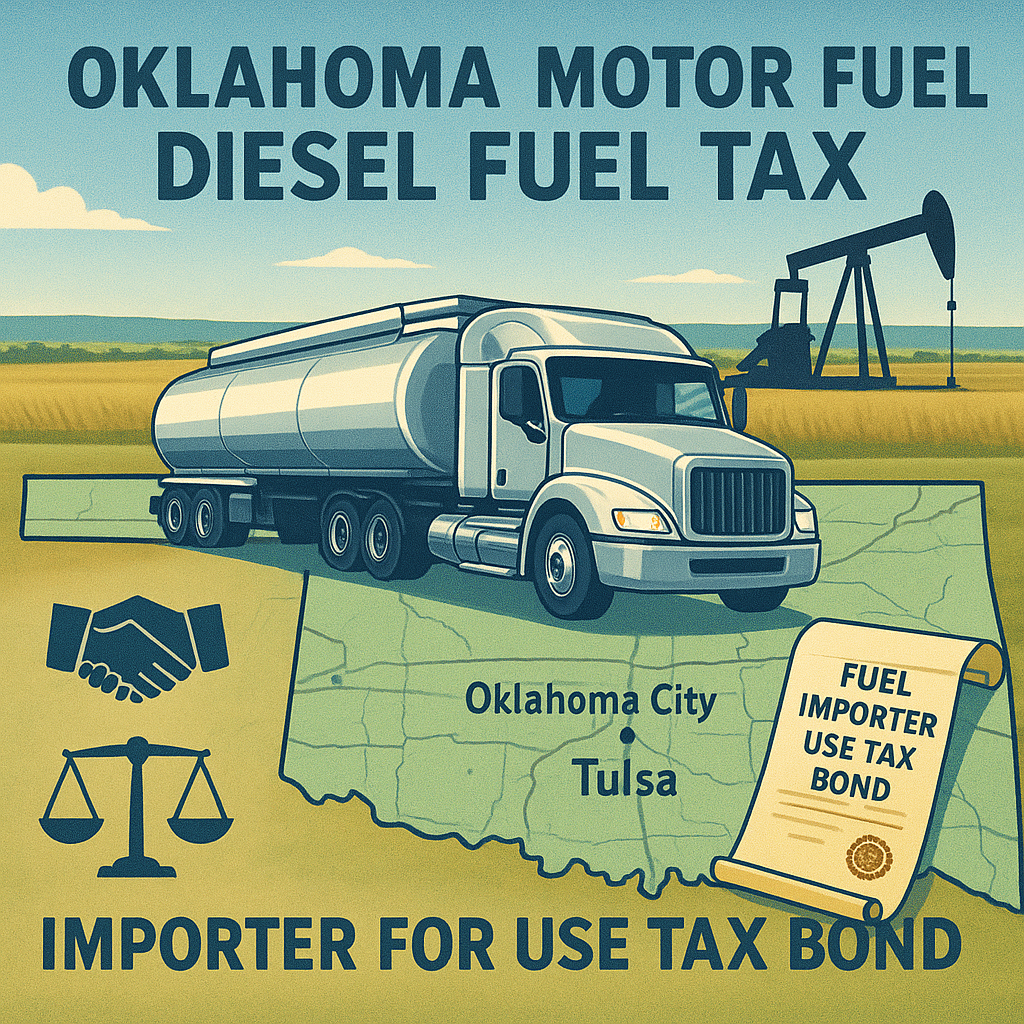
Let’s face it—taxes and bonds aren’t exactly the kind of stuff you’d curl up with on a rainy day. But if you’re bringing diesel fuel into Oklahoma, there’s one piece of paperwork that can make or break your operations: the Oklahoma Motor Fuel/Diesel Fuel Importer for Use Tax Bond. The name might sound like a mouthful, but don’t worry. By the time you finish reading, you’ll not only understand what it is, you’ll feel like you could explain it to a buddy over coffee.
The license is not the bottleneck your bond is
Most contractors focus on passing the trade exam, but the real delay is the surety bond underwriting. The state requires the bond, but the surety company requires a deep review of your personal credit, business financials, and project history. A low credit score or thin business file can trigger requests for additional collateral or personal indemnity, stalling the entire license application. What usually slows this down is applicants submitting incomplete financial statements or underestimating how their personal credit impacts the premium.
- Order your bond before your exam to lock in your rate and avoid last-minute underwriting surprises.
- Prepare two years of business and personal tax returns upfront—missing documents are the most common cause for delay.
- A credit score below 650 will likely require a financial statement and may increase your bond premium by 25-50%.
So, What Exactly Is This Bond?
Think of a surety bond as a promise with a safety net. You, the diesel fuel importer, promise to pay the required use taxes to the State of Oklahoma. The bond is there to catch you—well, actually to catch the state—if you don’t keep that promise. It’s not insurance for you. It’s a three-party agreement that protects the Oklahoma Tax Commission (OTC). If you fail to pay your taxes on time, the state can claim against your bond to recover the money.
Here’s a simple breakdown: you buy a bond from a surety company. If you mess up and don’t pay your taxes, the surety pays the state up to a certain amount. Then, guess what? The surety will come knocking on your door to get repaid. So, essentially, you’re still on the hook. The bond just gives the state instant access to funds without having to chase you down first.
Who Needs an Oklahoma Diesel Fuel Importer Bond?
If you’re importing diesel fuel (or any motor fuel) into Oklahoma for use, consumption, or sale, and you’re required to remit use tax to the state, you’ll likely need this bond. “Importer” here means you bring fuel from another state or country into Oklahoma. It doesn’t just apply to giant tanker ships; even if you haul fuel across the state line in a truck, you could fall under this requirement.
Common examples include:
- Trucking companies that buy diesel out of state and use it in their own vehicles within Oklahoma.
- Fuel distributors who bring in diesel to sell to gas stations or farms.
- Construction companies that transport their own fuel supply across state borders.
- Bulk purchasers who import diesel for industrial or agricultural use.
If any of those sound like you, it’s time to check with the Oklahoma Tax Commission to see if a bond is a must-have for your business license.
Why Does the State Require This Bond?
Oklahoma, like every other state, relies heavily on motor fuel taxes to maintain roads, bridges, and highways. When diesel fuel is imported and used on Oklahoma roads, the state wants its fair share of use tax. The bond ensures that importers can’t just roll into town, sell or use the fuel tax-free, and dash off into the sunset without paying what they owe. It’s a financial leash that keeps everybody honest.
Basically, the state is saying, “We trust you, but we’ll verify—and we’ll back that up with a bond.” It levels the playing field for local suppliers who already pay taxes upfront.
How Much Bond Coverage Do You Need?
Here’s where things get a bit personal. The bond amount isn’t a one-size-fits-all number. The Oklahoma Tax Commission typically determines the required coverage based on your estimated tax liability. For many new importers, the bond might start around $25,000, but it can go much higher depending on the volume of fuel you move. Think of it like an umbrella: the state wants coverage big enough to shelter its potential tax revenue in case you leave them in the rain.
When you apply for your importer’s license, the OTC will review your projected fuel imports and tell you the exact bond amount you need to post. As your business grows, you may need to adjust that bond upward. It’s a good problem to have—it usually means your company is doing well!
How Much Does the Bond Cost?
You don’t pay the full bond amount upfront. Instead, you pay a premium, which is a small percentage of that total. For example, if the OTC requires a $50,000 bond, your premium might be anywhere from $500 to $2,500 per year, depending on your credit score, business financials, and experience. Yes, the surety company will check your personal and business credit. The better your credit, the lower your rate.
Some sureties offer tiered pricing. If your credit is stellar, you might pay just 1% of the bond amount. If it’s a little bruised, you might see rates closer to 5% or even higher. In some cases, you can secure a bond even with bad credit, but expect to pay more or to provide collateral.
What Happens If You Don’t Get the Bond?
No bond, no license. It’s that simple. Operating without the required bond is a direct violation of Oklahoma’s motor fuel tax laws. You could face hefty fines, penalties, and interest on unpaid taxes. The state might suspend your business operations, and you could even end up with a revoked license, making it nearly impossible to continue importing fuel legally. Plus, word travels fast—a reputation for dodging bonds doesn’t exactly open doors with suppliers or partners.
Imagine showing up to a job site without your hard hat. You’d get sent home immediately. The bond is your hard hat for the financial side of your fuel business.
Step by Step: How to Get Your Bond
Getting bonded sounds scarier than it is. Follow these steps, and you’ll be through it in no time.
- 1. Know your numbers. Figure out your expected diesel import volume and gather any letters or determination documents from the OTC that state your required bond amount.
- 2. Find a reputable surety bond agency. Look for one that specializes in fuel tax bonds or understands Oklahoma’s requirements. You can often get quotes online within minutes.
- 3. Complete the application. You’ll provide business details, ownership structure, and maybe some financial statements. The surety wants to know you’re financially stable.
- 4. Undergo a credit check. The surety pulls your credit to assess risk. Don’t worry—this is normal.
- 5. Pay the premium. Once approved, you pay the premium, and the bond gets issued.
- 6. File the bond with the Oklahoma Tax Commission. You (or your agent) will send the original bond form to the OTC. They’ll keep it on file and finalize your license.
Make sure you never let your bond lapse. Set a reminder to renew it annually. Letting it expire is like letting your driver’s license expire—you’re not legally covered, and the state will notice.
Common Pitfalls (And How to Sidestep Them)
Many importers stumble into the same traps. Let’s make sure you aren’t one of them.
- Guessing the bond amount. Always get the exact figure from the OTC. An insufficient bond won’t cut it, and you’ll have to start over.
- Ignoring renewal notices. A lapsed bond can trigger immediate license suspension. You don’t want your trucks sitting idle over a forgotten premium.
- Assuming your existing bond covers everything. If you expand into new fuel types or increase your import volume, check if you need a higher bond.
- Not shopping around. Premiums can vary between surety companies. A little comparison can save you hundreds of dollars every year.
Does This Bond Protect You?
It’s a tough reality, but no, this bond doesn’t protect you. It protects the state and the people of Oklahoma. If a claim is made against your bond, you have to repay the surety in full—plus any legal fees they rack up. So while the bond is there to guarantee your tax payments, the ultimate responsibility still rests squarely on your shoulders. The best defense is simple: pay your use taxes on time, every time. Treat the bond as a backup plan that you hope never to use.
Why This Bond Might Be Your Best Business Friend
Okay, “friend” might be a stretch, but stick with me. Having an active diesel fuel importer bond signals to the state, your customers, and your competitors that you’re a credible, law-abiding business. It says you’re financially sound enough to qualify for bonding and that you take your tax obligations seriously. In an industry where trust is everything, that badge of honor can open doors and build lasting relationships.
Plus, when you’re bonded, you don’t have to lose sleep wondering if an audit is going to find something missing. You’re pre-vetted and primed for smooth sailing.
Final Thoughts: Don’t Let the Bond Trip You Up
Oklahoma’s diesel fuel importer use tax bond might seem like just another bureaucratic hurdle, but it’s really a straightforward way to keep your business compliant and running smoothly. By understanding what it is, who needs it, and how to get it, you’ve already done the hard part. Now it’s just a matter of acting on that knowledge.
Are you ready to take that next step? Reach out to a trusted surety bond professional, get your quote, and check this off your to-do list. The open road—and all those diesel miles—awaits.