Your personal credit score is the primary driver of your bond cost
Most freight broker applicants focus on the ,000 bond amount, but the part most applicants underestimate is how heavily their personal credit score impacts the premium. In practice, this often comes down to the underwriter's review of your FICO score. A score above 700 can secure a rate as low as 1-3% of the bond amount. A score below 650 can push rates to 10-15% or require a co-signer. What usually slows this down is applicants not knowing their exact score before applying, which leads to unexpected quotes and delays.
- Know your exact FICO score before you apply for an accurate quote
- Rates are tiered: Excellent credit (700+) pays 1-3%, while lower scores pay 10-15% or more
- If your score is below 650, prepare financials or consider a co-signer to improve approval odds
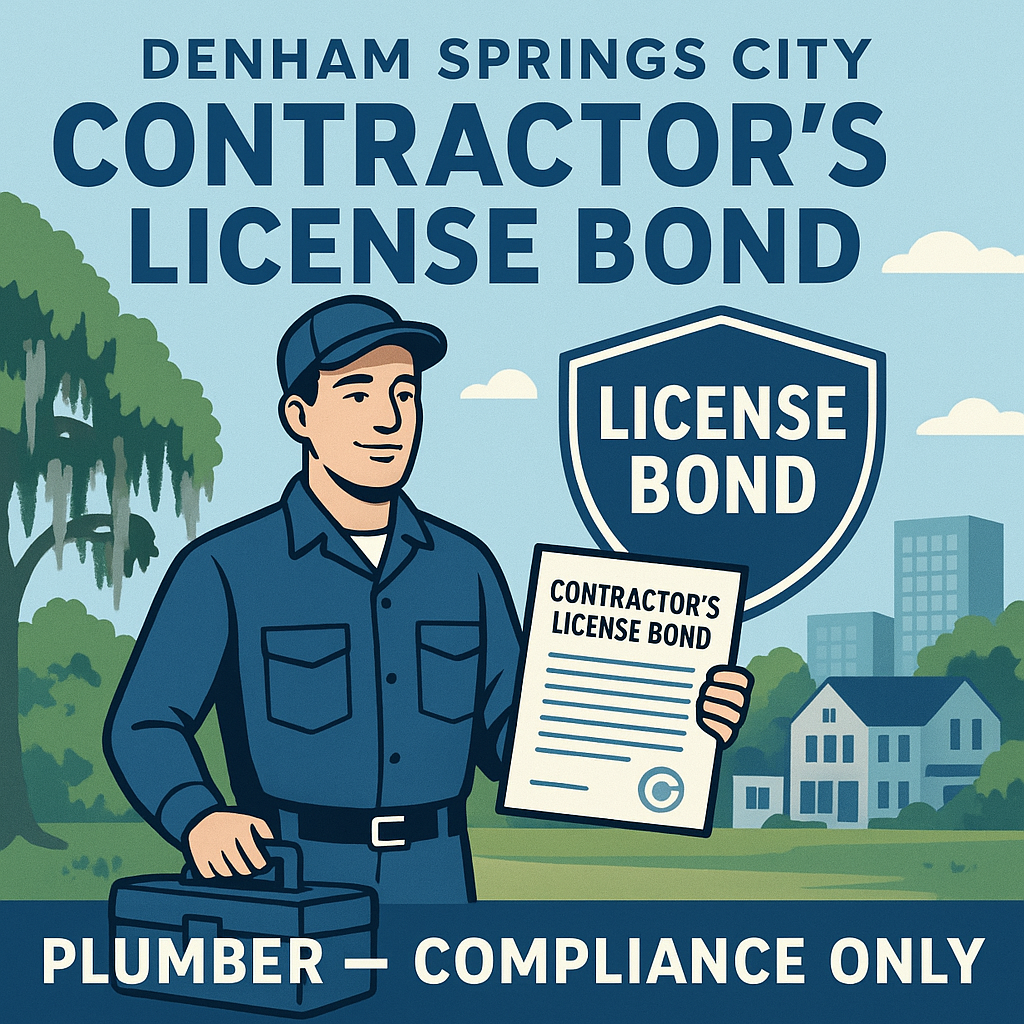
Why Plumbers in Denham Springs Need a License Bond
If you’re a plumber looking to work in Denham Springs, Louisiana, you’ve probably heard about the contractor’s license bond. Maybe you’ve seen it listed under “compliance only” and wondered what that really means. Let’s clear up the confusion.
The City of Denham Springs requires certain tradespeople, including plumbers, to post a surety bond before they can pull a permit or officially do business within the city limits. This isn’t a random hoop to jump through. Think of it as a promise, backed by money, that you’ll follow the local building codes, safety rules, and regulations. It’s the city’s way of making sure everyone plays fair and protects homeowners.
The phrase “Compliance Only” simply means this bond is focused on one thing: making sure you stick to the rules. It’s not about protecting you if a customer doesn’t pay. It’s not about covering mistakes on the job. It exists solely to guarantee that you’ll perform your plumbing work according to Denham Springs’ ordinances. Break those rules, and a claim could be made against your bond.
What Exactly Is a Contractor’s License Bond?
A license bond is a three-party agreement, but don’t let that legal-sounding phrase scare you. Let’s break it down with a simple example. Imagine you’re renting an apartment. Your landlord asks for a security deposit. If you damage the unit or break the lease, the landlord keeps some of that deposit to fix things. The city is like the landlord, you’re the tenant, and the bond is that security deposit.
In bond language, the three parties are:
- The Obligee: The City of Denham Springs. They require the bond and are protected by it.
- The Principal: You, the plumber. You purchase the bond and promise to obey the rules.
- The Surety: The bond company that backs your promise financially.
If you violate the city’s plumbing code—say, you install a water heater without the proper permits or in a way that creates a safety hazard—an affected person or the city itself can file a claim. The surety will investigate. If the claim is valid, the surety pays out damages up to the bond amount. But here’s the key: the surety will then come to you for every penny they paid out. This isn’t insurance that absorbs the loss. It’s a credit line you’re ultimately responsible for.
How Does This Bond Protect the Public—And You?
You might be thinking, “This just sounds like another expense.” But the bond actually builds trust. It tells potential clients that you’re a legitimate business owner who has been vetted and is held to a higher standard. It separates you from unlicensed handymen who might cut corners.
For homeowners, the bond is a safety net. Let’s say a plumber incorrectly installs gas piping, causing a dangerous leak. The city could tap the bond to help cover the cost of making the situation right, even if the plumber has disappeared or refuses to fix the mistake. That protection is exactly why the “Compliance Only” label matters—it keeps the focus squarely on public safety and code compliance, not on contract disputes or workmanship warranties.
How Much Does a Denham Springs Plumber’s Bond Cost?
Many plumbers assume they’ll have to pay the full bond amount out of pocket. Good news—you won’t. The bond amount is the maximum the surety would pay for a claim, not what you pay for the bond.
What you actually spend is a small percentage of that total, called the bond premium. For a compliance bond, you might pay anywhere from 1% to 5% annually, depending on a few factors:
- Your credit score: A strong credit history often leads to the lowest rates.
- Your business finances: The surety wants to see that you’re financially stable.
- Your experience: A track record of clean work can sometimes help.
So, if the city requires a $10,000 bond, your annual premium might be just $100 to $500. That’s a manageable cost to legally operate and show your customers you mean business. Always check the most current requirement with the City of Denham Springs, as bond amounts can change.
Step-by-Step: Getting Your Bond Quickly
The process is often simpler than you think, and you can usually do everything without leaving your office.
- Confirm Your Requirement: Check directly with Denham Springs City Hall or their permitting office. They’ll tell you the exact bond amount you need for your plumber’s license. Don’t guess—getting the wrong amount could delay your permit.
- Find a Reputable Bond Agency: Look for a surety company or an online bond provider that specializes in contractor license bonds in Louisiana. They’ll understand the local nuances and can get you the right bond fast.
- Apply for a Quote: You’ll fill out a short application with basic details about you and your business. No mountains of paperwork for most small bonds.
- Pay the Premium: Once approved, you’ll pay the annual premium. Many agencies let you pay online and download the bond instantly.
- File the Bond with the City: You’ll receive a completed bond form. Sign it, then submit the original to the City of Denham Springs. Keep a copy for your records. Once that’s on file, you’re legally ready to work.
Keeping Your Bond in Good Standing
Your bond is not a one-time box to check. It typically needs to be renewed each year along with your contractor’s license. Treat it like any other critical business expense. If you let your bond expire, the city may suspend your ability to pull permits, which can grind your projects to a halt and hurt your reputation.
More importantly, avoid claims by following all local plumbing codes, getting the right permits, and communicating clearly with clients. Remember, even if the surety steps in to pay a valid claim, you’re legally obligated to repay that money. A single claim can increase your future bond costs or make it tough to get bonded at all.
Frequently Asked Questions from Plumbers
Is this bond the same as general liability insurance?
Not at all. They’re completely different. General liability insurance protects you if your work accidentally causes property damage or bodily injury. Your insurance company covers those costs (up to your policy limits) without asking for repayment. A license bond protects the city and the public by guaranteeing you’ll follow codes. If the surety pays a claim, they will demand reimbursement from you. You need both—they serve separate purposes.
What happens if a homeowner claims my plumbing work violated code?
The surety company will investigate. They’ll look at evidence, often involving a city building inspector’s report. If a code violation is confirmed, the surety may pay to correct the hazard up to the bond limit. Then, they’ll turn to you for reimbursement. This is why it’s essential to fix legitimate issues long before they become bond claims.
Can I get a bond with poor credit?
Yes, often you can. While excellent credit gives you the lowest rate, many sureties have programs for plumbers with less-than-perfect credit. Your premium might be higher, but being bonded is still possible. Ask your bond agent about options specifically designed for credit challenges.
Does the bond cover me if a customer refuses to pay?
No. Remember, this is a “Compliance Only” bond. It has nothing to do with payment disputes or contract arguments. Its sole purpose is to guarantee you’ll follow Denham Springs’ plumbing and construction codes. For payment protection, you’d need to use mechanic’s liens or other legal remedies.
A Bond That Builds Confidence
Getting your Denham Springs contractor’s license bond might feel like just another administrative task, but it’s really a badge of credibility. It tells the city and your customers that you take your craft seriously and are willing to back up your promise to follow the rules with a real financial guarantee. The process is quick, the cost is modest for what it represents, and the result is a plumbing business that stands on solid legal ground. Whether you’re a one-person operation or run a larger crew, securing this compliance bond is your first step toward turning a wrench in Denham Springs with total peace of mind.