Contractor license bonds in Jennings, LA, are compliance guarantees that protect the public and the city by ensuring contractors follow building codes and regulations, while providing homeowners a financial recourse if rules are violated.
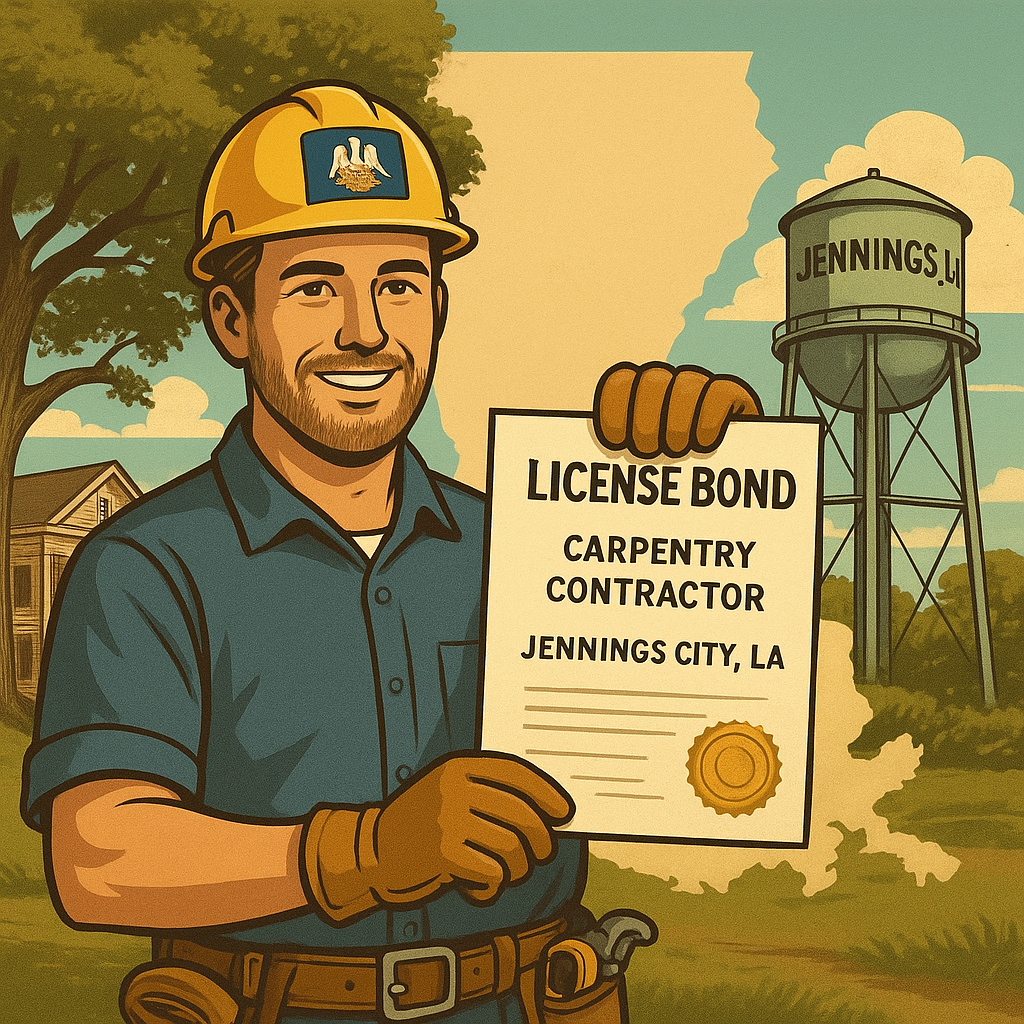
Let’s face it—contractor paperwork can feel like a maze. If you’re a carpenter or any kind of contractor in Jennings, Louisiana, you’ve probably heard the term “license bond” thrown around. It might sound like just another fee, but understanding it can save you from major headaches down the road. This post will walk you through what a contractor’s license bond really means, why the City of Jennings requires one, and how it protects both you and your customers. No complicated jargon—just a friendly, straightforward guide.
Assuming your bond cost is just a simple percentage
The most costly mistake is thinking your Oregon contractor license bond premium is a fixed rate like 1% or 2% of the bond amount. In practice, your final cost is determined by an underwriter reviewing your personal credit score, financial statements, and business history. Applicants with lower credit often pay 3-5% or more. What slows this down is not having your financials ready. The part most applicants underestimate is how much a strong credit profile can reduce your annual premium.
- Your personal credit score is the primary factor in your final rate.
- Have 2 years of business and personal financial statements prepared for review.
- A higher bond amount doesn't mean a proportionally higher cost; underwriting is key.
What Exactly Is a Contractor’s License Bond?
Think of a contractor’s license bond as a three-way promise. There’s you, the contractor (the principal). There’s the city or state agency that requires the bond (the obligee). And there’s the insurance company that backs the bond (the surety). The bond says, “This contractor will follow the rules, or we’ll cover valid claims up to a certain amount.” It’s not insurance for you—it’s a financial safety net for the public and the city.
In Jennings, Louisiana, the bond is labeled “Compliance Only” for many trades, including carpentry contractors. That means the bond’s purpose is purely to guarantee you’ll comply with local building codes, permit requirements, and other municipal regulations. If you fall short, someone can file a claim against your bond, and the surety will pay out, but then you’ll have to repay the surety. It’s like a stress test for your professionalism.
“Compliance Only” – What Does That Mean?
Great question. Some bonds also cover financial obligations like unpaid subcontractors or material suppliers. A compliance-only bond, on the other hand, is laser-focused on rule-following. Did you pull the right permit? Is your work up to code? That’s what this bond cares about. It tells the City of Jennings, “I’m committed to doing things the right way.”
Why Does Jennings, LA Require a Contractor’s License Bond?
Cities love bonds for the same reason you lock your front door at night—protection. Jennings is no different. By requiring a bond, the city adds a layer of accountability that goes beyond a simple piece of paper. If a contractor cuts corners on a porch build or ignores the local electrical code, the bond steps in to help make things right without draining public resources.
For homeowners, this requirement is a breath of fresh air. Imagine hiring a carpentry contractor for a custom deck. You’ve saved up for months, and then the work starts. Without a bond, you might have few options if the contractor walks off the job or builds something unsafe. With a bond in place, there’s a clear path to seek compensation—up to the bond limit—if the contractor violates local laws.
A Real-World Analogy: The Security Deposit on an Apartment
You know how a landlord holds a security deposit in case you damage the rental? A license bond works in a similar way, but for the entire community. The city holds the bond as a form of guarantee. If you break the rules, the bond covers the damages, and later, you pay back the surety. It’s a powerful incentive to operate ethically and competently.
Who Needs This Bond? Specifically, Carpentry Contractors
If you’re a carpentry contractor in Jennings, Louisiana, this bond is likely a mandatory part of getting your license or permit. Even if you’re a sole proprietor with years of flawless work, the city still wants that bond on file. It’s not about distrust; it’s about standardizing protections. Many trades—from electricians to plumbers to general builders—must carry similar bonds, so you’re in good company.
Are you a new carpenter just starting out? You’ll need to secure this bond before pulling your first permit. Already established? Double-check your license renewal requirements because bonds often need to stay active as long as your license does. Letting it lapse can mean fines, suspended privileges, or even losing your license altogether.
How Does a Contractor’s License Bond Actually Work?
Let’s break the process down step by step. First, you purchase the bond from a surety agency. The bond amount—set by the City of Jennings—might be something like $5,000 or $10,000, depending on the trade and risk level. You pay a small percentage of that amount as your premium, often 1% to 3% if your credit is strong.
Once you have the bond, you file it with the city. Now you’re bonded and good to go. If a client or the city itself has a valid complaint—say, you built a staircase without the required railing height and it violates code—they can file a claim. The surety investigates. If the claim is legitimate, the surety pays up to the bond’s full value. But here’s the key: the surety isn’t absorbing that loss. They’ll come back to you for reimbursement. So a bond claim can hit your wallet hard, not to mention your reputation.
What Triggers a Claim on a Compliance-Only Bond?
Since this bond focuses strictly on compliance, claims usually stem from:
- Failing to obtain proper permits before starting work.
- Repeated code violations that you refuse to fix.
- Ignoring a stop-work order from the city’s building department.
- Abandoning a project after the city has required corrections.
Notice what’s not covered: disputes about the quality of your craftsmanship (unless it directly violates code), arguments over payment, or dissatisfaction with paint color. Those are civil matters outside the scope of a compliance bond.
What Does a License Bond Cost in Jennings, LA?
You’ll be happy to know that the premium is usually quite affordable. For a bond amount of $5,000, you might pay as little as $100 to $150 per year if your credit history is solid. Even if your credit isn’t perfect, many surety companies offer programs for those with lower scores, though the rate will be higher. It’s not like buying health insurance where the cost can feel overwhelming. This is more like paying a modest subscription for your business’s integrity.
Think of it as the cost of doing business the right way. That small yearly payment unlocks your ability to work legally in Jennings, win more customers who trust bonded contractors, and sleep better at night.
How to Get Your Contractor’s License Bond in Jennings
Getting bonded is a straightforward process. Here’s what you typically need to do:
- Find a reputable surety bond agency. Many agencies specialize in contractor bonds and work in Louisiana. You can go through an insurance broker or directly online.
- Provide basic information. Expect to share your business name, personal details, and often your Social Security number for a credit check. The bond amount will be specified by the city, so have that handy.
- Get a quote. With good credit, quotes often come back in minutes. You’ll see the annual premium and any fees.
- Pay and receive your bond form. Once you pay, the surety issues the bond document. You’ll then file this document with the City of Jennings as part of your license application or renewal.
Some contractors worry that a bond means a long, painful approval process. In reality, most are issued the same day. The hardest part is sometimes just remembering to do it!
Common Misconceptions About Contractor Bonds
Let’s clear the air on a few points that often cause confusion:
- “A bond is the same as insurance.” Nope. Insurance protects your business from accidents, theft, or liability. A bond protects the public and the city from your non-compliance. You don’t file a claim on your own bond—you’re the one who could have a claim filed against you.
- “Only dishonest contractors need bonds.” Absolutely false. Totally honest, highly skilled carpenters are required by law to have one. It’s a standard license requirement, not a sign of distrust.
- “Once I get the bond, I’m covered no matter what.” The bond only covers up to the specified limit. If damages exceed that amount, you’re still on the hook. And the bond only covers compliance issues, not poor workmanship claims.
What Happens If You Don’t Get Bonded?
Skipping the bond requirement might seem tempting if you’re trying to save a few dollars, but the risks are huge. Without the required bond, you cannot legally obtain or renew your contractor’s license in Jennings. Operating without a license can lead to fines, stop-work orders, and even being barred from future projects. It also sends a red flag to potential customers. Many savvy homeowners specifically ask, “Are you bonded and insured?” If your answer is no, they’ll probably hire someone else.
Think of the bond as a trust badge. It shows the city and your clients that you’re serious about your trade and willing to stand behind your obligation to follow the rules.
Questions to Ask Before You Buy a Bond
Ready to take the next step? Here are a few questions to guide your conversation with a bond agent:
- What is the exact bond amount required by the City of Jennings for my trade?
- How much will my premium be based on my credit?
- Does the bond need to be renewed annually, or is it continuous until canceled?
- Are there any special filing instructions for the city?
- What happens if I need to increase the bond amount later?
Getting clear answers upfront avoids last-minute scrambles and keeps your business humming along.
The Bigger Picture: Protecting Your Reputation and Your Community
At its core, a contractor’s license bond is about trust. It’s a small, silent promise that you won’t leave your clients or your city hanging. In Jennings, Louisiana, carpentry contractors who take the time to get bonded are not only following the law; they’re building a foundation of reliability. Homeowners can rest easier, knowing there’s a system in place if something goes wrong. And you get the peace of mind that comes from doing things right from day one.
So, whether you’re constructing kitchen cabinets or framing a brand-new home, that bond is more than a piece of paper. It’s a statement that says, “I belong to a community of professionals who care.” The next time you glance at your license bond, remember it’s not a burden—it’s your backstage pass to operating a respected, successful contracting business in Jennings.
If you have specific questions about the City of Jennings requirements or need to start the bonding process, reach out to a local surety professional. They can walk you through the details so you can focus on what you do best—creating, building, and making your clients smile.