Electrical contractor license bonds in Pineville, Louisiana, are three-way agreements that protect the city and customers from financial loss if an electrician fails to follow local codes or complete work properly. These bonds are mandatory for permit approval and act as a financial safety net, though contractors must reimburse the surety company for any claims paid.
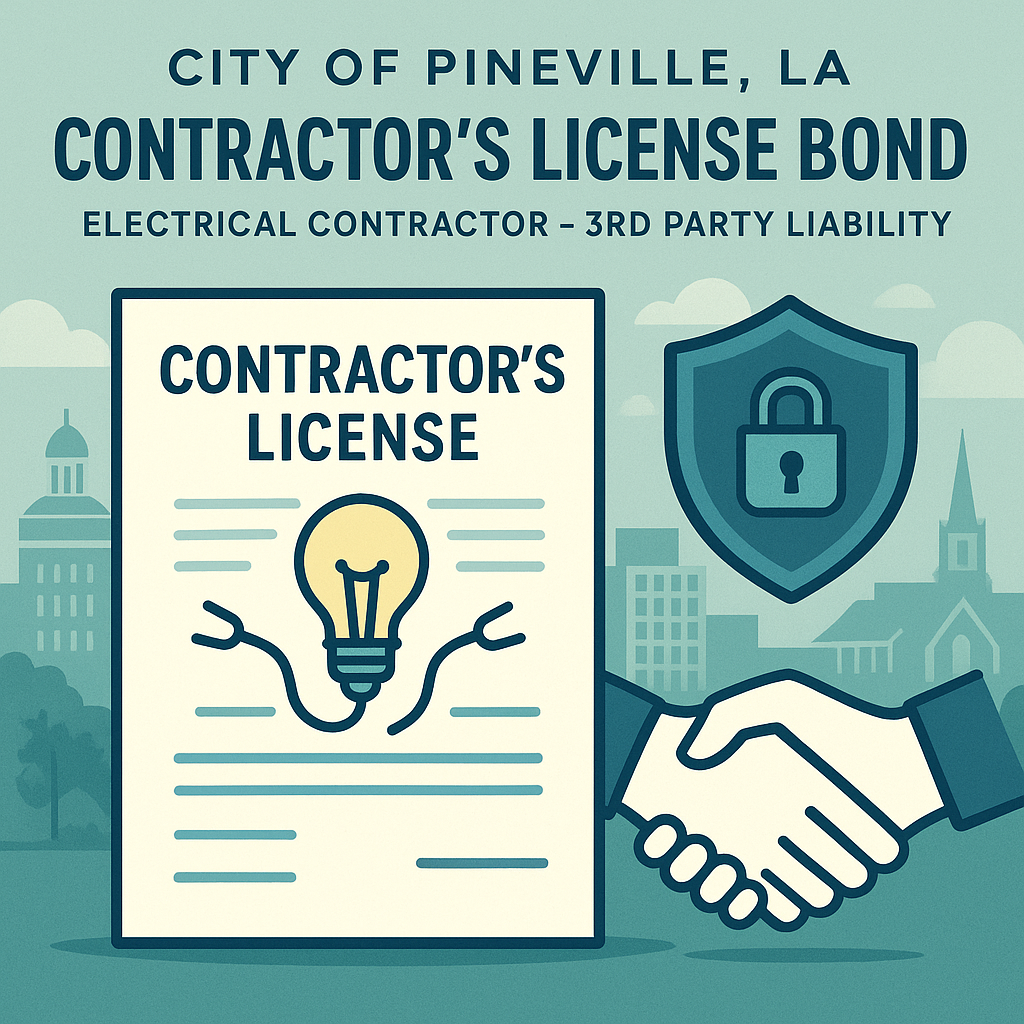
If you’re an electrician in central Louisiana, you already know that every job comes with its own set of rules. In Pineville, right across the Red River from Alexandria, there’s one requirement that often raises eyebrows: the electrical contractor license bond. Maybe you’ve heard it called a “third-party liability bond” or just “the bond the city wants.” Whatever the name, it’s a must-have before you can pull a permit and get to work. So let’s break down exactly what this bond is, why the City of Pineville asks for it, and how you can get yours without the headache.
Your personal credit score is the primary driver of your bond cost
Most freight broker applicants focus on the ,000 bond amount, but the part most applicants underestimate is how heavily their personal credit score impacts the premium. In practice, this often comes down to the underwriter's review of your FICO score. A score above 700 can secure a rate as low as 1-3% of the bond amount. A score below 650 can push rates to 10-15% or require a co-signer. What usually slows this down is applicants not knowing their exact score before applying, which leads to unexpected quotes and delays.
- Know your exact FICO score before you apply for an accurate quote
- Rates are tiered: Excellent credit (700+) pays 1-3%, while lower scores pay 10-15% or more
- If your score is below 650, prepare financials or consider a co-signer to improve approval odds
What Is an Electrical Contractor License Bond?
Think of a contractor license bond as a three-way promise. It involves you (the electrician), the City of Pineville (the obligee), and a surety company (the financial backer). The bond guarantees that you’ll follow the local electrical codes, complete your work honestly, and stand behind it. If something goes sideways — maybe a wiring job doesn’t meet code, or a project gets abandoned halfway through — the bond steps in to protect the client and the public.
It’s not insurance for you, though. That’s an important distinction. Your general liability policy covers tools, accidents, and property damage on the job site. This bond specifically protects the city and your customers from financial loss caused by your failure to follow the rules. If a claim is paid out, you’re responsible for reimbursing the surety company every penny. So it’s more like a very strong co-signer that trusts you to do the right thing.
Why Does Pineville, Louisiana Require This Bond?
Pineville takes its building codes seriously, and for good reason. The city wants to make sure that any electrical work inside its limits meets the National Electrical Code and any local amendments. A license bond provides a layer of accountability. It tells the city, “This contractor has some skin in the game.” If a job goes wrong, the harmed party can seek compensation without having to chase down a fly-by-night operator.
There’s also a “third-party liability” angle here. That phrase pops up in the paperwork because the bond extends beyond just the city’s interests. A homeowner who suffers property damage due to faulty wiring, or a business that loses inventory because of an electrical fire traced back to shoddy work, can potentially file a claim against the bond. In other words, the bond acts like a financial safety net for anyone who relies on your professional promise.
How Does a Contractor License Bond Work?
Let’s walk through a simple example. Imagine you install a new service panel in a Pineville home. Three months later, the panel malfunctions and starts a small fire. The fire inspector determines the installation didn’t meet local codes. The homeowner now faces a $5,000 repair bill. Because you’re bonded, the homeowner can file a claim with the surety company. The surety investigates, and if the claim is valid, they pay the homeowner up to the bond amount — say, $10,000. Then they turn to you for reimbursement.
This process keeps everyone honest. The homeowner gets paid without a drawn-out legal battle. The city’s reputation for quality construction stays intact. And you, the contractor, have a powerful incentive to nail every installation the first time. No one wants that awkward phone call from a claims adjuster.
Who Needs This Bond in Pineville?
Not every handyman rolling through Rapides Parish needs one. This bond is specifically tied to electrical contractors who are required to hold a license through the City of Pineville. If you’re pulling an electrical permit for new construction, a major remodel, or a service upgrade, you’ll almost certainly be asked to show proof of your bond. The city’s building department uses it as a prerequisite, just like your driver’s license or your state electrical license.
Even if you’ve been in the trade for decades, the bond requirement doesn’t disappear with experience. It’s an ongoing obligation that typically needs to be renewed every year. The city wants to know that you’re still in good standing and that your financial backing hasn’t lapsed.
How Much Does a Pineville Electrical Contractor Bond Cost?
Now for the part that makes everyone’s ears perk up — the price tag. The good news is you don’t have to pay the full bond amount upfront. Most Pineville electrical bonds are set at a specific dollar figure, often somewhere between $5,000 and $15,000, depending on the city’s current ordinance. But you only pay a small percentage of that total as an annual premium.
Several factors influence your premium:
- Your credit score: Surety companies see good credit as a sign of financial responsibility. The higher your score, the lower your rate.
- Your business financials: Established contractors with a track record often get better pricing.
- The bond amount: A $10,000 bond naturally costs more than a $5,000 one, but the difference in premiums is usually modest.
For a well-qualified electrician, premiums can start as low as 1% to 3% of the bond amount. That means a $10,000 bond might cost just $100 to $300 per year. It’s a small investment when you weigh it against the doors it opens.
How to Get Your Electrical Contractor Bond
Securing the bond doesn’t have to feel like pulling wire through an old, crowded conduit. Here’s a straightforward path:
1. Confirm the exact bond requirements with the City of Pineville. Reach out to the building department or visit their website. Ask for the required bond amount and any specific forms they need. Rules can shift, so a quick phone call can save you days of back-and-forth.
2. Gather your business and personal information. You’ll typically need your business name, address, license number, and your Social Security number or EIN for a credit check. Freelancers and LLCs alike can apply.
3. Apply with a surety bond agency. Many agencies handle bonds online. You’ll fill out a short application, and they’ll run a soft credit pull (don’t worry, this usually doesn’t hurt your score). Within minutes, you can get a quote.
4. Pay the premium and receive your bond form. Once approved, the surety sends you the official bond document. Sign it as the principal and file it with the city. Keep a copy for your records — you’ll need it at permit time.
5. Mark your calendar for renewal. Most bonds last one year. Let it lapse, and the city could suspend your ability to pull permits. Set a reminder a month before expiration to avoid any gap in coverage.
Real-Life Scenarios Where the Bond Saves the Day
Let’s paint a picture. A brand-new coffee shop in town hires you to wire their entire espresso bar. You do the work, but six weeks later, the health inspector notices the wiring isn’t grounded properly. The city red-tags the shop until it’s fixed. The owner has to shut down for three days, losing thousands in revenue. Because you’re bonded, the owner can recover those losses from the bond without taking you to court. It’s a stressful situation, but the bond keeps it from turning into a full-blown disaster for everyone.
Or consider a simpler case: you accidentally damage a client’s antique light fixture while troubleshooting a switch. Your general liability insurance might cover the replacement, but if there’s a dispute over whether the work was done to code, the bond guarantees the city and client have a path to resolution.
Common Misconceptions About Contractor Bonds
Let’s clear the air. A bond is not a license; it’s a companion to your license. Even if you have a state electrical license through the Louisiana State Licensing Board for Contractors, Pineville can still demand a separate municipal bond. Another myth: “My bond protects me if a customer doesn’t pay.” Nope. The bond protects the public and the city from you, not the other way around. To recover unpaid invoices, you’d need a mechanic’s lien or a collections process.
Also, don’t confuse this with a contractor insurance policy. The bond doesn’t cover your tools, your work vehicle, or your employees’ injuries. Those are separate coverages you’ll want to maintain for a complete protection plan.
Why Taking the Bond Seriously Matters
The City of Pineville isn’t trying to make your life difficult. They’re protecting the community — and, in a roundabout way, your professional reputation. When you’re bonded, potential clients see a badge of responsibility. It tells them, “This electrician is accountable, backed, and ready to do the job right.” That peace of mind can be the difference between getting the gig and losing it to a competitor.
Think of the bond as a trust amplifier. You already know your work is solid. The bond just gives the paperwork to prove it.
Frequently Asked Questions
Can I use a statewide bond instead of a Pineville-specific one?
Usually, no. Municipalities like Pineville often require a bond issued directly to the city as the obligee. A generic state bond may not satisfy local ordinances. Always check with the building department first.
What happens if a claim is filed against my bond?
The surety investigates. If the claim is found to be legitimate, they pay the damaged party up to the bond limit. You then owe the surety company that same amount. It’s treated like a loan you must repay. Too many claims can make it harder (and more expensive) to get bonded in the future.
Does my personal credit really affect a business bond?
For small electrical contractors, yes. Surety companies often look at the owner’s personal credit, especially if the business is new or doesn’t have a separate financial history. Solid personal credit keeps premiums low.
How fast can I get bonded?
For a straightforward Pineville electrical bond, many agents can issue the bond the same day you apply. If you have complex financials or a very high bond amount, it might take a day or two. But in most cases, it’s a quick process.
Final Thoughts: Power Up Your Business with the Right Bond
The electrical contractor license bond may seem like just another line item on your startup checklist, but it’s a key that unlocks doors across Pineville. It tells the city you’re legit. It reassures homeowners that their biggest investment is in capable hands. And it gives you a competitive edge in a field where trust is everything.
So if you’re gearing up for your next project, don’t let the bond requirement catch you off guard. Reach out to a surety bond professional, get your paperwork in order, and walk onto that job site knowing you’re fully backed. Because in Pineville, Louisiana, a good reputation starts with a solid bond—and a spark of integrity.