The Sulphur LA tree removal bond is a surety bond required by the City of Sulphur to guarantee compliance with local tree preservation rules, covering costs for violations like unauthorized removal or failure to replant. It applies to contractors, developers, and homeowners removing protected trees or those in public rights-of-way, balancing growth with environmental stewardship.
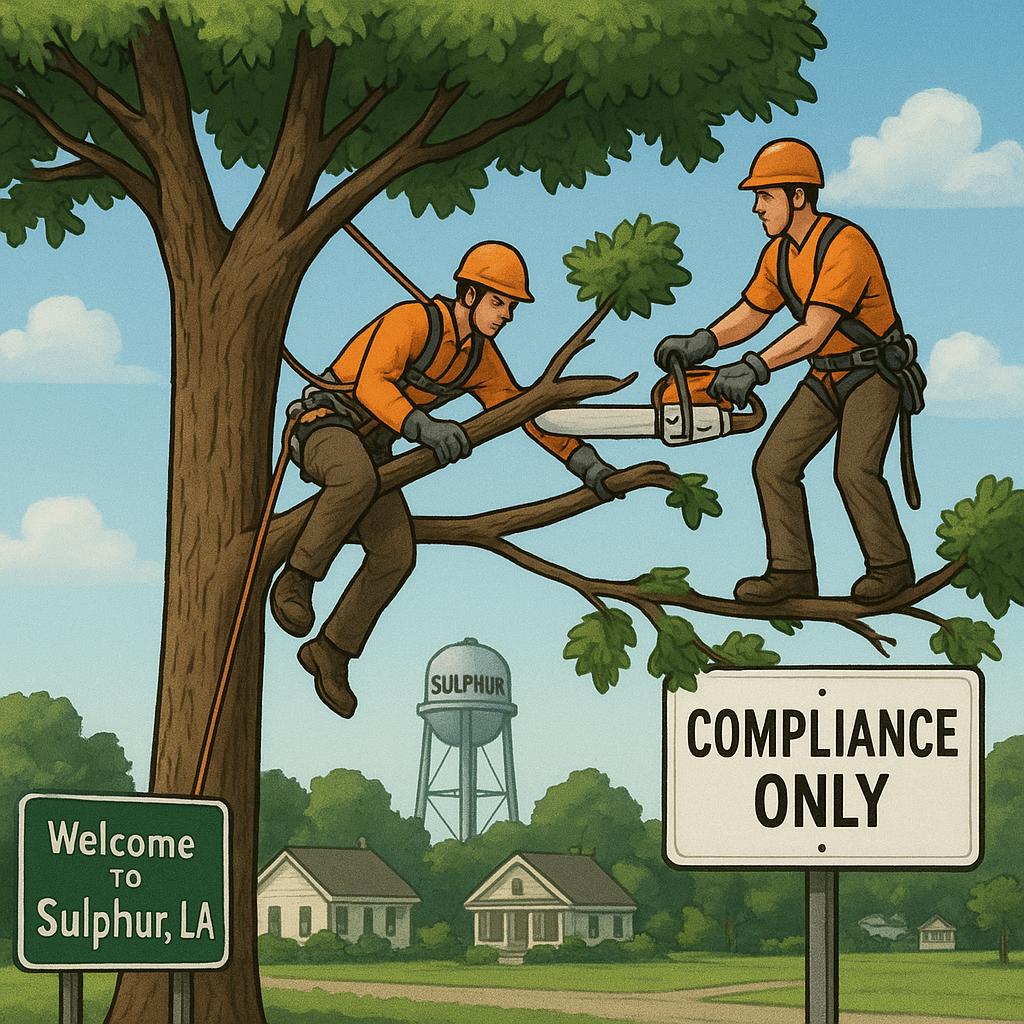
If you’re a homeowner, landscaper, or developer in Sulphur, Louisiana, you might be planning to remove a tree that’s seen better days. Maybe it’s leaning a little too close to the house, or you need the space for a new project. Before you fire up the chainsaw, there’s a local requirement that often catches people off guard: the Sulphur LA tree removal bond. It’s not just another bureaucratic hurdle—it’s a promise between you and the city that the work will be done responsibly.
Understanding this bond doesn’t have to be confusing. Think of it like a security deposit you might leave when renting equipment, but instead of protecting against damage to a tool, it protects the urban forest. The City of Sulphur takes its tree canopy seriously, and this bond is one of the tools used to ensure that removal is done in a way that keeps the community green and safe.
Your personal credit score is the primary driver of your bond cost
Most freight broker applicants focus on the ,000 bond amount, but the part most applicants underestimate is how heavily their personal credit score impacts the premium. In practice, this often comes down to the underwriter's review of your FICO score. A score above 700 can secure a rate as low as 1-3% of the bond amount. A score below 650 can push rates to 10-15% or require a co-signer. What usually slows this down is applicants not knowing their exact score before applying, which leads to unexpected quotes and delays.
- Know your exact FICO score before you apply for an accurate quote
- Rates are tiered: Excellent credit (700+) pays 1-3%, while lower scores pay 10-15% or more
- If your score is below 650, prepare financials or consider a co-signer to improve approval odds
What Exactly Is a Tree Removal Bond?
Let’s break it down in plain English. A tree removal bond is a type of surety bond. It involves three parties: the city (the one requiring the bond), you or your tree service company (the principal), and the surety company that issues the bond. This isn’t insurance for your property. Instead, it’s a financial guarantee that you’ll follow all the local tree removal rules set by the City of Sulphur.
If you cut down a protected tree without permission, fail to plant a replacement tree as required, or damage public property during the job, the city can make a claim against the bond. The surety company would pay the city up to the bond amount to cover the cost of making things right—and then the surety would come to you for reimbursement. It’s a powerful motivator to do everything by the book.
Why Does Sulphur, Louisiana Require These Bonds?
You might wonder why a city along the Calcasieu River cares so much about a few trees. The answer goes beyond aesthetics. Mature trees reduce stormwater runoff, improve air quality, provide shade that lowers energy bills, and preserve the character of neighborhoods. The City of Sulphur has a tree preservation ordinance designed to balance growth with environmental stewardship. The tree removal bond acts as the enforcement arm of that ordinance.
Without a compliance mechanism, it would be easy for someone to remove a heritage oak and never replace it. The bond ties a small financial guarantee to the permit, giving the city leverage to ensure that any required replanting actually happens—and survives. It’s a “trust but verify” approach that keeps the community looking beautiful for everyone.
Who Needs a Sulphur LA Tree Removal Bond?
Before you assume this only applies to big commercial developers, hear us out. Yes, contractors and landscaping companies who regularly work in Sulphur will often need to secure these bonds. But even an individual homeowner may be asked to provide one, depending on the tree’s location and size. The magic words are “protected tree” and “public right-of-way.”
Here are the common scenarios where a City of Sulphur tree removal bond comes into play:
- Protected tree removal: If the tree is a certain species, diameter, or designated as a landmark tree, removing it—even on private property—typically requires a permit and a bond.
- Right-of-way work: Any tree growing between the sidewalk and the street or in other city easements falls under the city’s jurisdiction. Cutting it down without a bond can lead to serious fines.
- Development and construction: Clearing a lot for a new home or commercial building almost always triggers tree protection requirements. The bond ensures you preserve the required percentage of tree cover or mitigate the loss.
When in doubt, your first stop should always be the Sulphur Planning and Zoning Department. They’ll tell you exactly which bonds, if any, apply to your project.
Key Requirements for Compliance
The phrase “compliance only” is often attached to this bond type. That means the bond’s sole purpose is to guarantee you’ll do what the permit says. No more, no less. To stay compliant and get that bond released at the end, you need to understand what the city expects.
While every situation is a little different, these are the core requirements you’ll likely encounter in Sulphur, LA:
- A valid tree removal permit: You must apply and get approval before any work begins. The permit will spell out conditions, like replanting ratios or root zone protection for remaining trees.
- Bond amount set by the city: The dollar value of the bond is usually determined by the city arborist or planning official. It’s commonly based on the appraised value of the tree being removed, or the cost to purchase and plant replacement trees.
- Bond form and filing: The surety bond must be on a form acceptable to the City of Sulphur. The original bond document is then filed with the relevant city department before the permit is issued.
- Replacement and maintenance period: If you’re required to plant new trees, you can’t just stick a sapling in the ground and walk away. The city often mandates a maintenance period—maybe one or two years—during which you must keep the replacement trees healthy. The bond stays active until that survival check clears.
- Final inspection and release: Once all work is done and any planting requirements are satisfied, a city inspector will visit the site. If everything checks out, the bond is released. You breathe a sigh of relief and that’s the end of it.
How the Bonding Process Works, Step by Step
If you’re a visual thinker, imagine the bond as a key that unlocks your permit. You can’t get one without the other. Here’s a simplified walkthrough of how you go from idea to finished project with the City of Sulphur tree removal bond in hand:
- Contact the city: Reach out to Sulphur’s planning or public works department. Describe your project and find out if a permit and bond are needed.
- Submit your permit application: Include photos, a site plan showing the tree, and the reason for removal. The city will evaluate the tree’s health, species, and location.
- Receive the bond requirement: If approved, the city tells you the bond amount and any special conditions. You’ll get a bond form or a list of required language.
- Purchase the bond: Contact a surety bond agency that writes bonds in Louisiana. You’ll provide the permit details and pay a premium. The agency issues the bond.
- File the bond with the city: Deliver the original bond to the city. They’ll then issue your final tree removal permit.
- Complete the work: Remove the tree carefully, following all safety and protection requirements. Perform any required replanting quickly.
- Pass the final inspection: After any mandated waiting period, the city inspects. If all conditions are met, the bond is canceled and liability ends.
What Does a Sulphur Tree Removal Bond Cost?
This is the part where people realize the requirement isn’t nearly as painful as they feared. You don’t have to pay the full bond amount upfront, like a cash deposit. You pay a premium—only a small percentage of the total bond value. For a typical compliance bond of $1,000 or $2,500, you might pay anywhere from $100 to $250. The exact premium depends on the bond amount and your personal credit score if the bond is required for an individual.
For tree service companies, rates are often very affordable and can sometimes be packaged with other contractor license bonds. Ask your surety provider if they offer multi-year discounts or can bundle bonds to save you money. It’s a small investment to keep your project on the right side of the law.
What If You Skip the Bond?
It can be tempting to roll the dice and hope nobody notices a freshly cut stump. But Sulphur’s code enforcement officers are active, and neighbors aren’t shy about reporting concerns. Removing a tree without the required bond and permit can lead to a cascade of headaches, including:
- Stop-work orders that delay your project indefinitely
- Fines that often cost far more than the bond premium would have been
- Legal liability for the value of the removed tree—sometimes triple damages under state or local law
- A tarnished reputation for contractors who need city permits for future jobs
Playing by the rules is always the smarter and cheaper path.
A Practical Example to Bring It All Together
Let’s say Jessica, a Sulphur resident, wants to remove a large water oak in her front yard because its roots are cracking her driveway. The tree’s trunk measures more than 24 inches in diameter, automatically making it protected under city rules. She applies for a permit, and the city arborist determines the tree is indeed causing structural damage, so removal is allowed—but only if she plants two new native trees on her property.
The city sets a compliance bond amount of $2,500, which covers the cost of purchasing and installing those two replacement trees plus a year of professional care. Jessica contacts a surety company, pays a $150 premium, and files the bond with the city. After the oak is removed, she plants a pair of red maples, waters them diligently, and calls for an inspection a year later. The trees are thriving. The bond is released. Jessica never had to tie up $2,500 of her own cash, and the city gained two healthy new trees. It’s a win for everyone.
Finding the Right Bond Provider
You don’t need to be a bonding expert to get this done. Look for a surety agency that understands local Louisiana requirements and can explain things without jargon. They’ll walk you through the application, which is usually a simple one-page form. Once approved, most bonds are issued the same day. Make sure you provide the agency the exact bond wording the City of Sulphur requires—they’ll take it from there.
Quick FAQ: Sulphur Tree Removal Bonds
Is a bond required for every single tree I cut down?
No. Minor pruning and removal of small, non-protected trees usually don’t trigger a bond. It’s typically the larger, more significant trees or those in public spaces that get this extra layer of protection.
Can I use a cash deposit instead of a surety bond?
Some cities allow cash bonds, but Sulphur generally requires a surety bond for tree removal because it’s simpler to administer and doesn’t tie up large sums of money for months or years. Ask the city what they accept for your specific case.
What happens if a storm knocks down a protected tree—do I still need a bond?
Emergency situations are often handled differently. If a tree has already fallen and is posing an immediate danger, call the city right away. They may waive the permit and bond requirement for urgent safety reasons, but you’ll still need to document the situation and follow up.
Keeping Sulphur Green, One Bond at a Time
The Sulphur LA tree removal bond might seem like an extra step, but it reflects a community that values its natural assets. When you see those beautiful live oaks draping Spanish moss along neighborhood streets, you’re witnessing the result of careful planning and rules that work. By complying with the bond requirements, you’re not just avoiding fines—you’re playing a part in preserving the city’s charm for future generations.
Before you start any tree project, do yourself a favor and reach out to the City of Sulphur. Ask about the bond, get the facts, and move forward with confidence. It’s a straightforward process that protects you and keeps the community beautiful, and that’s something we can all get behind.