Demolition contractors in Texarkana, Arkansas must secure a license bond that acts as a financial safety net for the public and the city if they violate building codes or fail to clean up properly. This compliance-only bond pre-screens contractors and guarantees funds are available to cover damages or cleanup costs without using taxpayer money.
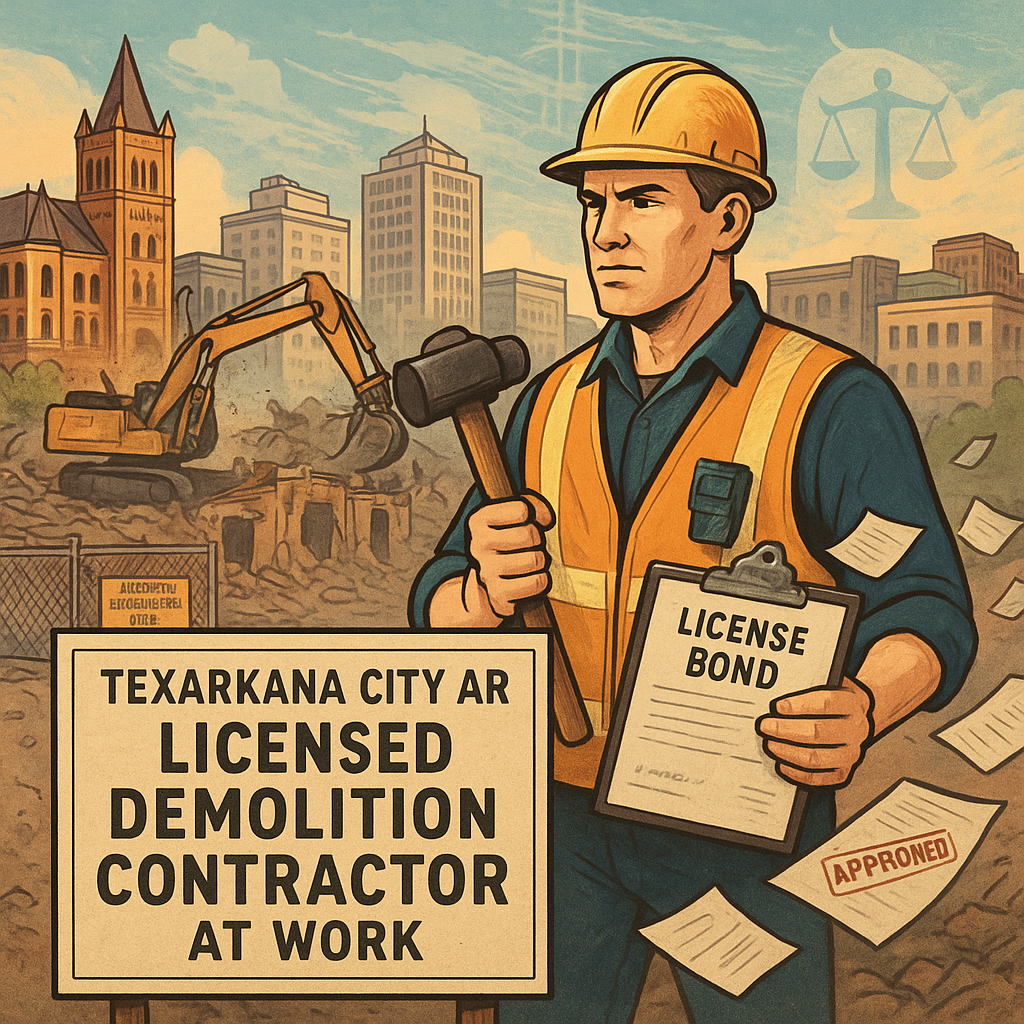
You’ve probably driven past a demolition site and noticed the massive equipment, the piles of debris, and the dust clouds. Maybe you even wondered who makes sure everything is done safely and legally. Behind the scenes, a lot is going on that you can’t see. One of the most important pieces of the puzzle in Texarkana, Arkansas, is something called a demolition contractor’s license bond. It might sound like dry paperwork, but it’s actually a powerful promise that protects you, your neighbors, and the entire city. Let’s break down what this bond is, why it matters, and how it keeps things running smoothly—all without the confusing jargon.
Thinking a license bond is about your work quality
Most contractors believe the Arizona Contractor License Bond guarantees their project performance. It doesn't. This bond is a financial guarantee to the state that you will follow licensing laws, pay owed taxes, and cover certain public liabilities from your business operations. The part most applicants underestimate is the personal credit check. Underwriters review your credit to assess the risk you'll default on the bond's financial obligation, not your skill as a contractor. A low score doesn't automatically disqualify you, but it directly impacts your premium rate and the speed of approval.
- The bond protects the public and state, not your client's project outcome.
- Your personal credit score is the primary factor determining your bond premium.
- You are personally liable for any claims paid by the surety on your bond.
So, What Exactly Is a Demolition Contractor’s License Bond?
Think of a license bond as a kind of safety net with three players. The demolition contractor needs it to get licensed by the City of Texarkana. The city itself requires it. And a surety company provides the financial backing. If the contractor breaks the rules, the bond catches anyone who gets hurt financially—up to a certain amount. It’s not insurance for the contractor; it’s a shield for the public. The bond doesn’t protect the contractor’s own tools or if they get injured. It covers things like if the contractor damages a public sidewalk, doesn’t clean up properly, or violates local building codes.
A common way to picture it is this: imagine renting out your house and asking for a security deposit. If the renter trashes the place, you use that deposit to fix it. The bond works similarly, except the deposit is guaranteed by a third party and it’s all about making sure the contractor follows the rules. If they don’t, there’s money set aside to make things right.
Why Does the City of Texarkana, AR, Require This Bond?
Demolition work is risky by nature. One wrong move could damage neighboring properties, disrupt utility lines, or send debris flying into a busy street. The City of Texarkana doesn’t just hand out demolition permits to anyone with a wrecking ball. They want to know that the person or company tearing down a building is serious, qualified, and financially responsible. Requiring a license bond is a way to pre-screen contractors. It shows the contractor has been vetted by a surety company, which won’t back someone with a terrible track record.
More importantly, the bond gives the city teeth. If a contractor leaves a site looking like a disaster zone, the city can make a claim on the bond to cover the cleanup costs without spending taxpayer dollars. It’s essentially a compliance tool. The bond doesn’t guarantee a perfect project, but it does guarantee that if the contractor messes up, there’s a clear path to financial recovery.
“Compliance Only” – What Does That Mean for You?
You might see the phrase “Compliance Only” attached to a Texarkana demolition contractor’s bond. It’s a simple concept with a big impact. This type of bond focuses exclusively on whether the contractor follows the city’s laws, regulations, and codes. It’s not a performance bond that promises the entire building will come down on time and under budget. Instead, it asks a narrower question: Did the contractor obey all the rules?
Does a compliance-only bond mean your project is unprotected? Not at all. It means the protection is channeled directly toward public and city interests first. If the contractor violates a safety code that results in your fence getting crushed, you could have grounds to file a claim because that violation falls under compliance. It’s like a referee on the field watching for fouls. The referee doesn’t care who wins the game, but they do care that everyone plays by the rulebook.
Real-World Examples of Compliance Issues
Let’s make this tangible. Imagine a contractor tears down an old garage but forgets to secure the perimeter. A neighborhood kid wanders in and gets hurt. The contractor failed to comply with safety regulations. The bond can step in to cover medical costs or fines. Or picture a scenario where the contractor illegally dumps asbestos-laden materials in a non-approved landfill. That’s a major violation. The compliance bond becomes the financial lever to help remedy the environmental damage and penalties. These aren’t just hypotheticals; they’re the exact reasons Texarkana mandates the bond.
How Does the Bond Protect You and the Community?
Many people think a bond only matters to the government. In reality, it’s a multi-layered safety net that touches everyone. Here’s who benefits:
- Property Owners: If you hired a bonded demolition contractor and their work damages your property beyond what was agreed, you have a path to seek compensation without an endless legal fight.
- Neighbors: Say flying debris from the demolition smashes your window. The bond provides a way to cover the repair because the contractor failed to contain the worksite properly.
- City Infrastructure: If a backhoe accidentally tears up a public water line, the city can file a claim to fix it fast. Without the bond, those repairs might get tied up in red tape.
- Taxpayers: Nobody wants their tax money cleaning up a mess left by a private contractor. The bond ensures the responsible party—or their surety—pays.
What Isn’t Covered? A Quick Reality Check
This is where it gets important. The bond isn’t a magic wand. It won’t pay out for poor workmanship that doesn’t violate a code. If the contractor simply did a sloppy job but the rubble is technically contained, a compliance-only bond won’t cover a redo. It also doesn’t cover contract disputes about price or timelines. That’s a separate matter between you and the contractor. The bond’s sole job is to act as a police officer making sure the rulebook is followed. Knowing this helps you set realistic expectations.
Getting Bonded: What a Contractor Must Do
If you’re a demolition contractor looking to work in Texarkana legally, obtaining this bond is a non-negotiable step. The process is more straightforward than you might think. First, you’ll apply through a surety bond company or an agency that specializes in contractor bonds. They’ll ask about your credit history, your experience, and your business financials. Why? Because the surety is betting on you. They want to be confident you’re less likely to cause a claim.
Once approved, you’ll pay a premium—usually a small percentage of the total bond amount. For a Texarkana demolition contractor’s license bond, the required amount is set by the city. The premium isn’t refundable; it’s the cost of doing business. You’ll then receive the bond paperwork, which you file with the City of Texarkana along with your license application. It’s that filing that officially activates your coverage. No bond, no license. It’s that simple.
What Drives the Cost? Premium Factors Explained
You may hear numbers like 1% to 5% of the bond amount thrown around. What determines where you fall? Primarily, your personal and business credit scores. A contractor with excellent credit might pay as little as 1%. Someone with a few bumps in their financial history could see a rate closer to 5%. The surety assesses the risk. They’re asking themselves, “How likely is this person to cause a claim?” A strong financial track record signals responsibility, which lowers the premium. It’s similar to how a car insurance company looks at your driving record, except here they’re peering into your creditworthiness.
Don’t let a less-than-perfect score discourage you. Many sureties offer bonds to contractors with challenged credit, though the price tag will be a bit higher. It’s a good idea to shop around, as different companies have different appetites for risk.
Staying Compliant: More Than Just a Piece of Paper
Once you have the bond in hand, your job isn’t over. Compliance is an ongoing responsibility. You must follow every applicable city ordinance: pulling the right permits, notifying utilities, controlling dust, managing traffic, and disposing of debris legally. If a claim is made against your bond and the surety pays out, here’s the catch: you, the contractor, have to reimburse the surety for every penny. A bond is not insurance for the contractor. It’s an extension of credit. If you cause a valid claim, you’re on the hook to pay it back. That’s why many contractors view the bond as a powerful incentive to do things by the book.
What happens if you let the bond lapse? The city can suspend or revoke your license. Working without an active bond is illegal and can result in fines or a shutdown of your project. It’s a simple system: no active bond, no legal demolition work in Texarkana.
Common Questions You Might Be Wondering About
Can a property owner check if a contractor is bonded? Absolutely. You can ask the contractor for their bond information and even verify it with the city. Transparency is a sign of a reputable professional. Do I still need a written contract if there’s a bond? One million percent yes. The bond is not a substitute for a detailed contract. The contract spells out the scope of work, payment terms, and timelines—things the bond doesn’t touch. The bond and the contract work together like a lock and key; both are needed for smooth sailing.
Is the bond the same as liability insurance? No, and confusing the two can be costly. Liability insurance covers bodily injury or property damage caused by accidents, like a worker dropping a beam on a car. The license bond covers violations of city laws and codes. Smart contractors carry both because they protect different risks.
Final Thoughts: Why This Bond Builds Trust
The Texarkana Arkansas demolition contractor’s license bond might seem like just another bureaucratic hoop, but it plays a starring role in keeping the city safe and accountable. It makes sure that when a building comes down, it doesn’t bring down the neighborhood’s well-being with it. For contractors, it’s a badge of credibility. For residents, it’s a quiet guardian that says, “If the rules get broken, you won’t be left holding the bag.”
Next time you see a demolition crew at work, you’ll know there’s a sturdy financial promise tucked behind that fence. It’s not the loudest tool on the site, but it might just be the most important one. Whether you’re a homeowner planning a teardown or a contractor sharpening your credentials, understanding this bond puts you one step ahead. Play by the rules, respect the process, and everyone wins.