Little Rock’s contractor bond acts as a financial safety net for homeowners, ensuring HVAC contractors follow local building codes and protecting the public from substandard work. It is a three-party agreement that holds contractors accountable for third-party liability, making proof of bonding essential for legal operation.
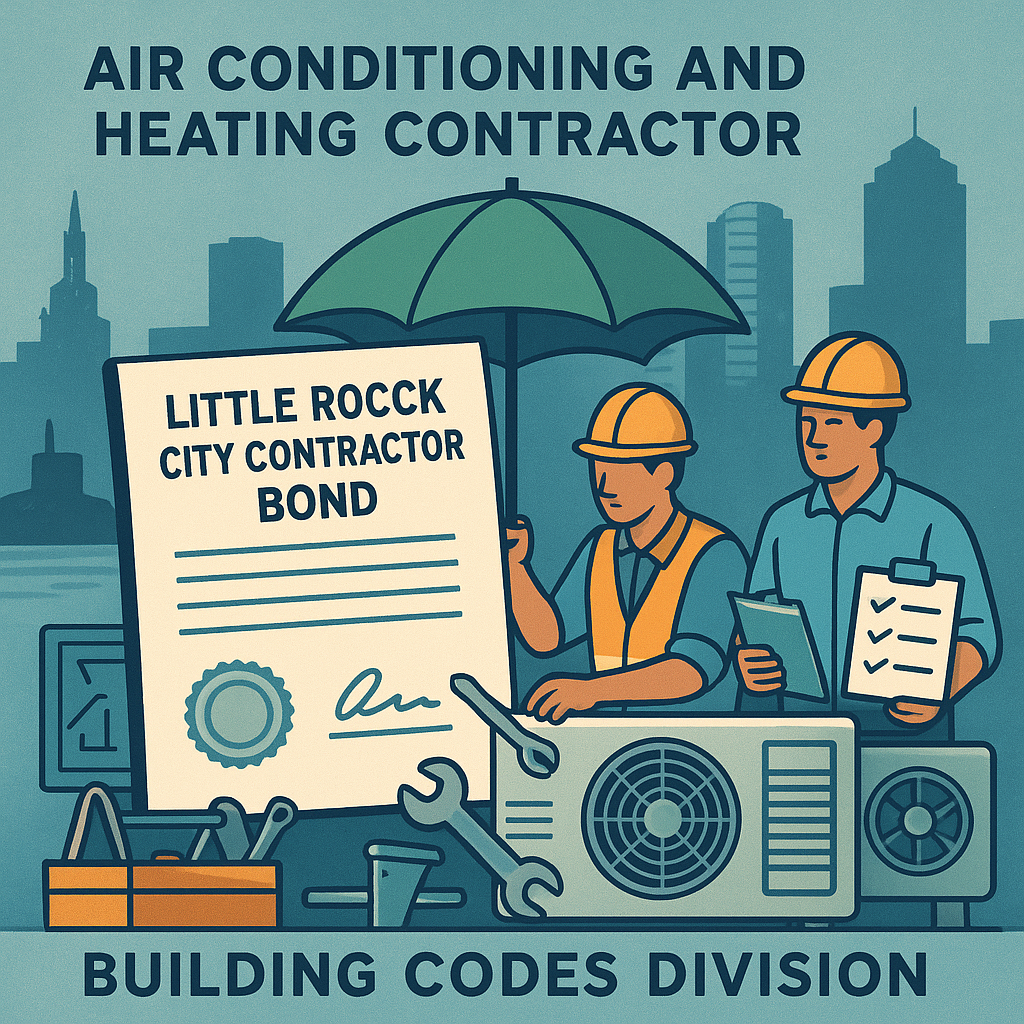
If you’re a homeowner in Little Rock planning to install a new air conditioner or fix a faulty furnace, you probably want the job done right. You also want peace of mind in case something goes wrong. That’s exactly where the Little Rock AR Building Codes Division Contractor Bond comes into play. Think of it as a financial promise between your contractor, the city, and you. In this post, we’ll unpack everything you need to know about this bond—why it matters, how it protects you, and what it means for air conditioning and heating contractors working in Little Rock.
Thinking a license bond is about your work quality
Most contractors believe the Arizona Contractor License Bond guarantees their project performance. It doesn't. This bond is a financial guarantee to the state that you will follow licensing laws, pay owed taxes, and cover certain public liabilities from your business operations. The part most applicants underestimate is the personal credit check. Underwriters review your credit to assess the risk you'll default on the bond's financial obligation, not your skill as a contractor. A low score doesn't automatically disqualify you, but it directly impacts your premium rate and the speed of approval.
- The bond protects the public and state, not your client's project outcome.
- Your personal credit score is the primary factor determining your bond premium.
- You are personally liable for any claims paid by the surety on your bond.
What Is a Contractor Bond, Really?
A contractor bond is a three-party agreement. The first party is the contractor, also called the principal. The second is the city or state agency that requires the bond—in this case, the Little Rock Building Codes Division. The third is the surety company that issues the bond. The obligation? The contractor must follow all local building codes, laws, and regulations. If they don’t, the bond can be used to make things right.
It’s helpful to picture the bond as a safety net under a tightrope walker. The contractor is walking the line of compliance. If they slip up, the safety net—the bond—catches the fallout. That fallout could be financial harm to a customer or the city. Unlike regular insurance, which protects the contractor’s own business, this bond works to protect you, the public.
Why the City of Little Rock Requires It for AC and Heating Contractors
Little Rock’s Building Codes Division oversees construction and mechanical permits to keep buildings safe. For air conditioning and heating work, improper installation can lead to dangerous gas leaks, electrical fires, or inefficient systems that waste energy. The city wants to make sure only qualified, accountable contractors pull permits and complete work up to code. That’s why they mandate a Little Rock City Contractor Bond for these professionals.
When a contractor registers with the Building Codes Division, the bond acts as a gatekeeper. It tells the city and consumers, “This person has some skin in the game.” Without it, the contractor can’t legally operate within Little Rock. So if you’re comparing bids, always ask to see proof of their bond. It’s a quick way to weed out unlicensed operators.
Focusing on Third-Party Liability
You might notice the bond is specifically tied to Third-Party Liability. That phrase can sound like legalese, but it’s straightforward. The contractor is the first party. The city is the second party. You—the homeowner, the neighbor, or any member of the general public—are the third party. If the contractor’s work causes you damage, you can file a claim against that bond. It’s not about the contractor’s tools or their truck; it’s about their responsibility to you.
Let’s say a heating contractor runs a new gas line but does a shoddy job that leads to a slow leak. You discover it months later and have to pay for emergency repairs. If the contractor refuses to cover the cost or can’t be tracked down, the bond can step in. Yes, you’d need to prove the violation, but the mechanism is there. That’s the essence of third-party liability protection.
How the Bond Protects You (and Your Home)
Imagine hiring someone to install a central AC unit. They show up, half-finish the job, and disappear with your deposit. Or they complete the installation but it fails a city inspection because they cut corners. These scenarios are stressful and costly. The Little Rock AR Building Codes Division Contractor Bond is designed to respond in cases like these.
Financial harm can take many forms:
- Faulty workmanship that doesn’t meet code and requires a do-over
- Damage to your property during the project
- Abandoning the job before it’s complete
- Not paying for required permits or subcontractors
Remember, the bond has a set amount—sometimes $5,000, $10,000, or another figure required by the city. That’s the maximum payout for all claims against that contractor. It’s not a blanket warranty on the work, but it adds a meaningful layer of consumer protection. And because making a claim can raise the contractor’s future bond costs, it encourages them to fix problems before they escalate.
Who Exactly Needs This Bond?
The requirement applies to Air Conditioning and Heating Contractor businesses that do work in the city limits of Little Rock. This includes companies that install, repair, or maintain HVAC systems. If you’re a solo operator or a large firm, the rule stands. The bond is tied to your license or registration with the Building Codes Division. Even subcontractors who perform HVAC work often need to comply.
What about homeowners pulling their own permits on their own home? That’s a different situation. The bond targets professionals who offer services to the public for compensation. If you’re an aspiring HVAC technician, it’s a non-negotiable part of setting up shop legitimately.
Getting the Bond: A Simple Process
For contractors, obtaining the bond is usually quick and painless. You reach out to a surety bond agency that’s licensed in Arkansas. They’ll ask about your business history, credit score, and the required bond amount set by the city. The premium—the cost you pay—is a small percentage of that total amount. If your credit is strong, you might pay as little as 1% to 3% annually. Even with less-than-perfect credit, options exist, though the rate may be higher.
Once you pay the premium and sign the paperwork, the surety company provides a bond form. You then submit that form to the Little Rock Building Codes Division as part of your licensing packet. After that, you’re authorized to pull permits and get to work. And yes, the bond must be renewed each year, just like your license.
What Happens When a Claim Is Filed?
Let’s walk through a real-world example. A homeowner notices that their newly installed furnace vents hot exhaust directly onto a wooden beam, creating a fire hazard. They report the issue to the Building Codes Division and file a claim against the contractor’s bond. The surety company then investigates. If the claim is valid—meaning the contractor violated city code or contract terms—the surety pays out up to the bond amount to remedy the situation.
Here’s the catch many people don’t realize: The bond protects the consumer, but the contractor is ultimately responsible. The surety will seek reimbursement from the contractor for any payout. This keeps the system fair. It also motivates contractors to maintain high standards because nobody wants to owe money for a job gone wrong.
Common Misunderstandings About the Bond
A frequent mix-up is thinking the bond works like liability insurance for the contractor. It doesn’t. Insurance shields the contractor from losses like equipment theft or an accident on the job. The Little Rock City Contractor Bond, with its 3rd party liability focus, shields the public from the contractor’s failure to follow the rules. Both are important, but they serve different masters.
Another misunderstanding? That the bond covers poor workmanship forever. It covers violations of law or contract that occur during the bond’s active period. Long-term performance guarantees usually fall under a separate warranty from the contractor or manufacturer. Treat the bond as your safety net for regulatory compliance, not a lifetime maintenance plan.
Why This Matters for Little Rock’s Community
When contractors are bonded, the entire community benefits. Building standards stay high, streets aren’t filled with fly-by-night repair crews, and disputes have a clear resolution path. The Little Rock Building Codes Division enforces these rules to maintain trust in the local construction industry. That trust helps homeowners invest in their properties without fear of being taken advantage of.
As a homeowner, you can even verify a contractor’s bond status before you sign a contract. Just ask them for their bond number, then call the Building Codes Division or check their online resources. A reputable HVAC contractor will share this information without hesitation. If they dodge the question, consider it a red flag.
Final Thoughts: A Small Requirement with a Big Impact
The Little Rock AR Building Codes Division Contractor Bond might seem like just another bureaucratic hoop. But dig a little deeper, and you’ll see it’s a vital part of a healthy marketplace. For air conditioning and heating contractors, it’s a badge of legitimacy. For you, it’s a promise that someone has your back when the unexpected strikes.
Next time you turn on your AC during a sweltering Arkansas summer, take a moment to appreciate the layers of protection that keep your home safe. That contract you signed? It’s backed by more than just good intentions. It’s backed by a bond that helps turn paper promises into real-world accountability.