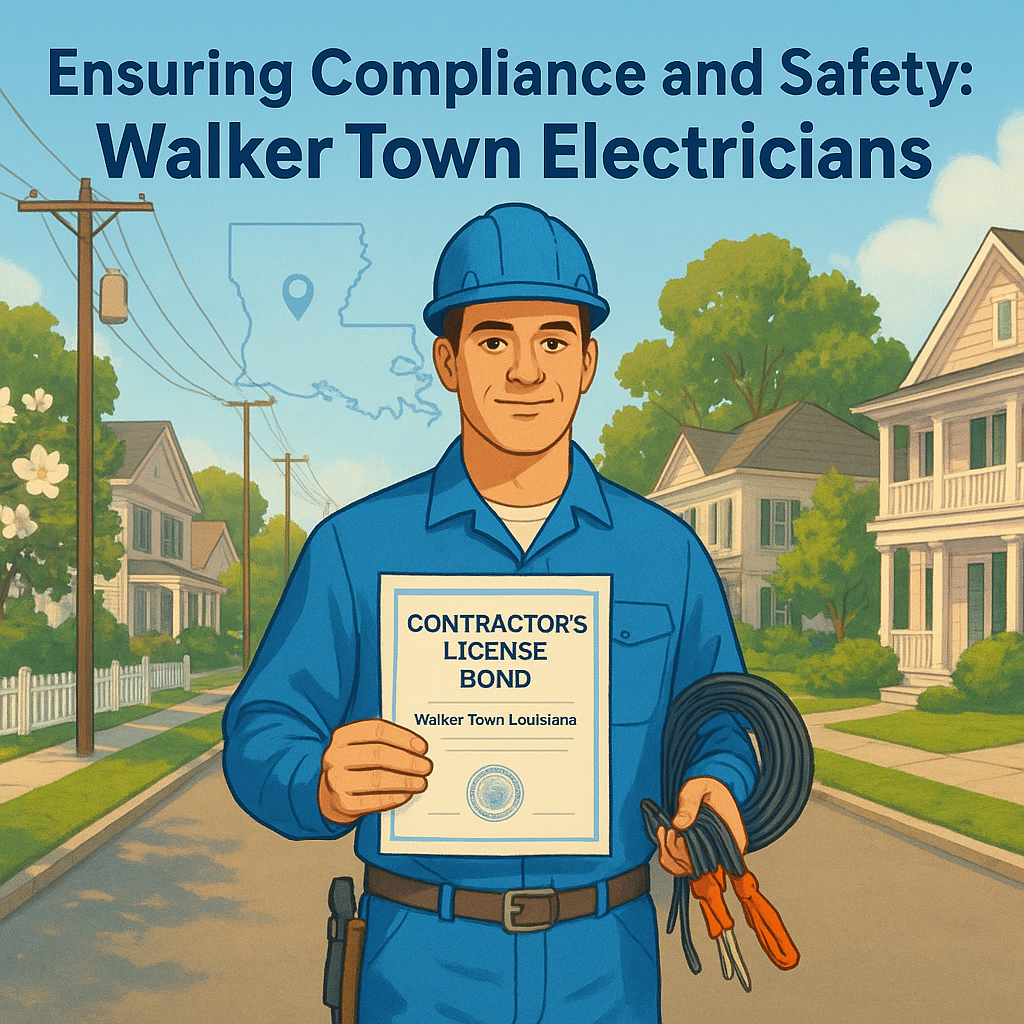
Imagine you’re about to hire someone to rewire your home or add new circuits to your kitchen. You want to be sure they’ll do the job safely and follow the rules, right? In the Town of Walker, Louisiana, there’s a simple but powerful tool that helps ensure exactly that. It’s called a contractor’s license bond, and for electricians, a specific type often comes into play: the compliance-only bond. Let’s pull back the curtain on what these bonds are, why they matter to you, and how they help make Walker a safer place to live and work.
Thinking a license bond is about your work quality
Most contractors believe the Arizona Contractor License Bond guarantees their project performance. It doesn't. This bond is a financial guarantee to the state that you will follow licensing laws, pay owed taxes, and cover certain public liabilities from your business operations. The part most applicants underestimate is the personal credit check. Underwriters review your credit to assess the risk you'll default on the bond's financial obligation, not your skill as a contractor. A low score doesn't automatically disqualify you, but it directly impacts your premium rate and the speed of approval.
- The bond protects the public and state, not your client's project outcome.
- Your personal credit score is the primary factor determining your bond premium.
- You are personally liable for any claims paid by the surety on your bond.
What Exactly Is a Contractor’s License Bond?
Think of a contractor’s license bond as a three-way promise. The contractor, the town, and a bonding company all agree to play their part. If the contractor breaks the rules, the bond can step in to make things right. It’s not insurance for the contractor—it’s protection for the public and a guarantee for the town that the professional will follow local codes and regulations.
When you hear “bond,” you might think of a financial investment. Here, it’s more like a safety net. The contractor pays a small percentage of the bond amount (often a few hundred dollars) to a surety company. In return, the surety issues the bond. If the contractor fails to comply with building codes or city ordinances, a claim can be filed against that bond. The surety would pay out up to the bond’s limit, but the contractor is ultimately responsible for paying that money back. This system keeps everyone honest.
Why Does Walker, Louisiana Require These Bonds?
Town of Walker leaders know that with growth comes construction. New homes, renovations, and commercial projects pop up all the time. The city wants to keep that momentum going while protecting homeowners and business owners from shoddy or unsafe work. A license bond acts like a seatbelt—it’s there just in case something goes wrong. By requiring bonds for certain trades, especially electricians, Walker ensures that professionals are accountable long before they ever step onto your property.
Without this requirement, you might have to rely solely on a contractor’s word or a basic contract. With a bond in place, there’s an extra layer of financial responsibility. It also gives the town a way to enforce its rules without immediately resorting to lengthy legal battles. If a contractor cuts corners, the bonding company can pressure them to fix the problem or face the consequences.
The “Compliance Only” Distinction for Electricians
You might have noticed the phrase “Compliance Only” tied to electrician bonds in Walker. What does that mean? A compliance-only bond focuses strictly on whether the contractor follows the laws, codes, and regulations that govern their work. It doesn’t cover things like poor workmanship or failure to finish the job on time—those fall under different types of bonds or warranties. Instead, it zeroes in on safety and legal compliance.
For an electrician, that’s huge. Electrical work carries serious risks if not done correctly. A compliance-only bond ensures the electrician adheres to the National Electrical Code, local amendments, and any other rules Walker has on the books. If an inspector finds a violation that the electrician refuses to correct, the bond can be tapped to cover the cost of bringing the work up to code. This protects you from having to pay out of pocket to fix dangerous wiring or improperly installed panels.
How Does a Compliance Bond Work in Real Life?
Let’s walk through a practical example. Suppose you hire an electrician to upgrade your service panel from 100 amps to 200 amps. They pull a permit, do the work, and the town inspector comes out to sign off. The inspector notices the electrician used undersized wiring that could overheat. The electrician insists it’s fine and refuses to redo the job. In this case, you (or the town) can file a claim against the electrician’s compliance bond. The bonding company investigates, and if they agree the work violates code, they’ll pay to have another licensed electrician make the necessary corrections—up to the bond amount. The original electrician then owes the bonding company that money. You get a safe electrical system, and the rules are enforced without you having to go to court.
This process might sound formal, but it’s designed to be straightforward. Most contractors won’t let it get that far because a bond claim damages their reputation and makes it harder to get bonded in the future. The mere presence of the bond encourages them to do the right thing the first time.
Who Needs a Contractor’s License Bond in Walker?
Not every trade is treated the same. In Walker, the requirement often applies to those whose work directly impacts public safety—electricians, plumbers, HVAC technicians, and general contractors working on larger projects. For electricians specifically, the compliance-only bond is typically a non-negotiable part of getting or renewing a license to operate within town limits.
The town sets the bond amount. It could be $5,000, $10,000, or another figure deemed appropriate for the level of risk involved. As a homeowner or business owner, you can verify whether a contractor holds an active bond by asking to see their bond certificate or checking with the town’s permitting office. It’s a quick step that can save you a lot of headaches later.
What’s the Difference Between a Bond and Insurance?
This is one of the most common questions. Insurance protects the contractor if something unexpected happens, like a tool gets stolen or a worker gets hurt on the job. The contractor pays premiums, and the insurance company covers the loss. A bond, on the other hand, protects the public and the town. While the contractor pays for it, the bond is there to back their promise to follow the rules. If they break that promise, you have a path to financial relief. The two work hand in hand, but they serve very different purposes.
Think of insurance as a contractor’s shield, and a bond as your shield. Both are important, but the bond is specifically about code compliance and lawful business practices, not accidents or property damage.
How Do Contractors Get Bonded in Walker, LA?
Getting bonded isn’t overly complicated, but it does require some paperwork and a decent credit history. Here’s the typical path for an electrician needing a compliance-only bond:
- Confirm the required bond amount with the Town of Walker. The permit or licensing office will tell you the exact dollar figure.
- Apply with a surety company or bond agency. Many agencies specialize in contractor bonds and can offer quotes within minutes.
- Undergo a credit check. The premium you pay—usually 1% to 5% of the bond amount—depends largely on your personal and business credit history.
- Pay the premium and sign the indemnity agreement. This agreement makes you personally responsible for any claims paid out by the surety.
- Receive your bond certificate and file it with the town. Keep a copy for your records and be ready to present it as proof of compliance.
The whole process can often be completed in a day or two, and the cost is minimal compared to the trust it builds with customers and the town. For a $5,000 bond, a contractor with good credit might pay as little as $100 per year. That’s a small price for a lot of peace of mind.
What If a Contractor Works Without a Bond?
Skipping the bond requirement might seem like a quick way to save a few bucks, but it carries big risks. First, the Town of Walker can suspend or revoke the contractor’s license. They might also issue fines or stop-work orders on active projects. For a customer, hiring an unlicensed or unbonded contractor means you lose that extra layer of financial protection. If something goes sideways, you’re left chasing the contractor through the legal system on your own. Always ask for proof of bonding before any work begins—it’s a simple habit that protects your wallet and your safety.
What Does This Mean for Homeowners and Business Owners in Walker?
As a resident or entrepreneur, you don’t need to become a bonding expert. But knowing the basics gives you a sharper eye when comparing contractors. When you see that a licensed electrician carries a Walker Town LA contractor’s license bond, you’re seeing a professional who has put their money where their mouth is. They’ve committed to following the rules, and there’s a financial backstop if they don’t.
You might wonder: does hiring a bonded contractor cost me more? Not directly. The bond premium is an overhead expense for the contractor, just like their tools or truck. You pay for their overall service, not the bond line item. In the long run, however, hiring a bonded professional can save you thousands by preventing expensive code corrections or fire hazards. It’s the kind of invisible shield that works quietly in the background—until it’s needed.
The Bigger Picture: Compliance as a Cornerstone of Trust
Walker, Louisiana is a community that values growth and safety in equal measure. The contractor license bond requirement is a small but mighty piece of the puzzle. It aligns the incentives of the town, the contractor, and the consumer. Everyone wants the same outcome: a project that’s done right, up to code, and free of costly surprises. By tying a financial guarantee to regulatory compliance, the bond system encourages electricians to stay current with code changes and treat every job with the seriousness it deserves.
If you’re an electrician working in the area, viewing the bond as more than just a regulatory hoop can change your mindset. It’s a marketing advantage. You can proudly tell clients, “I’m bonded, which means you have an added layer of protection.” In a competitive market, that statement can set you apart.
Wrapping It All Up
Navigating permits, licenses, and bonds can feel like wading through alphabet soup. But the core idea is refreshingly straightforward. In Walker, Louisiana, a contractor’s license bond—especially the compliance-only version for electricians—acts like a guardian of safety and fairness. It holds professionals accountable to the standards that keep your lights on and your family protected. Whether you’re a homeowner planning a renovation or a contractor looking to do business in town, understanding this simple tool helps you make smarter, safer choices.
So next time you flip a switch or plug in an appliance, take a second to appreciate the invisible network of rules and bonds that helped make it happen. It’s not flashy, but it works. And in the Town of Walker, that commitment to compliance shines bright.