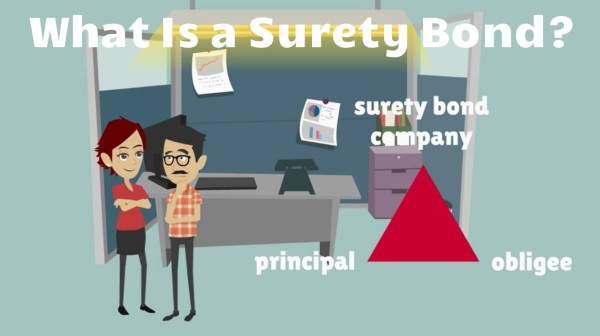
A surety bond is a three-party contract that guarantees a principal's obligation to a third party, protecting against financial loss if the terms are not met.
A surety bond is a three-party agreement that legally binds a principal, an obligee, and a surety. It guarantees that the principal will fulfill an obligation, such as performing a task or complying with regulations, to the obligee. If the principal fails, the surety is financially responsible to the obligee for the losses incurred, up to the bond’s penal sum.
This financial instrument is not insurance for the principal but rather a guarantee of performance or compliance provided to a third party. The principal remains ultimately liable for the obligation and must reimburse the surety for any claims paid out. Unlike an insurance policy, which transfers risk to the insurer, a surety bond actually preserves risk with the principal, who must indemnify the surety for any loss.
Your personal credit score is the primary driver of your bond cost
Most freight broker applicants focus on the ,000 bond amount, but the part most applicants underestimate is how heavily their personal credit score impacts the premium. In practice, this often comes down to the underwriter's review of your FICO score. A score above 700 can secure a rate as low as 1-3% of the bond amount. A score below 650 can push rates to 10-15% or require a co-signer. What usually slows this down is applicants not knowing their exact score before applying, which leads to unexpected quotes and delays.
- Know your exact FICO score before you apply for an accurate quote
- Rates are tiered: Excellent credit (700+) pays 1-3%, while lower scores pay 10-15% or more
- If your score is below 650, prepare financials or consider a co-signer to improve approval odds
How Does a Surety Bond Work?
The process involves three distinct entities. The principal is the party who needs the bond and is responsible for performing the obligated task. The obligee is the party requiring the bond, typically a government agency or project owner, who is protected by its terms. The surety is the company, often a specialized insurer, that underwrites the bond and guarantees the principal’s performance to the obligee.
If the principal defaults, the obligee can file a claim against the bond to recover financial losses. The surety will investigate the claim and, if valid, compensate the obligee. The surety then has the right to seek full reimbursement from the principal for the claim amount plus any associated fees, as outlined in the indemnity agreement signed when the bond was issued. This indemnity agreement is a critical component of the bond arrangement, and it is what distinguishes a surety bond from traditional insurance coverage.
Common Types of Surety Bonds
Surety bonds are broadly categorized by their purpose. Contract bonds guarantee the performance of contractors on construction projects, ensuring they adhere to the terms of their bid and complete the work. Commercial bonds are often required by government agencies to ensure businesses comply with laws and regulations, such as licensing or permit requirements. Court bonds, also known as judicial bonds, are used to guarantee compliance with court orders, often in probate or fiduciary cases.
For a comprehensive overview of the different categories and their uses, the U.S. Small Business Administration provides valuable resources on bonding requirements for contractors.
Why Are Surety Bonds Important?
They provide critical financial security and risk management in business and legal contexts. For obligees, bonds offer a layer of protection against financial loss due to non-performance, fraud, or non-compliance. This assurance allows projects to proceed and regulations to be enforced with greater confidence.
For principals, obtaining a bond is often a mandatory step to operate legally, bid on projects, or obtain licenses. The underwriting process also serves as a vetting mechanism, as sureties assess the principal’s financial health and track record before issuing a bond, which can enhance the principal’s credibility in the marketplace. A principal who successfully secures a bond demonstrates financial stability and reliability to potential clients and partners.
- License and Permit Bonds: Required by state or local governments for businesses to obtain a professional or operational license.
- Bid Bonds: Guarantee that a contractor will honor their bid price and enter into the contract if awarded the project.
- Performance Bonds: Protect the project owner from financial loss if the contractor fails to perform according to the contract terms.
- Payment Bonds: Ensure that subcontractors and suppliers on a project will be paid, preventing mechanic’s liens.
Getting a Surety Bond
The application involves a detailed review of the principal’s financial statements, credit history, industry experience, and the specific project or obligation. Strong financials and a solid track record typically result in better rates and terms. The cost, known as the premium, is usually a small percentage of the total bond amount and is based on the assessed risk. For standard commercial bonds, premiums typically range from 1% to 3% of the bond amount, but this can vary significantly based on creditworthiness and the specific bond type.
One common misconception is that a surety bond provides coverage for the principal’s own mistakes or poor workmanship. In practice, the bond protects the obligee, not the principal, and the surety will pursue the principal for full reimbursement of any claim paid. Contractors who fail to budget for potential claims often find themselves facing significant financial strain when a surety exercises its right of subrogation to recover losses.