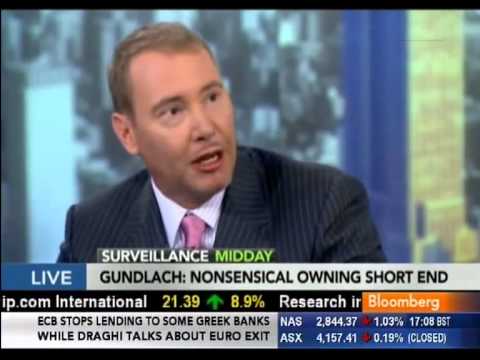
Jeffrey Gundlach emphasizes that bond investing is fundamentally governed by mathematics, where interest rate changes directly and predictably impact bond prices.
Jeffrey Gundlach, the founder of DoubleLine Capital, is a prominent figure in the fixed-income world. His analysis often emphasizes the mathematical principles that underpin bond valuation and market behavior. Understanding these core mathematical relationships is essential for any investor navigating the bond markets.
Gundlach frequently discusses concepts like yield, duration, and convexity. These are not just abstract terms but are critical for assessing a bond’s price sensitivity to changes in interest rates. A firm grasp of this quantitative framework allows investors to better manage risk and identify relative value across different fixed-income securities.
For those looking to deepen their understanding of these foundational concepts, the U.S. Securities and Exchange Commission’s investor education site offers valuable resources on bond basics and investment mathematics.
When analyzing bonds, several key mathematical factors must be considered simultaneously:
- Yield to Maturity (YTM): The total annual return anticipated if the bond is held until it matures, accounting for its current market price, par value, coupon interest, and time to maturity.
- Duration: A measure of the bond’s sensitivity to interest rate changes, expressed in years. It estimates how much the price of a bond will change given a 1% shift in interest rates.
- Convexity: A measure that refines the price change estimate provided by duration, accounting for the fact that the relationship between bond prices and yields is curved, not linear.
In practice, investors often make the mistake of relying solely on duration to gauge interest rate risk, only to find that large rate moves produce price changes that deviate significantly from their estimates. This occurs because duration is a linear approximation, and as yields shift substantially, convexity becomes the dominant force in determining actual price behavior. For example, a bond with positive convexity will typically outperform its duration-based prediction when rates fall sharply, while underperforming less than expected when rates rise, making convexity a valuable attribute in volatile rate environments.
His commentary often extends to macroeconomic trends and their mathematical implications for interest rates. Gundlach’s approach demonstrates how quantitative analysis is applied to forecast market movements and construct resilient portfolios. This mathematical rigor provides a disciplined framework for interpreting complex market signals and making informed investment decisions.
The license is not the bottleneck your bond is
Most contractors focus on passing the trade exam, but the real delay is the surety bond underwriting. The state requires the bond, but the surety company requires a deep review of your personal credit, business financials, and project history. A low credit score or thin business file can trigger requests for additional collateral or personal indemnity, stalling the entire license application. What usually slows this down is applicants submitting incomplete financial statements or underestimating how their personal credit impacts the premium.
- Order your bond before your exam to lock in your rate and avoid last-minute underwriting surprises.
- Prepare two years of business and personal tax returns upfront—missing documents are the most common cause for delay.
- A credit score below 650 will likely require a financial statement and may increase your bond premium by 25-50%.