To obtain a contractor's license bond in Cleveland, MS, sign contractors must secure a Sign Contractor – Compliance Only bond as a financial guarantee to follow local codes and ordinances. The bond protects the city and public by ensuring legal compliance, with contractors paying a premium to a surety company instead of a full cash deposit.
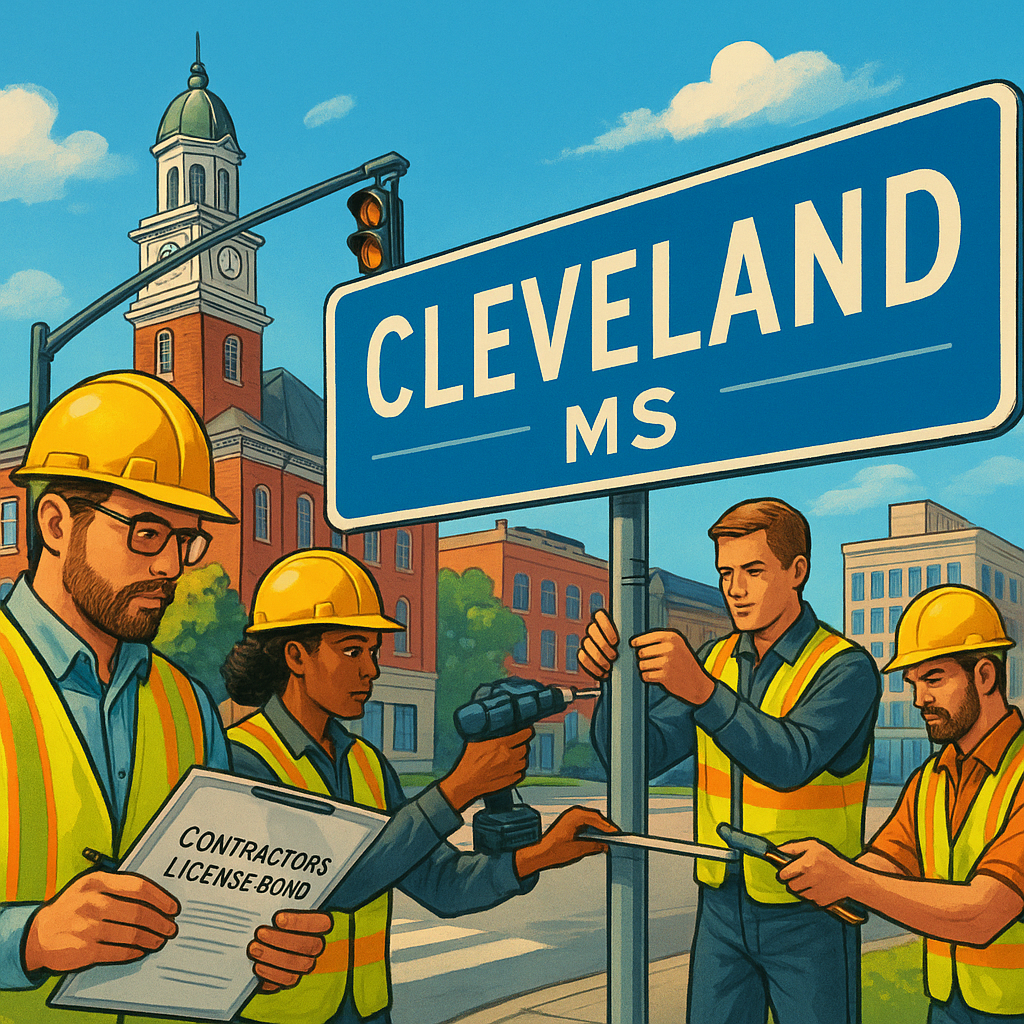
Are you planning to put up that new storefront sign in downtown Cleveland, Mississippi? Before you unload your tools or submit a permit application, there’s one important piece of paperwork that can make or break your project. The City of Cleveland requires many contractors to hold a valid license bond, and if you’re a sign contractor, you’ll most likely encounter the “Sign Contractor – Compliance Only” bond. Don’t worry if that sounds confusing—by the time you finish reading, you’ll know exactly what it is, why it matters, and how to get yours without a headache.
Thinking a license bond is about your work quality
Most contractors believe the Arizona Contractor License Bond guarantees their project performance. It doesn't. This bond is a financial guarantee to the state that you will follow licensing laws, pay owed taxes, and cover certain public liabilities from your business operations. The part most applicants underestimate is the personal credit check. Underwriters review your credit to assess the risk you'll default on the bond's financial obligation, not your skill as a contractor. A low score doesn't automatically disqualify you, but it directly impacts your premium rate and the speed of approval.
- The bond protects the public and state, not your client's project outcome.
- Your personal credit score is the primary factor determining your bond premium.
- You are personally liable for any claims paid by the surety on your bond.
What Exactly Is a Contractor’s License Bond?
Think of a surety bond as a three-way promise. You (the contractor), the City of Cleveland (the obligee), and a surety company shake hands on a financial guarantee. The bond doesn’t protect you directly—it protects the city and the public from financial harm if you break the rules. If you fail to follow building codes, ignore sign ordinances, or skip out on required permits, the city can file a claim against your bond to recover costs or fines.
In the simplest terms, a contractor’s license bond is like a security deposit you don’t have to pay all at once. Instead of forking over thousands of dollars in cash, you pay a small premium to a surety company. They back you up and promise the city that you’ll play by the book. If you don’t, the surety pays the city first—and then you repay the surety. It’s not an insurance policy for your business; it’s a compliance tool that helps keep the entire construction ecosystem honest and reliable.
Why Does Cleveland, Mississippi Require This Bond?
Cleveland’s local government wants to keep its streets safe and its neighborhoods looking great. When a contractor installs a sign that doesn’t meet height limits, blocks visibility, or uses substandard materials, the city needs a way to fix the problem without burdening taxpayers. The license bond gives them that safety net.
For sign contractors specifically, the requirement often carries a “Compliance Only” label. That means the bond exists solely to guarantee you’ll stick to Cleveland’s municipal codes, zoning laws, and sign regulations. It’s not about how fast you finish a job or whether the client is happy with your color choices. The bond’s entire job is to say, “This contractor will operate legally and follow the rules set by the City of Cleveland.”
Many towns across Mississippi ask for similar bonds, but Cleveland’s focus on sign work reflects how important signage is to local commerce and community appearance. Whether you’re hanging a small directional board or erecting a towering pylon sign, the city trusts that your bond helps keep the project within approved guidelines.
Who Needs a Contractor’s License Bond in Cleveland?
If you’re a sign contractor—someone who manufactures, installs, or maintains on-premise and off-premise signage—you can almost guarantee that Cleveland will request a license bond before you pull your first permit. Some trades, like general construction, electrical, and plumbing, may also face bond requirements, but today we’re zeroing in on the “Sign Contractor – Compliance Only” bond because it’s one of the most commonly asked-about obligations for out-of-town and local sign companies alike.
Even if you’ve been in the business for decades, Cleveland’s city clerk or building department may still ask for proof of a current bond when you apply for a new license or renew an existing one. It’s not a punishment—it’s just the standard pathway to staying compliant and maintaining your reputation as a trustworthy professional.
Understanding the “Compliance Only” Bond
You might hear terms like “performance bond” and “payment bond” thrown around. A compliance-only bond is different. A performance bond guarantees the project will be completed according to the contract. A payment bond assures subcontractors and suppliers get paid. A compliance bond simply vouches for your behavior under the law. For Cleveland sign contractors, your bond’s language likely reads something like “Sign Contractor – Compliance Only,” and it’s tailored to cover fines, penalties, or correction costs if you violate city ordinances.
Think of it as a promise ring. You’re telling Cleveland, “I’ll honor your local sign codes, obtain all necessary permits, and properly anchor my work. If I slip up, this bond will cover the consequences.” It gives everyone peace of mind without you having to drain your business savings.
How to Obtain Your Contractor’s License Bond in Cleveland, MS: Step by Step
Getting bonded might sound intimidating, but it’s often much smoother than booking a local music gig in the Delta. Here’s the process broken down into bite-sized pieces.
Step 1: Confirm the Bond Amount You Need
Reach out directly to the City of Cleveland’s Building Department or City Clerk. Ask them what bond amount they require for sign contractors. In many Mississippi cities, this number ranges from $5,000 to $10,000, but your exact amount depends on local ordinances. Write it down, and if possible, get a written confirmation. This simple call will save you from buying the wrong bond and dealing with rejections.
Step 2: Gather Your Business and Personal Details
Surety companies will want to verify your identity and financial responsibility. Have your business name, address, license number (if you already have one), and your Social Security number or Employer Identification Number ready. You’ll also need to provide basic information about your credit history and any prior bond claims. Don’t panic—this is standard procedure, not a criminal background check.
Step 3: Request a Quote from a Reputable Surety Agency
You can walk into an insurance office that offers surety bonds, or you can work with an online agency that specializes in contractor bonds. Many agencies can quote you in minutes. Provide them with the bond amount, the obligee’s name (City of Cleveland, Mississippi), and the bond type (Sign Contractor – Compliance Only). Within a few hours—or even instantly—you’ll receive a premium quote.
Step 4: Pay Your Premium and Sign the Paperwork
Once you accept the quote, pay the annual premium. The surety company then generates the bond form. You’ll sign as the principal, and they’ll provide the surety’s signature and seal. Some agencies email you a digital copy first so you can review the details before the hard copy arrives.
Step 5: File the Original Bond with the City
The bond isn’t active until Cleveland’s government has the original document. Hand-deliver or mail the signed bond to the appropriate city office. They’ll record it and link it to your license file. Keep a copy for your records—both physical and digital. After that, you’re free to pull permits and start your sign work legally.
What Does a Contractor’s License Bond Cost?
Here’s the part most people really want to know: the price tag. You won’t pay the full bond amount. You pay a premium, which is a small fraction of the total coverage. For a contract bond, premiums typically fall between 1% and 5% of the bond’s value for applicants with decent credit. So if Cleveland requires a $5,000 bond, and you qualify for a 2%