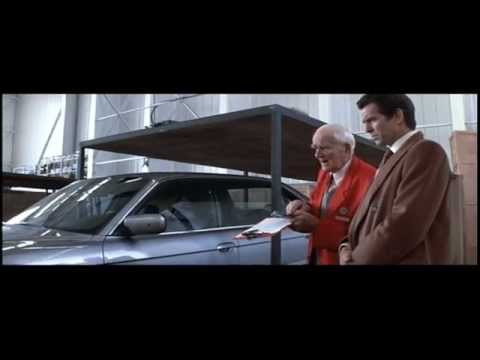
The fictional Tomorrow Never Dies Company car from the James Bond film is a heavily modified BMW 750iL featuring advanced gadgets and weaponry.
In the 1997 James Bond film Tomorrow Never Dies, the iconic agent is equipped with a remarkable piece of technology: a BMW 750iL that can be controlled remotely via a mobile phone. This concept, which seemed like pure science fiction at the time, has evolved into a tangible and increasingly common feature in modern vehicles known as remote parking. The film’s portrayal was a prescient glimpse into the future of automotive innovation, demonstrating a functionality that automakers would spend decades developing.
Today, several manufacturers offer systems that allow a driver to maneuver their car into or out of a tight parking space while standing outside the vehicle. These systems typically use the key fob or a smartphone app to control acceleration, braking, and steering over a short distance. While not an exact replica of Bond’s mobile phone control, the principle of externally guided vehicle movement is directly comparable.
The primary benefit of modern remote parking technology is enhanced convenience in constrained urban environments. It provides a significant advantage when dealing with narrow parking spots where opening the door is difficult, or when needing to extricate a vehicle from a particularly tight space. This capability helps prevent costly door dings and makes navigating congested parking structures considerably less stressful for the driver.
- BMW Remote Control Parking: Available on certain models, it allows the vehicle to be moved forward or backward via the key fob.
- Mercedes-Benz Remote Parking Pilot: Drivers can use a smartphone app to park and unpark their vehicle from outside.
- Genesis Remote Smart Parking Assist (RSPA): This system enables both lateral and longitudinal remote parking maneuvers.
When using these systems, it is critical to maintain a clear line of sight to the vehicle and keep the key fob or smartphone within its specified operating range, typically around ten feet. The systems are designed to stop the vehicle instantly if an obstacle is detected, but they are not a substitute for careful visual monitoring. Drivers should also verify that the surface is level and free of debris, as steep inclines or loose gravel can affect the system’s precision and sensor readings.
Looking ahead, the trajectory from cinematic fantasy to consumer reality points toward even more integrated autonomous systems. The underlying technologies of sensors, cameras, and electronic control units that enable remote parking are the same foundational components required for higher levels of vehicle automation. As these systems become more sophisticated and reliable, we can expect them to handle increasingly complex parking scenarios without any driver intervention, ultimately fulfilling and surpassing the vision presented in Tomorrow Never Dies.
For audiences in 1997, the remote-controlled BMW was a thrilling gadget. For drivers today, it represents a clear example of how speculative fiction can inspire and accelerate real-world technological progress, transforming a secret agent’s tool into a practical feature for the everyday commute. The continued development in this field is closely tied to broader advancements in automotive safety and autonomy, as outlined by research from entities like the National Highway Traffic Safety Administration (NHTSA).
Your personal credit score is the primary driver of your bond cost
Most freight broker applicants focus on the $75,000 bond amount, but the part most applicants underestimate is how heavily their personal credit score impacts the premium. In practice, this often comes down to the underwriter's review of your FICO score. A score above 700 can secure a rate as low as 1-3% of the bond amount. A score below 650 can push rates to 10-15% or require a co-signer. What usually slows this down is applicants not knowing their exact score before applying, which leads to unexpected quotes and delays.
- Know your exact FICO score before you apply for an accurate quote
- Rates are tiered: Excellent credit (700+) pays 1-3%, while lower scores pay 10-15% or more
- If your score is below 650, prepare financials or consider a co-signer to improve approval odds