A demolition permit bond in Jackson, Mississippi is a legally binding surety bond that guarantees contractors and property owners follow all local safety, building, and cleanup regulations during a teardown project. The requirement protects the community and taxpayers by ensuring the responsible party completes the job properly, preventing the city from being left with hazardous debris and cleanup costs.
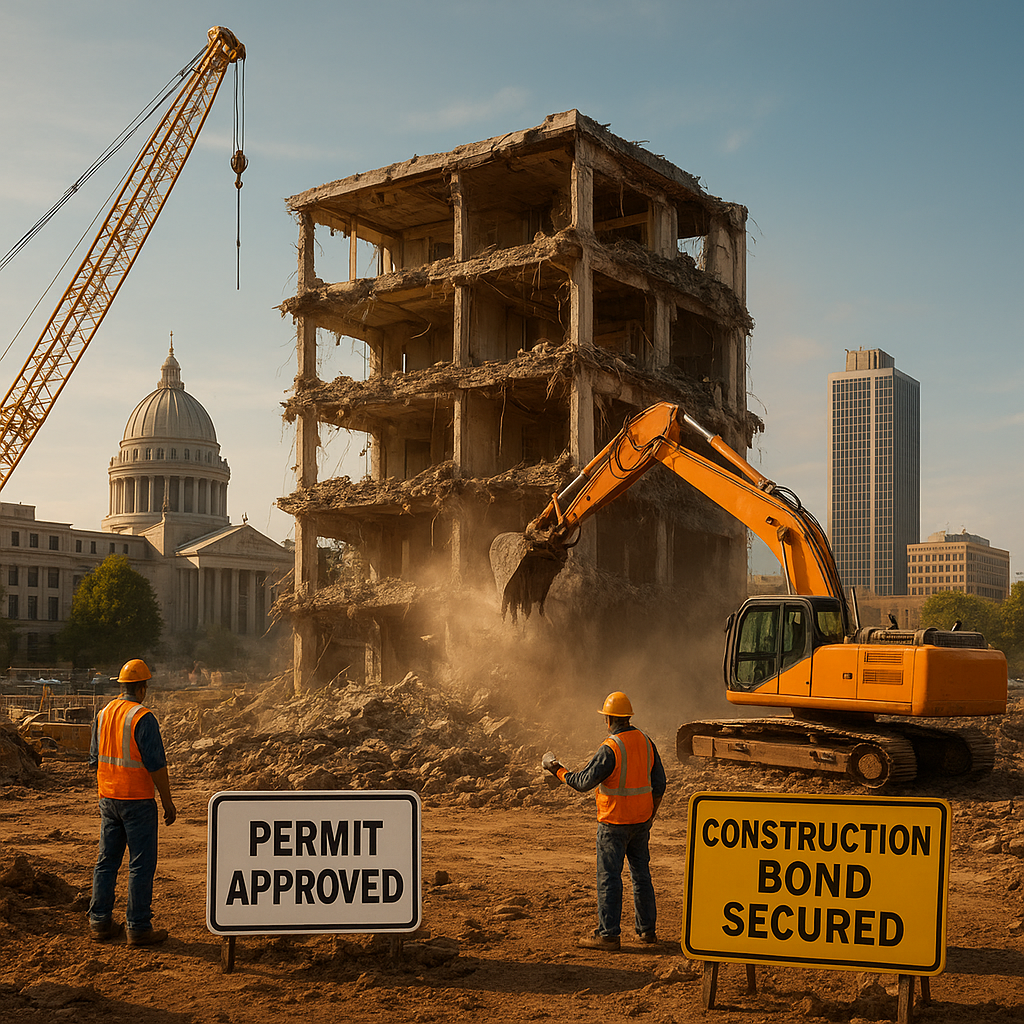
Have you ever driven past an old, crumbling building in Jackson, Mississippi, and wondered what it takes to bring it down safely? It’s not as simple as firing up heavy machinery and hoping for the best. The City of Jackson wants to make sure that when a demolition project starts, it gets finished the right way—cleaning up every last brick and protecting the community. That’s where a specific kind of financial promise comes into play: the demolition permit bond.
If you’re a contractor, a property owner, or just someone curious about local rules, understanding this bond might feel like learning a new language. But it doesn’t have to be complicated. Think of it like this: the bond is a deposit you don’t have to pay upfront, as long as you keep your word. Let’s walk through what that really means, why the City of Jackson requires it, and how you can get one without breaking a sweat.
Assuming your bond cost is just a simple percentage
The most costly mistake is thinking your Oregon contractor license bond premium is a fixed rate like 1% or 2% of the bond amount. In practice, your final cost is determined by an underwriter reviewing your personal credit score, financial statements, and business history. Applicants with lower credit often pay 3-5% or more. What slows this down is not having your financials ready. The part most applicants underestimate is how much a strong credit profile can reduce your annual premium.
- Your personal credit score is the primary factor in your final rate.
- Have 2 years of business and personal financial statements prepared for review.
- A higher bond amount doesn't mean a proportionally higher cost; underwriting is key.
What Exactly Is a Demolition Permit Bond?
Imagine you’re borrowing your neighbor’s fancy lawnmower. Before they hand over the keys, they might ask you to promise you’ll return it in one piece and maybe leave your phone number. A demolition permit bond is that promise, but in a legally binding form involving three parties. The City of Jackson is like the neighbor who wants protection. You, the contractor or project owner, are the one making the promise. And a surety company acts as a trusted friend who guarantees you’ll do what you said.
In simpler terms, a demolition permit bond is a type of surety bond that guarantees you’ll follow all local building codes, safety regulations, and cleanup rules during a teardown. If you walk away from a half-demolished eyesore or fail to grade the land properly, the city can use this bond to hire someone else to fix the mess. It’s not insurance for you—it’s protection for the public and the city government.
Why Does Jackson, Mississippi Require This Bond?
Jackson is a city with a rich history and a mix of aging properties. While revitalization is exciting, a demolition gone wrong can leave behind hazards like sharp debris, open foundations, or even rodent infestations. The city wants to prevent those dangerous gaps between “we tore it down” and “we restored the site.”
Without a bond requirement, a contractor could simply obtain a cheap permit, start the job, and vanish if the project hits financial trouble. Taxpayers would then foot the bill for clearing the rubble. By asking for a demolition permit bond, the City of Jackson transfers that risk away from the community and back to the party responsible. It’s a simple but powerful way to say, “You can break it down, but you have to clean it up.”
A Real-World Scenario
Picture a small contractor, let’s call him Mike, who wins a bid to demolish an abandoned corner store on State Street. Mike pulls the permit and pays a premium for a $10,000 demolition bond. Halfway through, his excavator breaks down, and he runs out of money. Frustrated, Mike leaves the site with a half-collapsed wall and piles of debris. The neighborhood is stuck staring at a safety hazard. Because Mike had a bond, the city doesn’t wait around. They file a claim, the surety pays out, and a new crew cleans up the property. Mike, however, now owes the surety company every penny they paid out. The bond didn’t let him off the hook; it just made sure the city wasn’t the one left holding the bag.
Who Needs to Secure a Demolition Permit Bond?
Not every project in Jackson will trigger this requirement, but you’re very likely to need one if you’re acting as a general contractor or a specialist in structural teardowns. Specifically, the bond is typically tied to the permit application itself. If the Jackson’s Building and Permits Department lists a bond as a condition for issuing your demolition permit, you can’t skip it.
This applies whether you’re razing a small residential garage or a large commercial warehouse. Even if you’re a homeowner pulling your own permit to knock down a backyard shed, the city might still require a minimal bond to ensure you restore the area. The key question to ask is: “Will this project disturb the ground or structure in a way that could leave a public nuisance if unfinished?” If the answer is yes, expect the bond requirement.
Breaking Down the Bond Amount and Costs
When people hear the word “bond,” their mind often jumps straight to a huge number they can’t afford. That’s because there’s a common mix-up between the bond amount and what you actually pay. The bond amount, also called the penal sum, is the maximum protection the city gets. In Jackson, this amount is set by local officials and can vary based on the size and scope of the demolition. You might see sums like $5,000, $10,000, or even $25,000 for larger jobs.
But here’s the good news: you don’t pay that full amount upfront. You pay a small percentage—usually between 1% and 10%—as an annual premium. That’s your real out-of-pocket cost. For a $10,000 bond, you might only spend $100 to $500 if you have decent credit and business history. It’s similar to renting a car. The rental company puts a large hold on your credit card for potential damage, but you only actually pay the small daily fee. The bond premium is your “rental fee” for the peace of mind you give the city.
What Influences Your Premium Rate?
Surety companies look at a few factors when pricing your demolition bond. Your personal credit score is the biggest piece of the puzzle. A higher score signals reliability, so you’ll land on that lower end of the percentage range. Your experience and work history matter too. A seasoned demolition contractor with zero claims on their record will likely get the best rate. Even your business financials can tip the scale. The process is less about punishing you for past mistakes and more about predicting whether you’ll finish the job without drama.
How to Get a Demolition Permit Bond in Jackson: A Step-by-Step Guide
Securing a bond can feel bureaucratic, but breaking it into steps clears away the fog. The process usually goes like this:
- Confirm the exact requirement. Visit or call the City of Jackson’s Building and Permits division. Ask for the specific bond amount and the form they need. Don’t guess; get it in writing.
- Reach out to a surety bond agency. You can work with an independent insurance agent or a specialized bond provider. Tell them you need a “City of Jackson Demolition Permit Bond” and share the required penal sum.
- Complete a simple application. You’ll provide basic information about yourself and your business. For small bonds, this can take minutes. Larger bonds might require a deeper review.
- Get your quote and pay the premium. Once approved, you’ll see your premium. After payment, the bond is issued immediately in most cases.
- File the bond with the city. The surety will give you the original bond document. Take this to the Jackson permit office along with the rest of your application. That’s it—you’re cleared to start work.
What Happens If Something Goes Wrong? Understanding Claims
Nobody plans for a project to go south, but it’s important to know how the safety net works when it’s triggered. A claim arises when the city determines you’ve violated the terms of your permit or left the site in an unacceptable condition. Maybe you didn’t properly backfill an excavation, or you hauled debris in a way that damaged a public road. The city notifies the surety company, detailing the breach.
The surety investigates. If the claim is valid, they will pay the city up to the bond amount to cover the cost of making things right. Did you catch that key part? The bond pays the city, not you. Then, the surety will turn to you for full reimbursement. It’s not a gift; it’s a temporary credit line you must pay back. That’s why smart contractors view the bond as an extension of their reputation. Avoiding claims isn’t just about saving money—it’s about keeping that relationship with the surety healthy for future projects.
Clearing Up Common Confusion: Bond vs. Insurance
Almost everyone mixes these up at first. An insurance policy protects your own business from unknown disasters, like a sudden hailstorm damaging your truck. If something bad happens, the insurance company pays you, and the premium might rise. A demolition bond, on the other hand, protects a third party (the City of Jackson) from your failure to perform. If you trigger a bond claim, you owe the money back. So, while insurance guards your wallet, a bond guards your promise to the public. You’ll probably need both: general liability insurance for your protection, and the permit bond for the city’s protection.
Little-Known Ways a Bond Protects Your Business Reputation
Beyond just checking a box on a permit application, holding a demolition bond silently tells clients and neighbors you’re a professional who can be trusted. It sets you apart from unlicensed operators who might cut corners. The city keeps a record of bonded contractors, and a clean claims history can actually help you win more bids. Property developers feel safer hiring someone who’s already vouched for by a surety company. In Jackson’s tight-knit business community, that can make all the difference.
Keeping the City Beautiful, One Bond at a Time
Jackson’s demolition rules aren’t random red tape designed to frustrate you. They’re a collaborative effort to keep neighborhoods safe and ready for new growth. Every time a contractor tears down a dangerous structure and restores the ground, they’re helping transform the city’s landscape. The bond is simply the quiet guarantee underneath that transformation, making sure the job doesn’t stop halfway.
So, whether you’re about to knock down your first wall or you’re a seasoned pro eyeing a contract in Fondren, embrace the bond. It’s a few hundred dollars and few minutes of paperwork that can save you thousands in headaches later. After all, building a better Jackson starts with a solid, and well-cleaned, foundation.