General contractor license bonds in Tupelo, Mississippi, are mandatory three-party agreements that guarantee contractors follow city building codes and regulations, protecting homeowners and the city from financial harm caused by substandard work or unfinished projects.
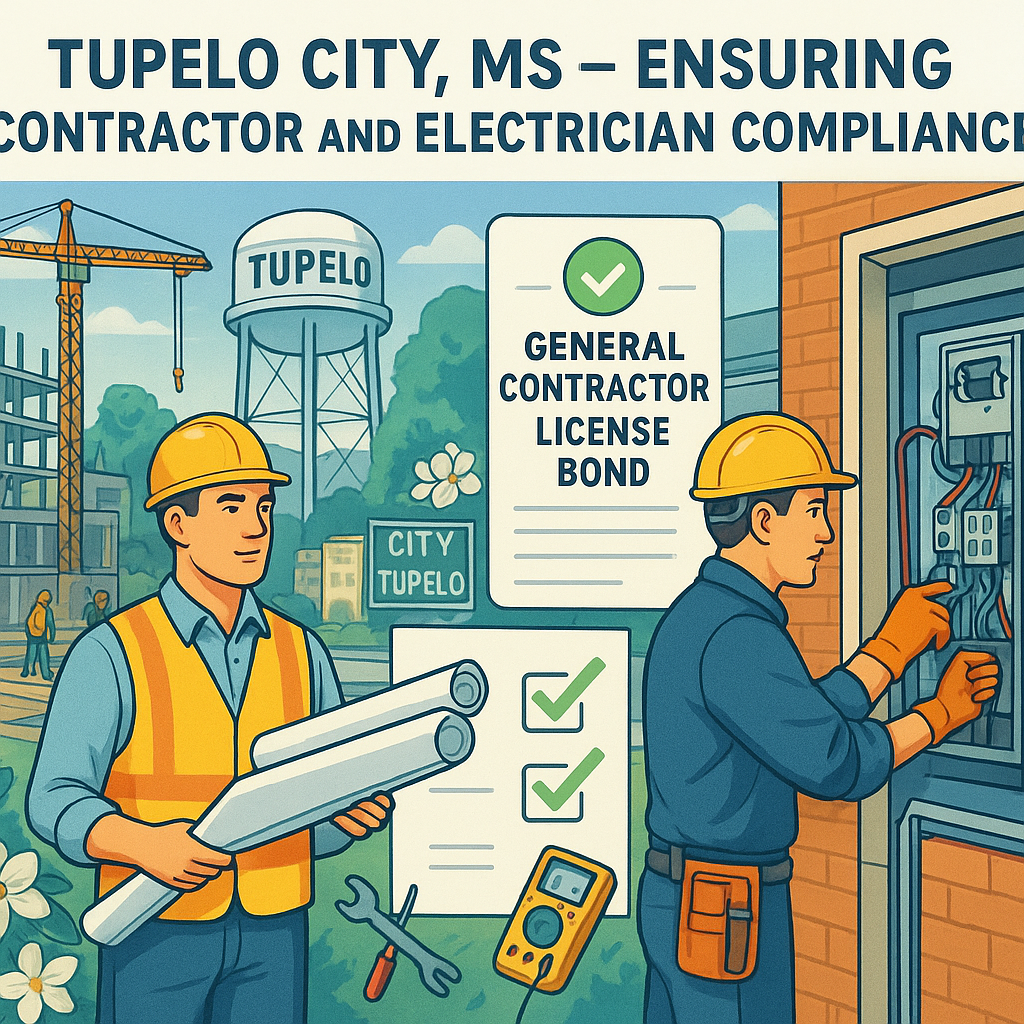
If you’re a general contractor planning to work in the City of Tupelo, Mississippi, you’ve probably come across the term “license bond.” Maybe the city’s building department mentioned it, or a fellow contractor told you it’s non-negotiable. Whatever brought you here, you’re in the right place. We’re going to walk through what a Tupelo MS general contractor license bond is, how it works, why it matters, and how you can get one without the headache.
Assuming your bond cost is just a simple percentage
The most costly mistake is thinking your Oregon contractor license bond premium is a fixed rate like 1% or 2% of the bond amount. In practice, your final cost is determined by an underwriter reviewing your personal credit score, financial statements, and business history. Applicants with lower credit often pay 3-5% or more. What slows this down is not having your financials ready. The part most applicants underestimate is how much a strong credit profile can reduce your annual premium.
- Your personal credit score is the primary factor in your final rate.
- Have 2 years of business and personal financial statements prepared for review.
- A higher bond amount doesn't mean a proportionally higher cost; underwriting is key.
What Is a General Contractor License Bond?
Let’s start with the basics. A general contractor license bond is a three-party agreement that acts like a financial safety net. Think of it as a promise backed by money. The three parties involved are:
- The obligee: The City of Tupelo, Mississippi – the authority that requires you to have the bond.
- The principal: You, the general contractor, who needs to buy the bond.
- The surety: The insurance-like company that issues the bond and guarantees payment if something goes wrong.
In simple terms, the bond guarantees that you’ll follow all the city’s building codes, rules, and regulations. If you don’t, and someone gets hurt financially because of it, the bond can step in to make things right. It’s not insurance for you – it’s protection for the public and the city.
Why Does Tupelo, Mississippi Require a License Bond?
Picture this: You hire someone to build a home addition. You pay a hefty deposit. The work is sloppy, doesn’t meet code, or worse – the contractor walks away. Who’s left holding the bag? Unfortunately, the homeowner. To prevent this kind of nightmare, the City of Tupelo mandates that general contractors carry a license bond. It’s the city’s way of saying, “We care about our residents, and we want to make sure contractors play by the rules.”
The bond isn’t just red tape. It’s a sign of a professional who’s committed to doing things the right way. For the city, it adds a layer of accountability. For homeowners, it offers peace of mind that they’re not gambling with their hard-earned money.
Who Needs a General Contractor Bond in Tupelo?
If you’re pulling permits for construction, remodeling, or renovation work within the Tupelo city limits, you almost certainly need a license bond. General contractors, of course, are at the top of that list. But the requirement might also extend to specialty trades depending on the project. You’ll often see separate bond categories for electricians, plumbers, and HVAC technicians. For now, let’s focus on the City of Tupelo MS General Contractor License Bond – the one that covers broad construction work.
If you’re unsure whether your specific situation requires a bond, the simplest step is to call the Tupelo City Building Department. They can confirm the exact bond amount and paperwork you’ll need. Better to ask once than to find out later and face fines or project delays.
How Does a Contractor License Bond Work?
Here’s where many contractors get confused. The bond works a bit like a loan in the event of a claim – not free insurance. Say you agree to build a deck, but halfway through the project you abandon it, and the homeowner has to pay someone else to finish. The homeowner files a complaint with the city and makes a claim against your bond. The surety company investigates. If the claim is valid, the surety pays the homeowner up to the bond’s penalty amount. Then, here’s the kicker: you have to pay the surety back every penny. Yes, every single cent. That’s why it’s crucial to maintain honest business practices and avoid claims altogether.
Think of the bond as a cash cushion that the public sits on, but you’re responsible for keeping it fluffed. If it gets flattened, you refill it.
The Cost of a Tupelo Contractor License Bond
You’re not expected to pay the full bond amount upfront. What you pay is a small percentage called the premium. For example, if the required bond amount is $10,000, your annual premium might be somewhere between $100 and $300, depending on a few factors.
What influences that premium?
- Your credit score: A strong credit history usually means a lower premium. Surety companies see it as a sign of reliability.
- The bond amount: Higher bond amounts carry higher premiums, though not proportionally.
- Your business financials: Some sureties look at your experience and business stability.
- Claims history: A clean record works in your favor.
Even with less-than-perfect credit, you can still get bonded. Special programs exist for contractors who need a little extra help. Don’t assume you’re stuck – reach out to a bond specialist who understands the Tupelo MS market.
Steps to Get Your General Contractor License Bond in Tupelo
Okay, so you know what the bond is and why you need it. Now, how do you actually get one? The process is surprisingly straightforward:
- Find out the required bond amount. Ask the Tupelo City Building Department or check their official website. Bond amounts vary based on the type and scope of work.
- Contact a reputable surety bond agency. Look for one that specializes in contractor license bonds. They’ll guide you through the application – often online in minutes.
- Provide basic information. Expect to share your business name, address, tax ID, and sometimes a Social Security number for a soft credit check.
- Get your quote and pay the premium. Once approved, you pay the annual premium and the bond is issued instantly.
- File the bond with the city. The surety will give you an official bond form. You’ll need to submit this to Tupelo as part of your license application or renewal.
That’s it! The entire thing can often be done in one afternoon. No office visits, no stacks of paperwork.
Bond vs. Insurance: Clearing Up the Confusion
This is a common mix-up, so let’s set the record straight. General liability insurance protects you from accidents, like if a ladder falls and damages a client’s car. A license bond protects the public and the city from your failure to follow rules. They’re not interchangeable. In fact, Tupelo may require both. Insurance pays claims and doesn’t demand reimbursement from you; a bond pays and then turns around and collects from you. They’re different tools for different purposes, and you need both in your professional toolkit.
Common Misconceptions About License Bonds
Let’s bust a few myths that float around job sites and coffee shops:
- “The bond covers my workmanship.” Not exactly. It kicks in for code violations, permit issues, or regulatory breaches – not simply because a client isn’t happy with a paint color.
- “Once I have a bond, I’m covered forever.” Bonds have expiration dates. You’ll need to renew yours, usually annually, for as long as you’re actively licensed.
- “A bond is too expensive for a small contractor.” Premiums are surprisingly affordable, often less than a monthly cell phone bill. It’s a small price for credibility and compliance.
- “Only big companies need this.” Nope. Even a one-person operation pulling a permit in Tupelo is likely to face the bond requirement.
Frequently Asked Questions
Can I use a bond from another city to work in Tupelo?
No. License bonds are specific to the jurisdiction. A bond that works for Jackson or any other Mississippi city won’t satisfy Tupelo’s requirements. You’ll need a separate bond naming the City of Tupelo as the obligee.
What happens if I let my bond lapse?
Your license can be suspended or revoked, and you could be hit with fines. Even worse, you’d be operating illegally, which can do long-term damage to your reputation. Always set a reminder to renew.
How quickly can I get bonded?
Most applications are approved within the same business day, often within hours. Some agencies offer instant online issuance, so you can walk into the city office with your bond in hand that very afternoon.
Putting It All Together
A general contractor license bond is more than just a piece of paper – it’s your ticket to building a trusted business in Tupelo, Mississippi. It shows the city and your clients that you stand behind your work and respect the rules that safeguard the community. Without it, you’re locked out of permits and, ultimately, out of good opportunities.
If you’re ready to take the next step, start with a quick call to Tupelo’s building authority to nail down the required bond amount. Then partner with a surety professional who can walk you through the rest. Before you know it, you’ll have your bond squared away and your focus back where it belongs – on creating quality projects that make Tupelo an even better place to live and work.