Louisiana requires proprietary school solicitors to obtain a surety bond and permit to ensure ethical recruitment and financial protection for students. The Form PSC-5 bond guarantees compensation for damages if a solicitor misleads prospective students or violates state regulations.
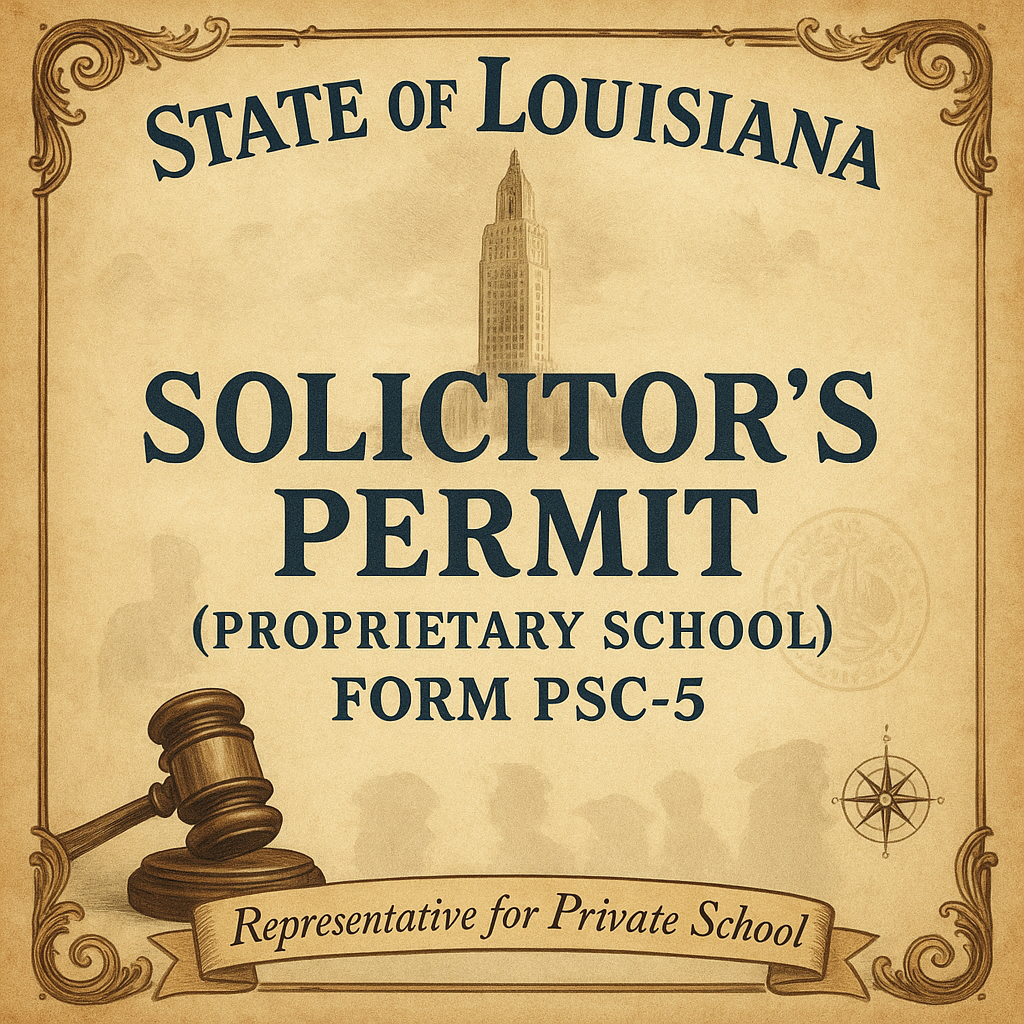
Ever heard the phrase “going to school on someone’s dime”? In Louisiana, that’s exactly what a proprietary school permit is designed to handle — but in the best possible way. If you represent a private, for-profit school in the Bayou State, the Board of Regents wants to make sure everything stays above board. That’s where the Form PSC-5 surety bond steps in. Let’s unpack what that means, why it matters, and how you can navigate this requirement without breaking a sweat.
Thinking a license bond is about your work quality
Most contractors believe the Arizona Contractor License Bond guarantees their project performance. It doesn't. This bond is a financial guarantee to the state that you will follow licensing laws, pay owed taxes, and cover certain public liabilities from your business operations. The part most applicants underestimate is the personal credit check. Underwriters review your credit to assess the risk you'll default on the bond's financial obligation, not your skill as a contractor. A low score doesn't automatically disqualify you, but it directly impacts your premium rate and the speed of approval.
- The bond protects the public and state, not your client's project outcome.
- Your personal credit score is the primary factor determining your bond premium.
- You are personally liable for any claims paid by the surety on your bond.
What Exactly Is a Proprietary School in Louisiana?
Before we dive into permits and bonds, let’s clear up the term. A proprietary school is simply a privately owned, for-profit educational institution. Think trade schools, cosmetology academies, truck driving schools, or IT boot camps. These aren’t your typical public colleges; they’re businesses that teach specific skills — and they charge tuition for that training.
Because money changes hands upfront, the state steps in to protect students. Louisiana’s Board of Regents oversees these schools and requires them to follow certain rules. And if someone is out there actively recruiting students — called a solicitor or representative — the state wants even more assurance that everything is legitimate.
Enter the Solicitor’s Permit: Who Needs One?
Do you knock on doors, call prospective students, or set up booths at job fairs to enroll people into a proprietary school? Then you’re a solicitor. In Louisiana, anyone who acts as a representative for a private, for-profit school must carry a valid solicitor’s permit. It’s like a driver’s license for enrollment agents.
This permit isn’t just a fancy piece of paper. It tells families, “This person has met state standards and can legally talk to you about this school.” Without it, you’re driving without a seatbelt — risky and against the rules. And part of getting that permit often involves the PSC-5 surety bond.
The Big Player: Form PSC-5 Surety Bond
So, what’s this bond, and why does a piece of paper with “PSC-5” printed on it keep popping up? In simple terms, a surety bond is a three-way promise. You (the solicitor), the state (the Board of Regents), and a bonding company sign on to a guarantee. If you break the rules, the bond covers financial losses up to a certain amount.
The Form PSC-5 surety bond is specific to Louisiana’s proprietary school solicitors. It’s not optional if the Board of Regents says you need one. The bond amount is set by the state, and it acts as a safety net. Picture it like a security deposit: you don’t plan to cause damage, but if something goes wrong, the deposit makes things right.
How Does the Bond Protect Real People?
Let’s paint a picture. Imagine a representative visits a single mom and promises her that their medical assistant program guarantees a job within two weeks of graduation. She enrolls, pays tuition from her savings, and then discovers the school’s placement rate is abysmal and no such guarantee exists. She’s been misled.
Because the solicitor held a PSC-5 bond, the state can help her get her money back from the bond. The bonding company pays her, and then the solicitor must repay the bonding company. It’s a way to keep solicitors honest and families protected. No one wants to think about worst-case scenarios, but this bond makes sure someone has your back if things go south.
Who Must Obtain This Bond?
Not every school employee needs one. The bond is typically required for individuals who are actively recruiting or soliciting students on behalf of a proprietary school. This could include:
- Independent contractors hired to bring in new enrollments.
- Admissions representatives who travel off campus to meet potential students.
- Third-party recruiters who work on commission.
If you’re on the payroll and sit in the admissions office taking calls from interested students who called you, you might not need a solicitor’s permit. The line is usually drawn at who initiates the contact. When in doubt, reach out to the Louisiana Board of Regents. A quick call can save you a world of legal trouble.
What Does the Bond Cost? (Spoiler: Less Than You Think)
This is everyone’s big question, right? A surety bond is not the same as buying insurance where you pay the full coverage amount. The bond amount, say $10,000 or $20,000, is the total protection available — not the price you pay. You only pay a small percentage, called the premium. For most people with decent credit, that might be 1% to 3% of the bond amount annually.
So, on a $10,000 bond, you could pay as little as $100 per year. Several factors affect your rate, such as:
- Credit score – stronger credit often means a lower premium.
- Experience and past claims – a clean history helps.
- Bond amount required – usually set by state regulation.
The good news is that even with less-than-perfect credit, specialized surety companies can still help you get bonded. You might pay a bit more, but it’s rarely out of reach.
Step by Step: Getting Your PSC-5 Bond and Solicitor’s Permit
Feeling a little overwhelmed? Don’t be. Think of this as a recipe with just a few ingredients.
- Confirm your requirement. Talk to the school you represent or the Board of Regents to verify that you need a solicitor’s permit and the associated PSC-5 bond.
- Determine the bond amount. The state will tell you the exact penalty amount. It’s often listed on the permit application or on the board’s website.
- Shop for a surety bond. You can go directly to a bond agency or use an online platform that specializes in surety bonds. They’ll ask for some basic information and run a quick credit check.
- Get your bond issued. Once approved, you’ll receive the actual Form PSC-5 document. Keep this somewhere safe — you’ll need to submit it with your permit application.
- Submit your application. File everything with the Louisiana Board of Regents, pay any applicable permit fees, and wait for your solicitor’s permit to be approved.
- Keep records and renew on time. Bonds and permits expire. Mark your calendar so you don’t have a lapse that could pause your ability to work.
Frequently Overlooked Tips (Learn From Others’ Mistakes)
Over the years, folks have stumbled on a few common rocks. Let’s make sure you don’t.
- Don’t assume the school covers your bond. Often the individual solicitor is responsible for obtaining and paying for the bond. Read the fine print in your contract with the school.
- Keep your bond continuous. Opt for a continuous bond form rather than one that automatically cancels. A gap could mean starting the process all over and potentially a black mark with the board.
- Notify the board of any changes. If you switch schools, your permit and bond probably don’t transfer automatically. Stay compliant by updating your paperwork.
- Be truthful in your marketing. A bond claim not only costs money but can make it nearly impossible to get bonded again. Your reputation is worth more than one quick enrollment.
Why Louisiana Cares So Much About This Bond
You might wonder, “Is this just bureaucratic red tape?” Hardly. The state has a deep interest in protecting its residents from fraudulent education schemes. Louisiana has seen fly-by-night schools pop up, collect tuition, and vanish like morning fog. The solicitor’s permit and surety bond requirement creates a paper trail, requires financial accountability, and gives harmed students a path to recover their money.
It also elevates the entire industry. When ethical operators are bonded and permitted, the schools that play fair don’t have to compete with scammers. It’s a win-win: families feel safer, and legitimate schools attract more students.
Ready to Take the Next Step?
Understanding the Louisiana proprietary school surety bond Form PSC-5 doesn’t have to feel like studying an ancient language. Once you break it down, it’s simply a promise wrapped in paperwork — a promise to do your job ethically and transparently. If you’re stepping into the world of proprietary school solicitation, embrace the bond as a badge of trust, not a burden.
Check with the Louisiana Board of Regents for the most current requirements, contact a reputable surety bond provider, and start building your career on a solid, compliant foundation. After all, helping people find the right education is a noble calling. Let this bond be the quiet partner that keeps your professional journey clean and confident.