Oklahoma City requires sidewalk contractor bonds as a financial guarantee that contractors follow city codes and regulations, protecting property owners from shoddy work. Contractors must secure this surety bond before obtaining permits, as it signals legitimacy and ensures compliance with municipal standards.
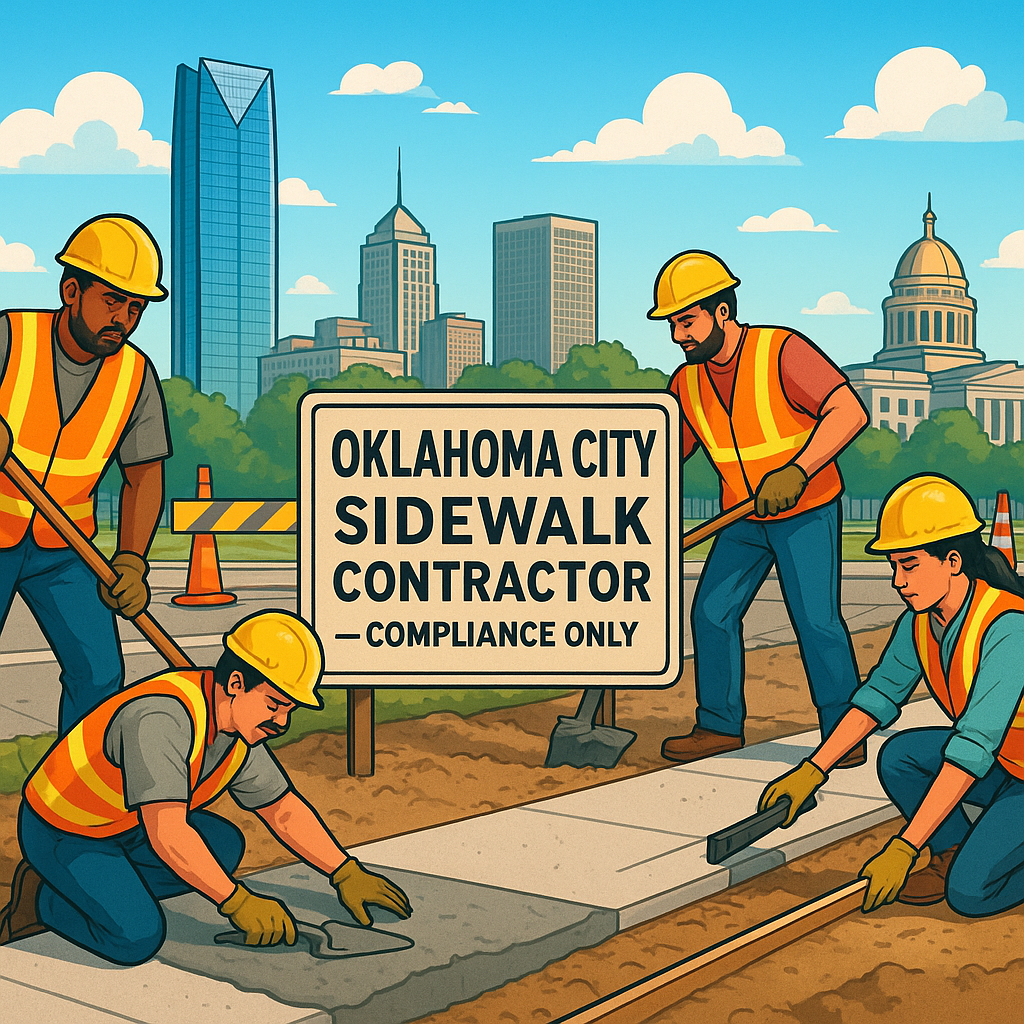
If you’ve ever strolled down a sidewalk in Oklahoma City and admired smooth concrete under your feet, there’s a good chance a licensed sidewalk contractor made it happen. But before that contractor could even break ground, they had to take care of something behind the scenes — a sidewalk contractor bond. You might be hearing this term for the first time, or perhaps you’re a contractor trying to wrap your head around the rules. Either way, you’re in the right place. We’re going to walk through what an Oklahoma City sidewalk contractor bond is, why it matters for compliance, and how it quietly protects everyone who lives in or visits the city.
Your personal credit score is the primary driver of your bond cost
Most freight broker applicants focus on the ,000 bond amount, but the part most applicants underestimate is how heavily their personal credit score impacts the premium. In practice, this often comes down to the underwriter's review of your FICO score. A score above 700 can secure a rate as low as 1-3% of the bond amount. A score below 650 can push rates to 10-15% or require a co-signer. What usually slows this down is applicants not knowing their exact score before applying, which leads to unexpected quotes and delays.
- Know your exact FICO score before you apply for an accurate quote
- Rates are tiered: Excellent credit (700+) pays 1-3%, while lower scores pay 10-15% or more
- If your score is below 650, prepare financials or consider a co-signer to improve approval odds
What Exactly is a Sidewalk Contractor Bond?
Let’s break it down without the legalese. A sidewalk contractor bond is a type of surety bond — think of it as a three-way promise. The three parties involved are the contractor (you, if you’re doing the work), the City of Oklahoma City (the one requiring the bond), and the public at large. The bond is a financial guarantee that the contractor will follow all city codes, ordinances, and regulations when building or repairing sidewalks.
It’s not insurance for the contractor, though. Actually, it’s more like a security deposit held by a third party. If the contractor cuts corners, damages property, or fails to finish the job according to the city’s rules, a claim can be made against the bond to fix the problem. So, in simple terms, the bond is the city’s way of saying, “We trust you to do the job right — but just in case, there’s money set aside to make things right.”
Why Does Oklahoma City Require This Bond?
Imagine you own a home, and the city needs to repair the sidewalk in front of your house. A crew shows up, tears out the old concrete, and then … disappears for weeks. Or maybe they finish the job, but the new sidewalk slopes the wrong way and turns into a mini pond every time it rains. Who pays to fix that? Without a bond in place, you might be stuck in a frustrating loop of phone calls with no resolution.
Oklahoma City requires sidewalk contractor bonds exactly to prevent that nightmare. The bond is a compliance tool. It makes sure contractors take their obligations seriously. Because if they don’t, the bond company can step in and cover the cost to hire someone else to do the job correctly. This keeps sidewalks safe, functional, and up to the city’s standards — and it keeps property owners from footing the bill for shoddy work.
On a broader level, the bond also helps filter out fly-by-night operators. Getting bonded involves a background check and financial review, so it signals that a contractor is legitimate and reliable.
Who Needs an OKC Sidewalk Contractor Compliance Bond?
If you’re a contractor planning to perform any sidewalk construction, repair, or maintenance within Oklahoma City limits, you’ll almost certainly need this bond before you pull a permit. The specific bond required by the city is often called a “Sidewalk Contractor – Compliance Only” bond. It’s not optional; it’s a box you have to check off to legally work on public sidewalks or areas that impact public right-of-way.
This includes independent concrete finishers, paving companies, general contractors dabbling in sidewalk projects, and even subcontractors if they’re directly permitted by the city. The requirement isn’t meant to make your life harder. It’s there to create a level playing field where everyone follows the same rules and the public stays protected.
How Does the Bond Process Actually Work?
Getting a surety bond can feel confusing the first time, so let’s think of it like renting an apartment. When you rent, you pay a security deposit that the landlord holds onto. If you leave the place trashed, the landlord uses that deposit to cover repairs. If you leave it spotless, you get your money back (minus normal wear and tear). A contractor bond works in a similar way, except you don’t put up the full amount of the bond yourself. Instead, you pay a smaller percentage — called a premium — to a surety company. That company then extends the full bond amount as a guarantee to the city.
The bond is active for a set term, usually one year, and you’ll need to renew it to keep your contractor privileges. During that time, if everything goes smoothly and no claims are filed, the bond simply quietly exists in the background. You might even forget it’s there — until renewal time rolls around.
How Much Does an Oklahoma City Sidewalk Contractor Bond Cost?
Here’s where things get a little more specific. The cost of the bond depends on two main factors: the required bond amount set by the city and your personal credit score. For sidewalk contractor compliance bonds in Oklahoma City, the bond amount is often a fixed figure (for example, $10,000, though you’ll want to verify the exact dollar amount with the city’s Public Works department).
Don’t worry, you won’t have to pay the full $10,000 out of pocket. Your premium will typically be a small percentage of that total — often somewhere between 1% and 10%. If you have strong credit and a solid business history, you might pay as little as $100 to $300 a year. If your credit has taken a few hits, the premium might be higher, but even then it’s usually manageable. The surety company is simply measuring risk. Better credit signals that you’re less likely to generate a claim, so they reward you with a lower rate.
What Happens If There’s a Claim Against Your Bond?
This is the part every contractor hopes they’ll never experience, but it’s crucial to understand. Let’s say a homeowner or the city itself files a claim, alleging you didn’t compact the soil properly and the sidewalk has already started to crack. The surety company will investigate — they won’t just cut a check blindly. If the claim is valid, the surety pays up to the bond amount to fix the problem.
But here’s the catch that often surprises contractors: the bond is not a form of insurance that absolves you of responsibility. Once the surety pays out, you’re legally obligated to reimburse them for every penny they spent. That’s right — it’s your debt to repay. That’s why it’s so important to treat every job with care, stick to city specifications, and communicate clearly with property owners. A claim can strain your finances and make it harder (or more expensive) to get bonded in the future. Your reputation in the construction community also takes a hit, which is something no marketing budget can instantly fix.
Steps to Getting Your Sidewalk Contractor Bond
If you’re ready to get your compliance bond and start working, you’ll be glad to know the process is fairly straightforward. Here’s a typical roadmap:
- Confirm the exact bond requirements with the City of Oklahoma City. Every municipality has its own nuances. Check the city’s website or call the permit office to find out the current bond amount and any specific forms they require.
- Gather your business and personal info. Surety providers will need your legal business name, contact details, Social Security number, and sometimes a few years of financial statements. This helps them assess risk quickly.
- Apply with a reputable surety bond agency. Many agencies allow you to apply online in minutes. You’ll get a quote based on your credit and the bond amount.
- Pay the premium and receive your bond form. Once approved, you’ll receive the official bond document that you’ll sign as the principal. The surety company will also sign it.
- File the bond with the city. The city needs the original bond or a certified copy before they’ll issue your permit or license. Keep a copy for your own records too.
Why This Bond Matters More Than You Think
It’s easy to look at compliance bonds as just another bureaucratic hoop to jump through. But when you step back, you’ll see that the Oklahoma City sidewalk contractor bond creates a safety net that holds the whole neighborhood together — literally and figuratively. Sidewalks are more than just concrete paths; they’re how kids get to school, how neighbors walk their dogs, and how elderly residents maintain their independence. If a sidewalk fails, it’s more than an expense. It’s a safety hazard and a daily inconvenience.
By requiring bonds, the city reinforces a culture of accountability. The bond tells property owners, “If something goes wrong, you have a way to recover.” And to the contractor, it’s a badge of professionalism. It says you stand behind your work so confidently that a third party is willing to back you up financially.
Common Questions About OKC Sidewalk Bonds
Is the Compliance Bond the Same as a Performance Bond?
Not exactly, although they’re cousins. A performance bond typically guarantees the completion of a specific construction project. A compliance bond, on the other hand, focuses on following all applicable rules and regulations over a period of time. Oklahoma City’s sidewalk contractor bond is more about ongoing compliance, but in practice, it functions as a safeguard for both the public and the project outcome.
Can I Get Bonded with Less-than-Perfect Credit?
Absolutely. Surety companies work with a broad range of credit profiles. While your rate may be higher, there are programs specifically designed for contractors who are rebuilding their credit. Don’t let a past financial hiccup stop you from pursuing a bond and growing your business.
Making Compliance Second Nature
If you’re a contractor just starting out, the word “compliance” might carry a heavy weight. But think of the bond as your commitment in physical form. Every time you pour a sidewalk slab that meets city code, you’re not just building infrastructure — you’re reinforcing trust. And in a place like Oklahoma City, where community pride runs deep, that trust is the real foundation you’re laying down.
So, the next time you see a fresh stretch of sidewalk curving along a neighborhood street, you’ll know there’s a story beneath that concrete. It’s a story of a contractor who followed the rules, a city that asked for accountability, and a bond that quietly stood guard the whole time.