Sign contractor bonds in Tulsa County serve as a three-party compliance guarantee, ensuring contractors follow all local ordinances, zoning laws, and building codes for sign installation. The requirement protects community safety and property values by creating a financial incentive for contractors to adhere to county standards.
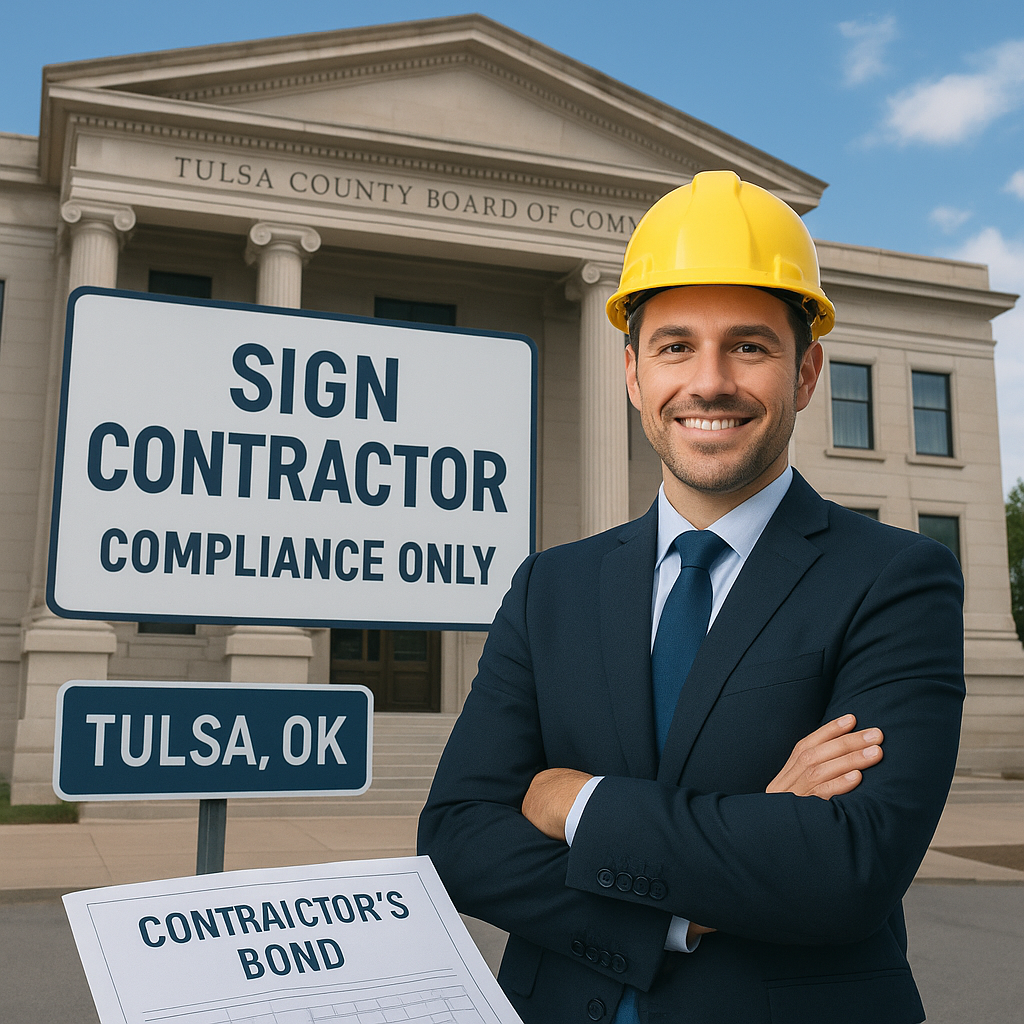
So, you’re a sign contractor in Oklahoma and just landed a promising project in Tulsa County. Maybe it’s a sleek new storefront sign, a towering monument sign for a shopping center, or a set of directional signs for a business park. You’ve got your tools, your crew, and your design ready. But before you can even think about digging the first post hole, the Board of County Commissioners has one crucial requirement: a sign contractor’s bond. Not a scary thing—think of it as your professional handshake with the county, a promise that you’ll do things by the book.
In Tulsa County, that specific promise is called a Sign Contractor – Compliance Only Bond. If that phrase sounds like a mouthful, don’t worry. By the end of this article, you’ll understand exactly what it is, why it exists, and how to get one without losing your mind. Let’s break it all down in plain, everyday language.
Assuming your bond cost is just a simple percentage
The most costly mistake is thinking your Oregon contractor license bond premium is a fixed rate like 1% or 2% of the bond amount. In practice, your final cost is determined by an underwriter reviewing your personal credit score, financial statements, and business history. Applicants with lower credit often pay 3-5% or more. What slows this down is not having your financials ready. The part most applicants underestimate is how much a strong credit profile can reduce your annual premium.
- Your personal credit score is the primary factor in your final rate.
- Have 2 years of business and personal financial statements prepared for review.
- A higher bond amount doesn't mean a proportionally higher cost; underwriting is key.
What Exactly Is a Sign Contractor’s Bond?
At its core, a sign contractor’s bond is a three-party safety net. Imagine you’re setting up a safety line before starting a big climb. The bond works similarly—it’s there to catch everyone if something goes wrong. The three parties involved are:
- You, the Contractor (the Principal): The person purchasing the bond and agreeing to follow all the rules.
- The Board of County Commissioners Tulsa County, OK (the Obligee): The local government body that requires the bond to protect the public and uphold county standards.
- The Surety Company (the Surety): The financial backer that guarantees you’ll keep your promises. If you don’t, they step in to make things right—and then you repay them.
Now, here’s the key phrase: “Compliance Only.” This isn’t about making sure you’ll finish building a sign or pay your material suppliers. Instead, it’s a focused guarantee that you’ll comply with all applicable Tulsa County ordinances, zoning laws, permitting rules, and building codes related to sign construction and installation. Think of it as a very specific vow: “I will not cut corners, I will get the right permits, and I will build signs that meet the county’s safety and aesthetic standards.”
Why Does the Board of County Commissioners Require This Bond?
You might wonder, “Why the extra hoop to jump through?” The answer is rooted in community protection. Tulsa County is a vibrant place with a blend of urban, suburban, and rural landscapes. Signs aren’t just decorations; they impact traffic safety, property values, and the overall look of a neighborhood. An improperly placed sign could block a driver’s view of oncoming traffic. A poorly anchored sign might become a hazard during Oklahoma’s notorious high winds.
The Board of County Commissioners uses the bond requirement as a proactive tool. It’s not about mistrusting contractors. Rather, it creates a clear financial incentive to do things right. If a contractor bypasses a permit or builds a sign that violates height limits, there’s a monetary consequence. That money doesn’t just disappear into a black hole—it can be used to remedy the violation, remove a dangerous sign, or compensate the county for the cost of enforcing its rules. Ultimately, the bond helps keep Tulsa County safe, attractive, and orderly for everyone.
Who Needs a Tulsa County Sign Contractor Bond?
Generally speaking, if you are in the business of installing, erecting, maintaining, or altering signs within the unincorporated areas of Tulsa County—or any jurisdiction where the Board of County Commissioners has authority—you’ll likely need this bond. This includes, but isn’t limited to:
- Sign manufacturing and installation companies
- Electrical sign contractors (especially if illumination is involved)
- Freelance sign installers who take on commercial projects
- General contractors who occasionally handle signage as part of a larger build
It’s always smart to check directly with the Tulsa County Clerk’s office or the Board of County Commissioners to confirm your specific situation. Rules can change, and knowing the exact bond amount and any additional registration requirements is your first step toward a smooth project.
The “Compliance Only” Bond in Action: A Real-World Example
Let’s put this into a scenario that’s easy to picture. Imagine you install a beautiful illuminated sign for a new restaurant. The sign looks great, but a few months later, a county inspector notices that it extends five feet above the allowed height limit and was never properly permitted. The county now has a problem: the sign violates the ordinance, and they need to either get it modified or removed.
Because you were bonded, the county can file a claim against your sign contractor bond. The surety company investigates. If the claim is found valid, the surety will pay the county up to the bond’s penalty amount to cover the cost of bringing the sign into compliance—or taking it down altogether. Then, here’s the part many contractors forget: you are fully responsible for reimbursing the surety for every penny they paid out. A bond isn’t insurance for you; it’s a line of credit you must repay. This is why it’s so crucial to stick to the rulebook from day one.
How Much Does a Sign Contractor Bond Cost in Tulsa County?
Now for the part you probably care about most: the dollars and cents. The county will set a required bond amount, which is the maximum the surety would pay out for a valid claim. Common amounts for sign contractor bonds in Oklahoma can range from $5,000 to $25,000, though you’ll need to verify the exact figure for Tulsa County.
The good news? You don’t have to lay out that full sum in cash. Instead, you pay a premium—a small percentage of the total bond amount. For contractors with solid credit, that premium might only be 1% to 3% of the bond amount. So, a $10,000 bond could cost as little as $100 to $300 per year. Here are a few factors that influence your premium:
- Your personal credit score: This is the biggest factor for small bonds.
- Business financials: For larger bonds, surety companies may look at your company’s revenue and stability.
- Your experience and claims history: A clean track record works in your favor.
If your credit isn’t perfect, don’t panic. Many surety companies offer programs for those with less-than-stellar credit, though the premium percentage may be higher. The important thing is to shop around and work with a bond professional who can find the best fit.
How to Get Bonded in a Few Simple Steps
Getting your hands on a Tulsa County sign contractor bond is usually a painless process if you know where to go. Here’s a quick walkthrough:
- Confirm the requirements. Reach out to the Board of County Commissioners or visit the Tulsa County official website to get the exact bond form name and required amount. This step ensures you’re not buying the wrong bond.
- Find a reputable surety bond agency. You can work with an agency that specializes in contractor bonds. They’ll have access to multiple surety markets and can compare rates for you.
- Complete a quick application. You’ll typically need to provide basic business and personal information. For small bonds, the application might only take a few minutes.
- Get your quote and pay the premium. Once approved, you’ll see the premium cost. Pay it, and the bond will be issued.
- File the bond with the county. The surety will give you the official bond document (often a seal-signed form). You then submit it to the Board of County Commissioners as part of your licensing or permitting process.
Many agencies can email you the bond instantly, which means you could have everything wrapped up in a single day.
What Happens If a Claim Is Filed Against Your Bond?
This is a question that keeps some contractors up at night, but knowing the process removes the mystery. A claim occurs when the obligee (Tulsa County) believes you’ve violated the compliance terms. They file a formal claim with the surety company. The surety will open an investigation—they’ll look at the evidence, the ordinances, and your side of the story.
If the claim is justified, the surety pays the county up to the bond limit. That’s where your responsibility kicks in: you must repay the surety in full. Failure to do so can lead to collections, legal action, and a seriously damaged reputation that would make it almost impossible to get bonded again. If the claim is unfounded, the surety will defend you and deny the claim. Either way, staying in compliance from the get-go is your best shield.
Don’t Confuse This with Insurance or Liability Coverage
This is a common mix-up so let’s clear the air. A sign contractor bond protects the county and the public. It does not protect you from lawsuits, property damage at your worksite, or injuries to your workers. For that, you need general liability insurance, workers’ compensation, and perhaps a commercial auto policy. Think of the bond as your ticket to legally work in Tulsa County, and insurance as your shield against the unpredictable. You’ll likely need both to run a fully compliant and protected business.
Quick Answers to Common Questions
Is the bond requirement only for projects in Tulsa County’s unincorporated areas?
Yes, typically. Incorporated cities within Tulsa County, like the City of Tulsa itself, may have their own licensing and bonding rules. The Board of County Commissioners’ bond applies primarily to areas outside city limits. But always double-check the project’s jurisdiction.
How long does the bond last?
Most sign contractor bonds are issued on an annual basis and must be renewed each year. Some sureties offer multi-year options, but you’ll need to keep your bond active as long as you’re performing regulated work.
Can I cancel my bond once I’m done with a project?
You typically can’t cancel a bond mid-term and get a refund the way you might with some insurance. If you stop working in the county, you can choose not to renew. Just be sure you’ve met all obligations for past projects to avoid any post-cancellation claims.
What if my credit isn’t great right now?
As mentioned, you still have options. Some specialty surety markets focus on bonds for individuals with lower credit scores. The premium will be higher, but it allows you to stay in business and keep working while you rebuild your credit. Over time, with no claims, you can often re-qualify for better rates.
Why This Bond Is More Than Just Paperwork
It’s easy to view a sign contractor bond as yet another bureaucratic hurdle. But flip the perspective for a moment. This small requirement signals to your clients, the county, and the community that you’re a serious professional who stands behind their work. When you hand over that bond certificate, you’re essentially saying, “I’ve got the financial backing to prove I’ll do this right, and I’m willing to stake my reputation on it.”
In an industry where trust is everything, that’s a powerful message. The Board of County Commissioners set this system up not to make your life difficult, but to create a level playing field where responsible contractors thrive and the public stays protected. Once you understand that, getting bonded becomes less of a chore and more of a badge of credibility.
Ready to Secure Your Tulsa County Sign Contractor Bond?
If you’re gearing up for a project, start early. Reach out to a surety bond professional who knows Oklahoma’s requirements inside and out. They can help you lock in a competitive rate, get the exact bond form the county needs, and have you ready to pull permits without delay. In the end, the few minutes you spend on the front end can save you from headaches, fines, and legal tangles down the road. Here’s to building signs that make Tulsa County proud—safely, beautifully, and fully compliant.