A West Baton Rouge contractor license bond is a compliance-only requirement that ensures contractors follow local building codes and regulations, protecting the parish and public rather than the contractor. Unlike performance bonds, this bond provides a financial safety net for code violations without guaranteeing workmanship quality.
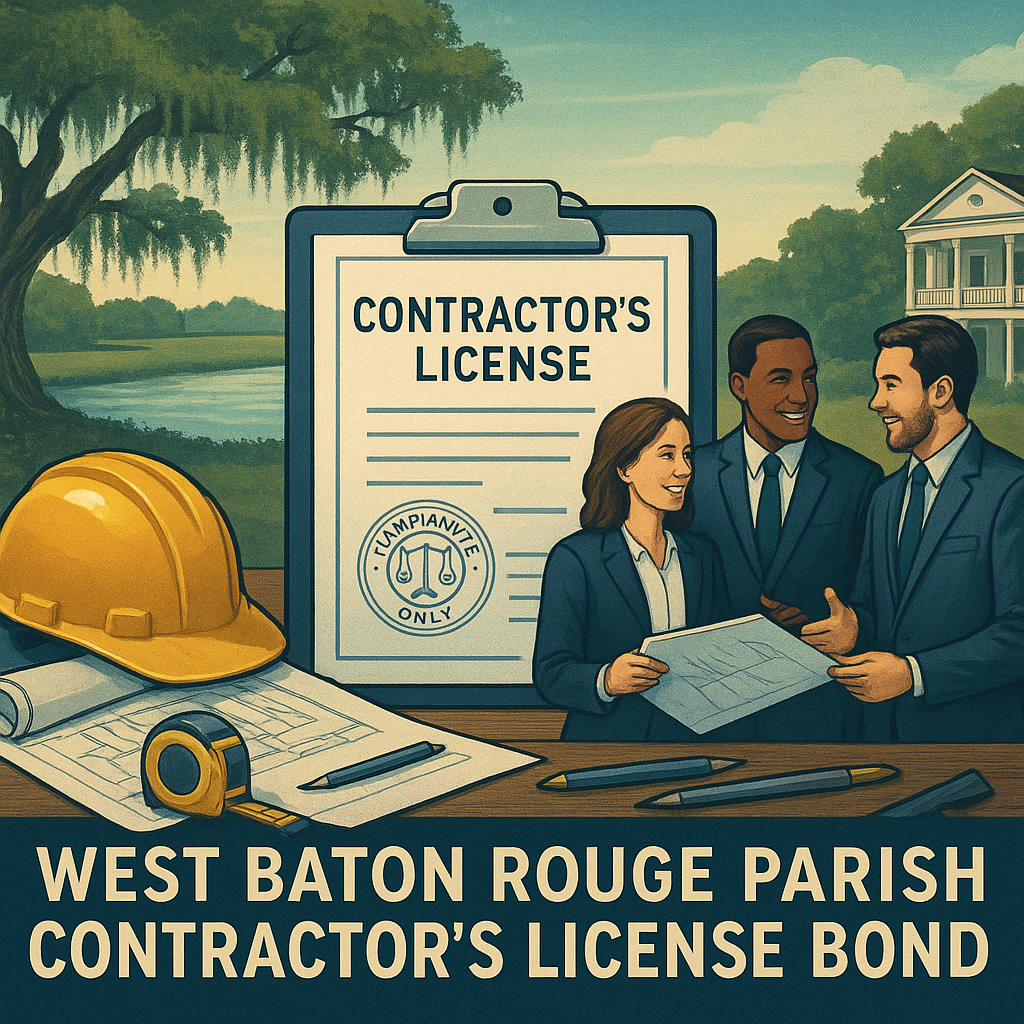
So, you’re a general contractor looking to work in West Baton Rouge Parish, Louisiana. Maybe you’ve just landed a promising project in Port Allen or Brusly. Then, buried in the paperwork, you spot a requirement that makes you pause: a contractor’s license bond. It might sound like just another bureaucratic hoop, but it’s actually a pretty straightforward concept once you break it down. Let’s talk about what this bond really means, why the parish asks for it, and how you can check it off your to-do list without the headache.
Thinking a license bond is about your work quality
Most contractors believe the Arizona Contractor License Bond guarantees their project performance. It doesn't. This bond is a financial guarantee to the state that you will follow licensing laws, pay owed taxes, and cover certain public liabilities from your business operations. The part most applicants underestimate is the personal credit check. Underwriters review your credit to assess the risk you'll default on the bond's financial obligation, not your skill as a contractor. A low score doesn't automatically disqualify you, but it directly impacts your premium rate and the speed of approval.
- The bond protects the public and state, not your client's project outcome.
- Your personal credit score is the primary factor determining your bond premium.
- You are personally liable for any claims paid by the surety on your bond.
What Exactly Is a Contractor’s License Bond?
Think of a contractor’s license bond as a three-way promise. It involves you (the contractor), the local government (West Baton Rouge Parish), and a surety company. The bond’s job is to guarantee that you’ll follow all the rules, codes, and regulations tied to your contractor’s license. If something goes wrong—say, a code violation that the parish has to fix—the bond provides a financial safety net. But here’s the key: the bond doesn’t protect you. It protects the public and the parish. If a claim is paid out, you’re ultimately responsible for reimbursing the surety company.
In West Baton Rouge, this particular bond is often labeled “Compliance Only.” That phrasing is your best friend because it tells you exactly what you’re signing up for. You aren’t guaranteeing the quality of your tile work or promising a client that a renovation will be flawless. You’re simply pledging to comply with all applicable laws, ordinances, and building codes during your project.
Why West Baton Rouge Parish Requires This Bond
Every parish in Louisiana has its own flavor of rules. West Baton Rouge isn’t trying to make your life difficult—it’s trying to create a fair, safe building environment. When a contractor pulls a permit, the parish needs assurance that the work will meet minimum safety standards. A compliance bond acts like a financial handshake. It says, “I’ll do the work according to the book, and if I don’t, there’s a fund available to set things right without burdening local taxpayers.”
Without this requirement, the parish would have far fewer tools to enforce building codes effectively. For homeowners, knowing a contractor is bonded provides a whisper of peace of mind. It’s not a warranty on the workmanship, but it is a layer of accountability that helps filter out operators who might cut corners and disappear.
“Compliance Only” vs. Performance Bonds: Don’t Confuse Them
One of the biggest misunderstandings in the construction world is mixing up a license compliance bond with a performance bond. They’re two very different animals. Let’s clear that up right now.
- License Compliance Bond: Required by the parish to make sure you play by the rules. If you violate a building code and the parish steps in to correct it, this bond can cover the costs. It’s tied directly to your license.
- Performance Bond: Usually required by a project owner. It guarantees that you’ll finish the job according to the contract terms. If you abandon the work or fail to deliver what was promised, the bond can help the owner hire someone else to complete it.
In West Baton Rouge, the contractor’s license bond you’re dealing with is strictly for compliance. You won’t use it to satisfy a homeowner who dislikes the paint color or worries about a cracked driveway years later. Keep that boundary clear, and you’ll set accurate expectations with your clients.
Who Needs This Bond in West Baton Rouge?
Not every contractor walking down the street will need this bond. Generally, if you’re a general contractor applying for or renewing a license through the parish, the bond requirement will pop up. Specialized subcontractors—electricians, plumbers, HVAC technicians—often operate under separate state-level licensing boards, so they may not face this specific parish bond. However, always verify directly with the West Baton Rouge Parish Planning and Zoning Department or the permit office. Regulations can shift, and assuming you’re exempt is a gamble you don’t want to take.
How Does the Bond Protect the Public?
Imagine a scenario: a general contractor builds a small addition but ignores the required setbacks and proper foundation depth. The parish inspector catches it after the concrete is poured. The corrective action is expensive, and the contractor refuses to fix the problem. The parish can then file a claim against the bond to fund the demolition or correction. The resident isn’t left with an unsafe structure, and the integrity of the neighborhood is preserved. The bond doesn’t make a bad contractor good, but it does give the parish a mechanism to act quickly without draining public funds.
For you as a contractor, it’s helpful to explain this to clients. Many homeowners hear the word “bonded” and assume it’s a blanket guarantee of perfect work. A short, friendly conversation can prevent confusion later: “My parish bond means I’m fully licensed and committed to following codes. For specific project guarantees, let’s talk about warranties and our contract terms.”
What Determines the Cost of Your Bond?
Here’s some good news: compliance bonds are generally affordable. The bond amount is set by the parish. You might see a requirement for a $10,000 bond, for example. But you don’t pay $10,000 out of pocket. Instead, you pay a small percentage—anywhere from 1% to 5% of that total amount—as an annual premium. So, a $10,000 bond could cost you as little as $100 per year if your credit and business history are solid.
What factors nudge that percentage up or down? The surety company will typically look at:
- Your personal credit score: A higher score often translates to a lower premium.
- Your business financials: Stable revenue and a clean track record help.
- Your experience and license history: If you’ve maintained a license without complaints or claims, you’re seen as a lower risk.
If your credit has taken a few hits, don’t panic. Many surety providers offer programs specifically for contractors with less-than-perfect credit. The premium might be a bit higher, but it’s still accessible.
Step-by-Step: How to Secure Your West Baton Rouge Bond
The process is much simpler than winning a bid on a complicated custom home. Here’s a typical path:
1. Confirm the Exact Requirement
Call or visit the West Baton Rouge Parish permit office. Ask for the specific bond form, the required amount, and any wording that must appear on the document. Some parishes want to be named as the obligee in a very particular way. Getting this right up front prevents returns and delays.
2. Reach Out to a Reputable Surety Bond Agency
You can work with a local insurance agent who handles bonds, or you can use an online surety marketplace that specializes in contractor bonds. The key is finding someone familiar with Louisiana parish requirements, not just generic bonds.
3. Complete a Short Application
You’ll usually provide basic business details, your license number, and consent for a credit check. It’s quick—often under ten minutes online.
4. Review Your Quote and Pay the Premium
Once approved, you’ll see your premium. Pay it, and the surety will issue the bond.
5. File the Bond with the Parish
The original bond document needs to be filed with West Baton Rouge Parish. Keep a copy for your records—you’ll be glad you did when renewal time rolls around.
Common Questions Contractors Ask
Is this bond the same thing as insurance? No, and that’s a crucial distinction. Insurance protects your business from accidents, damage, or lawsuits. A bond protects a third party—like the parish—and you must pay back any claims the surety covers. Think of it as a line of credit with a specific purpose.
Does the bond expire? Yes. Most license bonds are issued for a one-year term and must be renewed alongside your license. Don’t let it lapse, because working without an active bond could mean fines, license suspension, or even a stop-work order.
Can a claim hurt me? Absolutely. A claim can make it harder and more expensive to get bonded in the future. More importantly, it signals to the parish that something went wrong. The best approach is open communication with inspectors and a commitment to fixing issues before they escalate to a claim.
Making the Bond Work for Your Reputation
It’s easy to view a compliance bond as just another cost of doing business. But you can flip that perspective. When you advertise your services, mentioning that you’re fully licensed and bonded in West Baton Rouge Parish signals professionalism. In a market where homeowners feel nervous about hiring the wrong person, that badge of credibility can open more doors than any flashy yard sign.
Talk about it in your estimates and on your website. Say, “We carry the required West Baton Rouge Parish compliance bond, which guarantees our adherence to all local building codes.” That sentence alone tells a potential client you’re legitimate, responsible, and invested in doing things right.
Staying Ahead of Renewals and Changes
Parish requirements can evolve. One year the bond amount might be $5,000; the next, the parish council could vote to raise it to $15,000. Keep a tickler file—digital or paper—that reminds you to check for any ordinance updates a month before your license renewal. Joining a local builders’ association or simply maintaining a friendly relationship with the permit office staff can give you an early heads-up.
When renewal time comes, don’t wait until the afternoon your license expires. Contact your surety agent a few weeks early. Ask if your premium has changed and whether you need a fresh bond form. That small habit will save you from last-minute scrambles that distract from actual paying work.
Wrapping It Up
A West Baton Rouge contractor license bond might look like a small piece of paper, but it carries weight. It represents your promise to uphold safety, respect local codes, and contribute to the parish’s long-term well-being. By understanding the “compliance only” scope, separating it from performance bonds, and tackling the application process early, you turn a potential stumbling block into a simple administrative step. More than that, you show your clients—and your community—that you’re a contractor who takes the rules seriously. And that reputation is worth far more than the modest premium you’ll ever pay.