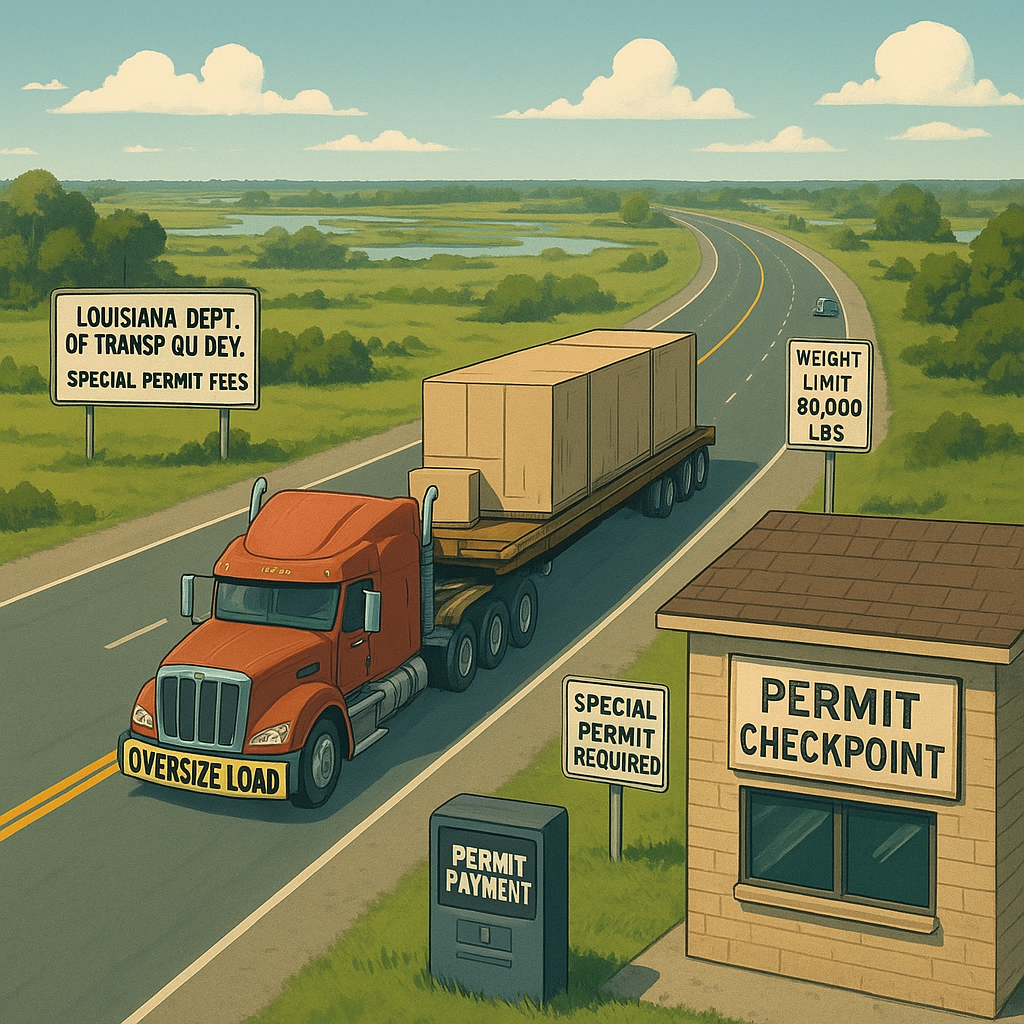
Louisiana requires carriers of oversize or overweight loads to post a surety bond guaranteeing payment of special permit fees to the Department of Transportation and Development. This bond is typically necessary for companies using deferred billing, blanket permits, or frequent hauling, ensuring the state collects revenue for road maintenance even if the carrier fails to pay.
Your personal credit score is the primary driver of your bond cost
Most freight broker applicants focus on the ,000 bond amount, but the part most applicants underestimate is how heavily their personal credit score impacts the premium. In practice, this often comes down to the underwriter's review of your FICO score. A score above 700 can secure a rate as low as 1-3% of the bond amount. A score below 650 can push rates to 10-15% or require a co-signer. What usually slows this down is applicants not knowing their exact score before applying, which leads to unexpected quotes and delays.
- Know your exact FICO score before you apply for an accurate quote
- Rates are tiered: Excellent credit (700+) pays 1-3%, while lower scores pay 10-15% or more
- If your score is below 650, prepare financials or consider a co-signer to improve approval odds
What Exactly Is the Louisiana Excess Dimensions or Weight Bond?
If you’ve ever moved something massive down a Louisiana highway, you already know you need a permit. But did you know the state might also ask you to secure a special type of surety bond before you ever hit the road? It’s called the Louisiana Excess Dimensions or Weight – Highways (Payment of Special Permit Fees) Bond, and while the name is a mouthful, the idea behind it is surprisingly simple.
Think of this bond as a promissory note you give to the Louisiana Department of Transportation and Development (DOTD). It guarantees that any fees tied to your oversize or overweight permits will be paid, even if your business hits a rough patch. This bond isn’t an insurance policy for your truck—it’s a financial safety net for the state, ensuring they get the revenue they need to maintain the roads your heavy hauls travel on.
Why Would You Need This Bond in the First Place?
Transporting loads that exceed standard legal limits — whether they’re too tall, too wide, too heavy, or a combination of all three — means you’re applying for special permits. Those permits come with fees that can add up quickly, especially if you’re running multiple trips or using blanket permits for a fleet. The DOTD wants to make sure those fees don’t slip through the cracks.
Here’s a real-world scenario: picture a crane boom being hauled from Baton Rouge to Shreveport. It requires an oversize permit with a specific route, and the fee is due before or shortly after the move. A company that moves dozens of similar loads each month might be billed on account or pay in arrears. The bond steps in and says, “If that company doesn’t pay, the state can come to us.” It’s the government’s version of asking for a deposit before you open a tab.
Is This Bond a Requirement for Every Oversize Load?
Not every single trip automatically triggers a bond, but if you routinely haul oversize or overweight loads in Louisiana, you can almost count on it. The DOTD often requires the bond when a carrier establishes an account for permit fees, wants to use a deferred payment plan, or applies for annual oversize/overweight permits. It’s the state’s way of saying, “We trust you to move safely — we just need a guarantee on the financial side.”
If you’re unsure whether your operation needs this bond, ask yourself one question: Do I expect to pay permit fees on more than a one-off, immediate payment basis? If the answer is yes, you’ll likely be asked to provide a bond in the amount the DOTD specifies. Many trucking companies discover this after their first conversation with the permit office, so getting ahead of it saves time and headaches.
How Does the Bond Actually Work?
At its core, the bond is a three-party agreement. You, the trucking company or carrier, are what the industry calls the “principal.” The Louisiana DOTD is the “obligee” — the entity that requires the protection. Then there’s the “surety,” the company that issues the bond and backs it financially.
- The principal (you) purchases the bond and agrees to pay all special permit fees.
- The obligee (the state) gets a guarantee that unpaid fees can be recovered.
- The surety guarantees payment, with the understanding that you’ll reimburse them fully if they ever have to pay out a claim.
It works like a credit-backed promise. If the state discovers unpaid fees — perhaps an audit shows a balance due for dozens of oversized moves — they can file a claim against your bond. The surety investigates, and if the claim is valid, they pay the state up to the bond’s full amount. Then, and this is crucial, the surety comes to you for reimbursement. Yes, you have to pay back every penny, often with added legal costs.
A Quick Analogy: It’s Not Like Truck Insurance
Many people confuse bonds with insurance, but they serve opposite purposes. Insurance protects you from unexpected loss. The bond protects the state from your failure to pay. Imagine renting an apartment: your security deposit is there to cover damages you might cause, not to protect you. The Louisiana excess dimensions bond is your security deposit with the DOTD, focused squarely on permit fees.
What Fees Are Covered by the Bond?
The bond covers “special permit fees” associated with oversize and overweight moves. These can include, but aren’t limited to:
- Fees for single-trip superloads that exceed standard weight or dimension limits.
- Annual blanket oversize permit fees for recurring routes.
- Overweight permit fees based on axle spacings and total gross weight.
- Administrative charges tied to route surveys or special handling.
The state doesn’t use the bond to cover fines for traffic violations or damage to infrastructure—those are separate matters. The bond is laser-focused on the price of obtaining permission to operate non-standard vehicles on Louisiana’s highways.
How Much Does the Bond Cost, and How Is the Amount Set?
The required bond amount varies depending on your operation. It’s not a number you get to choose. The Louisiana DOTD assesses your expected volume of permit activity and sets a bond amount that gives them enough coverage. Some carriers might see a $10,000 bond requirement, while larger operations with significant monthly fees could face higher amounts.
Here’s the good news: you don’t pay the full bond amount upfront. You pay a premium, often a small percentage of the total. For applicants with strong credit and solid financials, the premium could be as low as 1% to 3% of the bond amount. So if your required bond is $10,000, you might pay just $100 to $300 for a full year of coverage. Even applicants with less-than-perfect credit can typically secure this bond, though the premium might be higher.
What factors influence your rate? The surety will look at:
- Personal and business credit scores.
- Years of operating experience.
- Any history of bond claims or permit fee disputes.
- Overall financial health of your company.
Step-by-Step: How to Get Your Bond in Place
Securing a Louisiana Excess Dimensions or Weight Bond isn’t complicated, but you’ll want to tackle it before the DOTD issues a deadline. Follow this straightforward path:
1. Confirm your bond requirement. Reach out to the Louisiana DOTD permit office or check your account correspondence. They’ll tell you the exact bond amount they need and the form they accept.
2. Apply with a surety bond provider. You can work with an agency that specializes in commercial bonds. You’ll fill out a short application covering basic business information and sometimes owner details.
3. Get a premium quote. With good credit, you can often get a quote within hours. The surety will run a soft credit check and offer a rate. No, this isn’t a loan application—it’s far simpler.
4. Pay the premium and sign the paperwork. Once you accept the quote, the surety will issue the bond. You’ll receive the official bond form that needs to be filed with the state.
5. File the bond with the DOTD. Usually, the surety agency can help you submit the bond directly, or they’ll send you the original to forward to Louisiana’s Department of Transportation and Development. The bond is not active until the state accepts it.
6. Mark your calendar for renewal. Most of these bonds are written on an annual term. You’ll need to renew before the expiration date to keep your permit account in good standing. Letting it lapse could halt your ability to get new permits.
What Happens If You Don’t Have a Bond?
Skipping the bond when it’s required can bring your heavy haul business to a standstill. The DOTD can refuse to issue oversize or overweight permits, delay your account setup, or suspend existing privileges. In an industry where timing is everything, a gap in your ability to get a permit means missed jobs, angry customers, and potential revenue loss.
Also, think about the ripple effect. If you’re known for having permit issues, brokers and shippers might look the other way. Carriers who keep their compliance house in order stand out for all the right reasons. The bond is a small administrative step that signals reliability.
Keeping the Bond Healthy: Avoid Claims Like the Roadside Diner You Skip
Nobody wants a claim on their bond. It’s messy, expensive, and stains your record with sureties. Preventing claims is refreshingly simple: pay your permit fees on time, every time.
Set up internal reminders to match permit invoices against completed trips. If you use a permit service, make sure they’re forwarding all fee notices promptly. Should a dispute arise about what’s owed, talk to the DOTD before the situation escalates. The state would much rather resolve a payment issue directly than invoke the bond process. Communication almost always wins.
Common Questions Operators Ask
Can I use a single bond for multiple vehicles or a fleet?
Absolutely. The bond typically covers the company’s permit account, not individual trucks. Whether you have one rig or fifty, the bond amount is set based on your overall fee exposure, and one properly executed bond satisfies the DOTD requirement.
Is the bond the same as a “superload” permit bond?
Not exactly. Some states have separate bonds for extremely massive superloads that require extensive route surveys and infrastructure assessments. Louisiana’s Excess Dimensions or Weight bond focuses on payment of special permit fees, not on performance or road damage. However, superload permit fees are part of what it covers. Always clarify with the permit office if you’re moving something truly extraordinary.
Will the bond premium go up if I have a claim?
Yes, it likely will. Just like with credit, a claim signals higher risk to the surety. Even if you reimburse the surety quickly, the fact that a payout was triggered can lead to higher renewal premiums or trouble getting bonded down the line. Treat the bond like your reputation — protect it fiercely.
Navigating Fees and Bonds Without the Headache
The world of oversize load permits can feel like a maze of numbers, rules, and paperwork. The special permit fees bond is one piece of that puzzle that actually works in your favor when you understand it. It gives the state confidence to extend you payment flexibility, and it lets you move freight with fewer administrative holdups.
If you’re planning to haul big through the Bayou State, take the time to check whether this bond will be part of your setup. A quick call to the Louisiana DOTD or a knowledgeable surety agency can answer your specific questions. With the bond in your back pocket, you can focus on what really matters: delivering that oversize load safely, legally, and on time.