Louisiana requires a $50,000 surety bond for most telephone solicitors to protect consumers from Do Not Call violations, with each business location needing its own bond.
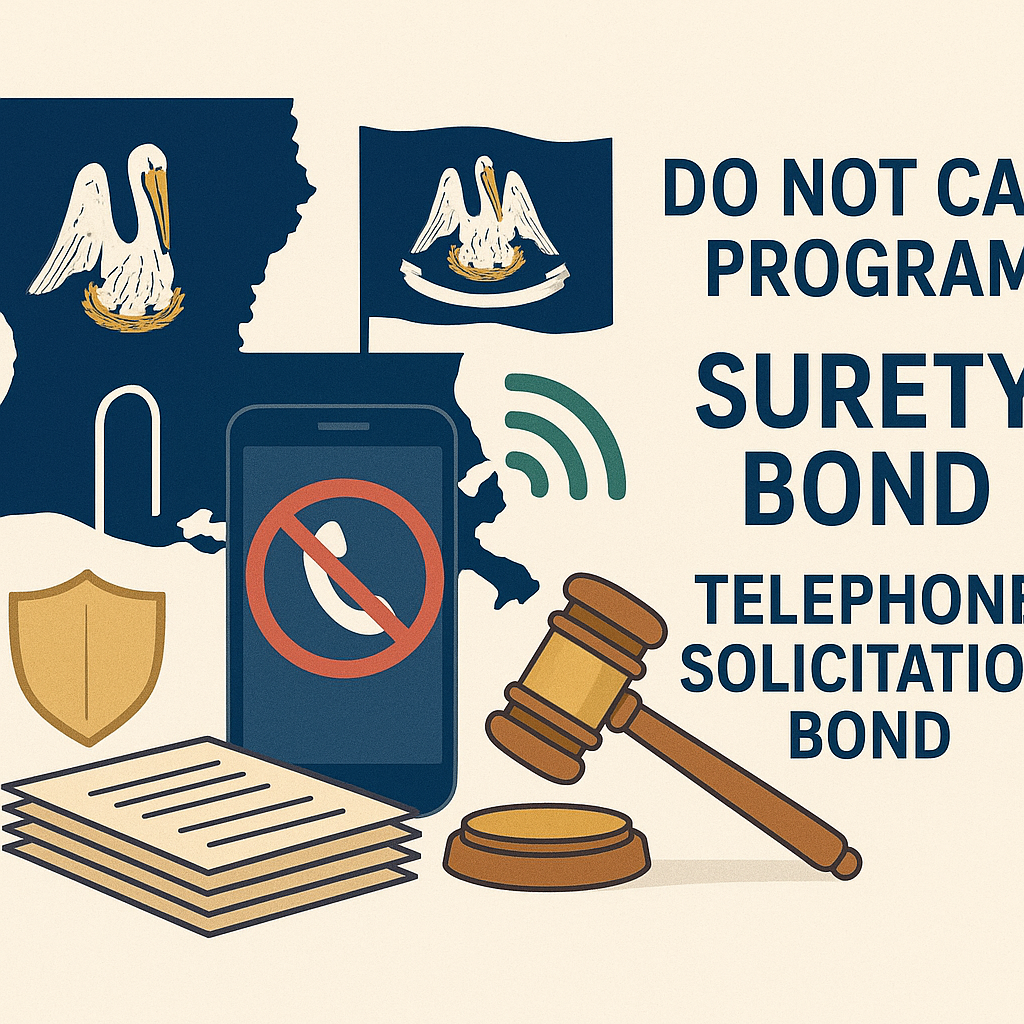
Have you ever sat down to dinner only to be interrupted by an unwanted sales call? That annoying experience is exactly why Louisiana created one of the toughest Do Not Call programs in the country. If you run a business that reaches out to residents by phone, there is a good chance you need to understand the Louisiana Do Not Call Program Surety Bond. It might sound like a mouthful, but it’s really just a promise to play fair.
Think of it as a safety net for consumers – and a professional badge for your company. Let’s break down what this telephone solicitation bond is, who needs it, and how you can get one without the headache.
Thinking a license bond is about your work quality
Most contractors believe the Arizona Contractor License Bond guarantees their project performance. It doesn't. This bond is a financial guarantee to the state that you will follow licensing laws, pay owed taxes, and cover certain public liabilities from your business operations. The part most applicants underestimate is the personal credit check. Underwriters review your credit to assess the risk you'll default on the bond's financial obligation, not your skill as a contractor. A low score doesn't automatically disqualify you, but it directly impacts your premium rate and the speed of approval.
- The bond protects the public and state, not your client's project outcome.
- Your personal credit score is the primary factor determining your bond premium.
- You are personally liable for any claims paid by the surety on your bond.
What Exactly Is the Louisiana Do Not Call Program?
Before we dive into the bond itself, it helps to know the rules behind it. The Louisiana Public Service Commission (LPSC) runs a “Do Not Call” list. Residents can put their phone numbers on this list to block most commercial telemarketing calls. It is stricter than the federal list, and the state does not mess around when it comes to fines.
Any company making telephone sales calls to Louisiana residents must follow these rules. If someone on the list gets a call from you, and you didn’t have an existing business relationship, you could be in trouble. That is where the bond comes in.
The Safety Net: Understanding Your Telephone Solicitation Bond
A Louisiana Do Not Call Program Surety Bond (often called a Telephone Solicitation Bond) is a license requirement set by the LPSC for most telemarketers. But please don’t mix it up with insurance. While insurance protects your business, this bond protects the people you are calling.
Imagine it like a security deposit. The state asks you to set aside a guarantee of $50,000. If you break the rules – say, you keep calling someone on the Do Not Call list or use deceptive scripts – a consumer can file a claim against your bond to recover losses. You are still ultimately responsible for paying back any claims, but the bond ensures the consumer gets paid first.
Who Needs to Get This Bond in Louisiana?
This is where many business owners get confused. Not every single call to Louisiana triggers the bond requirement, but the net is wide. You will almost certainly need an LA Do Not Call Program Surety Bond if you are a telephone solicitor. That includes any person, firm, or corporation that makes a telephone call to a residential or mobile number in the state with the goal of selling goods or services.
There are a few exceptions. Charities asking for donations, political campaigns, and companies with an existing customer relationship usually do not need the bond. However, any third-party call center or business actively pushing a sales pitch to new prospects in Louisiana probably does. When in doubt, always check with the Louisiana Public Service Commission directly.
One Bond Per Business Location
Here is a key detail that trips people up: the state requires a separate $50,000 surety bond for each physical business location where telephone solicitation takes place. If you run three call centers in different cities, you will need three separate bonds. It is not a one-size-fits-all deal.
How a Louisiana Surety Bond Actually Works
A surety bond always involves three parties. Let’s meet them using a simple coffee shop analogy. Suppose you lend your friend money for a coffee cart, and a third friend guarantees you will get paid back even if the first friend loses every dollar. That third friend is the surety, you are the customer, and the cart owner is the telemarketer.
- The Principal: That’s you, the telephone solicitor buying the bond.
- The Obligee: The Louisiana Public Service Commission, which requires the bond to protect the public.
- The Surety: The insurance company that backs your promise financially.
If a consumer reports a violation and the LPSC issues a judgment, the surety can pay the consumer up to the $50,000 penalty. After that, the surety comes back to you (the principal) for reimbursement. So, think carefully before letting an employee go rogue with the autodialer – it hits your wallet in the end.
What Does a Louisiana Do Not Call Bond Cost?
When you hear “$50,000 bond,” you probably picture a massive bill. Breathe easy. You do not pay the full $50,000. You only pay a small yearly premium, much like interest on a loan. For the Louisiana Do Not Call Program Surety Bond, that premium often falls between 1% and 10% of the total bond amount.
How is your rate determined? The surety company looks mainly at your personal credit score. If you have solid credit, your premium could be as low as $500 to $1,500 annually for that $50,000 bond. If your credit has taken some hits, you might still get approved, just at a higher rate, perhaps closer to 5% or 10%. Even with rocky credit, a good bond provider can usually find a program that works.
- Good credit (700+): as low as 1% of the bond amount.
- Challenged credit (below 650): typically 5%-10%.
Business financials and industry experience can also influence the final number, but for most small telemarketing outfits, personal credit is the key.
Getting Your Bond in Three Easy Steps
The process is much simpler than filing your state taxes. Here’s a typical road map.
Step 1: Complete a quick application. You will provide basic business details and your social security number for a credit check. Reputable surety agencies offer secure online forms that take maybe ten minutes.
Step 2: Receive your quote and pay the premium. Once approved, you will see the exact cost. Pay online, and the bond becomes active.
Step 3: File the bond with the Louisiana Public Service Commission. You will get a physical or digital bond form. Make sure the LPSC receives it along with your license application. Many surety companies can even file it for you, saving a trip to the mail room.
Do you need the bond instantly? Many agencies can issue the LA telephone solicitation bond the same day you apply, so you are not left waiting for weeks.
Common Questions Business Owners Ask
Does the bond ever expire? Yes. Most surety bonds are issued on an annual basis. You will need to renew your bond each year by paying another premium. Letting it lapse can get your telemarketing privileges suspended faster than you can say “unsubscribe.”
I have a small home-based business selling candles. Do I really need a $50,000 bond? If you are cold-calling Louisiana residents to sell those candles, the law sees you as a telephone solicitor, and yes, you likely do. Scale does not matter—the outreach method does.
Is this the same as the federal Do Not Call registry bond? No. The Louisiana bond is a state-specific requirement. You might need both a state surety bond and a federal registration, but they are separate processes. An Louisiana Do Not Call Program Surety Bond satisfies the LPSC, not the FTC.
What if someone files a false claim against my bond? A claim does not automatically mean you lose. The surety will investigate. If you can prove you followed the rules, the claim gets denied. It is a good reason to keep meticulous call logs and Do Not Call scrubbing records.
Why the Bond Matters Beyond Compliance
Maybe you are thinking, “This is just another hoop to jump through.” But having a telephone solicitation bond actually sets you apart. It tells potential clients and partners that your business is financially stable and ethical. In a world full of scam robocalls, a bonded telemarketer looks like the real deal.
Imagine pitching a big client who has been burned by shady call centers before. Showing them your Louisiana surety bond is a powerful signal that you are trustworthy. It is a silent marketing tool that can open more doors than a pushy sales script ever could.
Staying on the Right Side of the Rules
Once you have your bond, the work is not completely over. To avoid claims and keep that premium low year after year, make compliance a daily habit. Train your agents to scrub numbers against the updated Louisiana Do Not Call list. Honor opt-out requests immediately. Keep detailed records of every call, just in case a dispute arises.
Think of the bond as a giant “I promise” sticker on your business. Breaking that promise leads to headaches, money out of your pocket, and possibly losing the ability to operate in Louisiana entirely. The state can hit you with fines on top of bond penalties, so the real cost of a messy claim runs much deeper than the bond premium.
Wrapping It Up
The Louisiana Do Not Call Program Surety Bond might seem intimidating on the surface, but it’s really just a structured way to show you respect the people you call. It protects consumers, keeps the industry honest, and gives your business a stamp of credibility. For a relatively small annual fee, you can meet the state’s requirements and focus on what you do best – connecting with customers.
Have more questions about specific rates or whether your business model requires the bond? Talking to a surety bond specialist is always free and removes the guesswork. After all, knowing the rules is the first step to playing the game right.