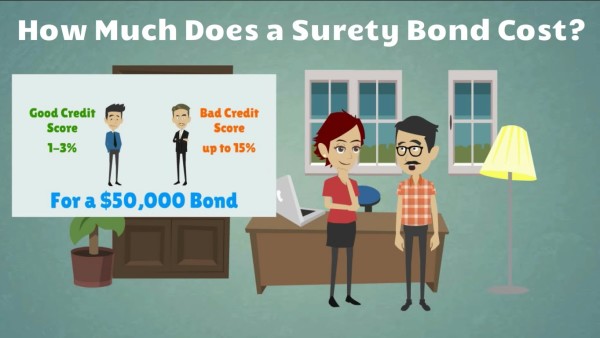
Surety bond costs typically range from 1% to 15% of the bond amount, determined by factors like the applicant's credit score and the bond's risk level.
If you’re in the market for a surety bond, your first question is likely about cost. The price of a surety bond, known as the premium, is not a fixed number. It is determined by a combination of key factors that underwriters evaluate to assess risk. Understanding these variables is the first step to getting an accurate quote for your specific situation.
Thinking a license bond is about your work quality
Most contractors believe the Arizona Contractor License Bond guarantees their project performance. It doesn't. This bond is a financial guarantee to the state that you will follow licensing laws, pay owed taxes, and cover certain public liabilities from your business operations. The part most applicants underestimate is the personal credit check. Underwriters review your credit to assess the risk you'll default on the bond's financial obligation, not your skill as a contractor. A low score doesn't automatically disqualify you, but it directly impacts your premium rate and the speed of approval.
- The bond protects the public and state, not your client's project outcome.
- Your personal credit score is the primary factor determining your bond premium.
- You are personally liable for any claims paid by the surety on your bond.
What Factors Influence Surety Bond Costs?
Several core elements directly impact your bond premium. The single most important factor is the applicant’s personal credit score. Individuals with strong credit histories represent a lower risk to the surety company and will qualify for the lowest premium rates, typically between 1% and 3% of the bond amount. Conversely, applicants with lower credit scores may see premiums ranging from 3% to 10% or higher, as the perceived financial risk increases.
The bond amount itself, also called the penal sum, is the next major determinant. This is the maximum financial guarantee the bond provides. Since the premium is a percentage of this amount, a higher bond limit directly results in a higher premium cost. For example, a $50,000 bond at a 2% rate costs $1,000, while a $100,000 bond at the same rate costs $2,000. Understanding this relationship helps you avoid overbonding—purchasing a higher limit than required—which unnecessarily inflates your premium without adding compliance value.
Industry risk and bond type also play a significant role. Certain professions, like construction contractors or those handling client funds, are viewed as higher risk. A performance bond for a large project will be underwritten more rigorously—and often cost more—than a simple license bond for a low-risk business. Underwriters may also factor in your business history, litigation exposure, and prior bond claims when setting your rate.
Finally, the required bond term influences the total price. Most bonds are issued for one-year terms and must be renewed annually, with premiums paid each term. Some bonds may be written for multiple years, which can affect the total cost calculation. Be aware that some states require continuous bonds that remain in force until canceled, which can change how and when premiums are billed.
How to Get the Best Surety Bond Rate
To secure the most favorable rate, preparation is key. Start by obtaining a copy of your personal and business credit reports to understand your financial standing. Disclose all relevant information accurately on your application, as transparency builds trust with underwriters. It is also highly advisable to work with an experienced surety bond agency. A knowledgeable agent can advocate on your behalf, present your financials in the best light, and leverage their relationships with multiple surety companies to find you the most competitive offer.
When comparing quotes, look beyond just the premium percentage. Consider the surety company’s financial strength, its reputation for handling claims, and the agency’s level of customer service. The cheapest bond is not always the best value if the provider is difficult to work with or financially unstable. A common mistake is assuming that all surety companies price risk identically—in practice, rates for the same applicant can differ meaningfully between carriers, which is why shopping through a wholesale broker with access to multiple markets often yields better results than going direct.
Common Surety Bond Types and Typical Costs
While costs vary, here are general premium ranges for common bond types, assuming standard credit:
- License & Permit Bonds: Often required by government agencies for businesses like contractors, motor vehicle dealers, and notaries. Premiums are typically 1% to 3% of the bond amount.
- Court Bonds: These include fiduciary (e.g., estate executor) and appeal bonds. They are highly case-specific but generally range from 1% to 5%.
- Contract Bonds: Required for construction projects (bid, performance, and payment bonds). These are heavily underwritten and typically cost 1% to 3% of the contract value.
- Commercial Bonds: This broad category includes bonds like those for freight brokers or Medicare providers. Premiums can vary widely, from 1% to 10%, based on risk.
For contractors, note that bid bonds are often issued at no additional premium when bundled with performance and payment bonds on the same project—a detail many first-time applicants overlook when budgeting. Similarly, some states set statutory minimum and maximum premium rates for specific license bonds, so check your state’s regulations before assuming a quoted rate is negotiable.
Next Steps for Your Surety Bond
Getting a surety bond doesn’t have to be a complex process. By understanding the cost factors and preparing your financial information, you can approach the market with confidence. The best course of action is to request quotes from a few reputable surety bond providers to compare rates and terms specific to your bonding requirement.