Navigating Louisiana’s Atchafalaya Basin requires oversize and overweight permits due to the sensitive levee infrastructure. The Atchafalaya Basin Levee District enforces these special permits to protect flood control systems from damage caused by heavy or oversized loads.
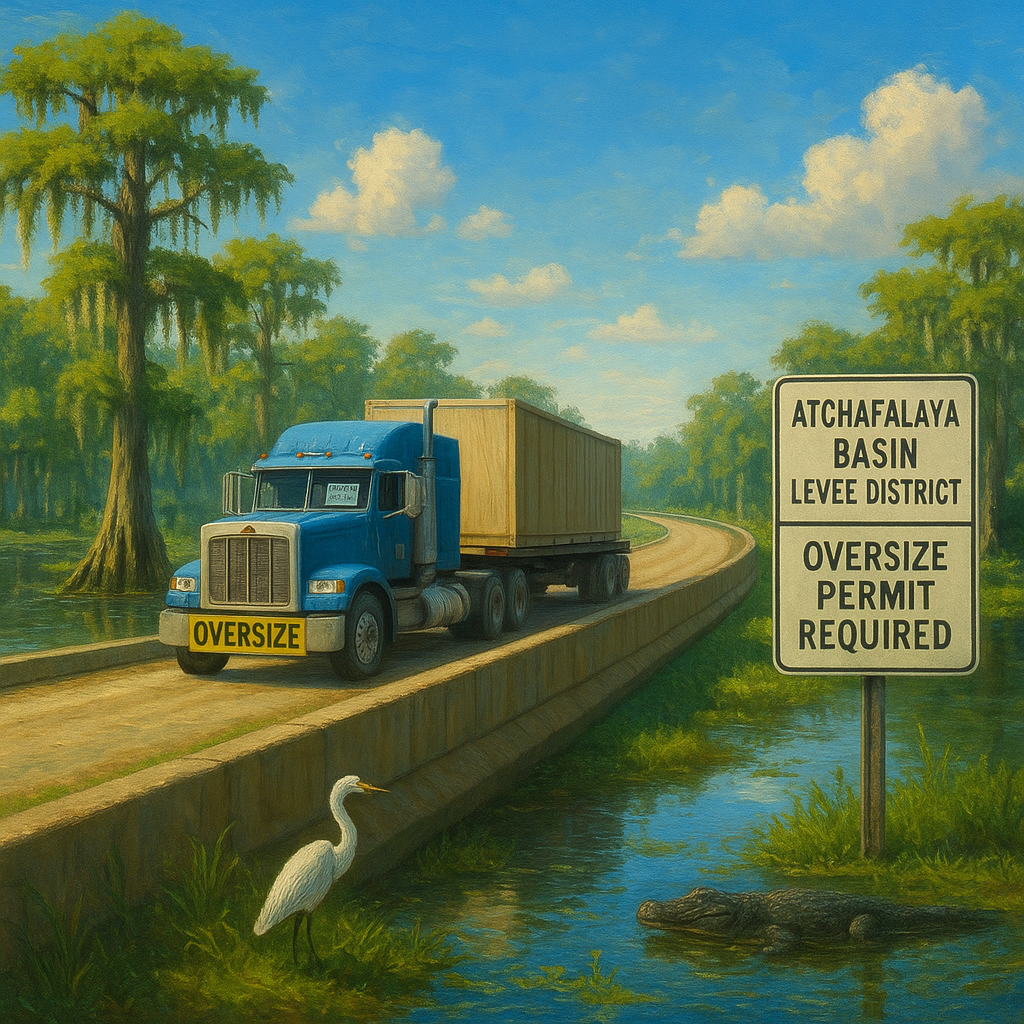
Hauling something that’s longer, wider, taller, or heavier than the standard legal limits isn’t as simple as hitting the road and hoping for the best. In Louisiana, especially when your route winds through the sprawling wetlands of the Atchafalaya Basin, there’s an extra layer of protection you need to understand: the oversize and overweight permit bond. If terms like “Atchafalaya Basin Levee District” and “surety bond” make you scratch your head, don’t worry. We’re about to break it all down in plain, everyday language.
Think of this as your friendly guide to navigating the levee district’s requirements without the headache. Whether you’re a trucking company owner, a heavy equipment mover, or a project manager coordinating a big haul, by the end of this post you’ll know exactly what’s needed, why it matters, and how to get it done smoothly.
Your personal credit score is the primary driver of your bond cost
Most freight broker applicants focus on the ,000 bond amount, but the part most applicants underestimate is how heavily their personal credit score impacts the premium. In practice, this often comes down to the underwriter's review of your FICO score. A score above 700 can secure a rate as low as 1-3% of the bond amount. A score below 650 can push rates to 10-15% or require a co-signer. What usually slows this down is applicants not knowing their exact score before applying, which leads to unexpected quotes and delays.
- Know your exact FICO score before you apply for an accurate quote
- Rates are tiered: Excellent credit (700+) pays 1-3%, while lower scores pay 10-15% or more
- If your score is below 650, prepare financials or consider a co-signer to improve approval odds
What Exactly Is the Atchafalaya Basin Levee District?
Before we dive into permits and bonds, let’s set the scene. The Atchafalaya Basin is a massive river swamp in south-central Louisiana—the largest of its kind in the United States. It’s a delicate mix of bayous, levees, wildlife habitats, and flood control structures. Protecting all of that is the Atchafalaya Basin Levee District. This local governing body manages and maintains the levee system that keeps communities safe from flooding.
But here’s the thing: those levees aren’t just big dirt walls. They’re engineered structures with roads on top, access points, and weight limits. When you need to move an oversized load—like a crane, a modular home, or heavy industrial equipment—through or across this district, you’re literally driving on top of vital flood protection infrastructure. That’s why the levee district requires special permits. It’s not about making your life difficult. It’s about making sure that the levee system stays intact for the thousands of people and properties it shields.
Why Oversize and Overweight Permits Even Exist
Imagine trying to carrying a king-size mattress through a doorway designed for a single person. You’d need to angle it carefully, maybe remove the door, and you’d definitely risk scraping the walls. Now multiply that by a thousand. An oversized or overweight truck on a narrow levee road is like that mattress—except the “walls” are flood barriers, and a scrape could mean catastrophic failure down the line.
Louisiana, like every state, sets legal size and weight limits for vehicles traveling on public roads. Anything exceeding those limits requires a special permit. But the Atchafalaya Basin Levee District adds its own layer of rules because the roads running along and across the levees are especially sensitive. Rain, soft soil, and water pressure already stress these structures. An unapproved, heavy vehicle could cause cracks, settlement, or even a levee breach. So, the oversize and overweight permit process here is a partnership: you get to move your load, and the district gets assurance that you’ll do it responsibly.
Where the Bond Comes Into Play
Now we reach the heart of the matter: the Atchafalaya Basin Levee District oversize and overweight permit bond. A bond like this is a three-party promise. You, the mover (the principal), obtain the bond from a surety company. The bond says to the levee district (the obligee) that you’ll follow all the rules of the permit. If you don’t—and your load damages the levee, the road, or the surrounding environment—the bond covers the cost to fix things up to a certain amount.
So, is it insurance? Not exactly. Insurance protects you. A surety bond protects the public and the district. If a claim is paid out, you’ll have to reimburse the surety company later. Think of it like a security deposit for an apartment. The landlord holds it in case you leave the place trashed. The levee district holds the bond in case your heavy load leaves their infrastructure trashed. Once you fulfill your obligations, the bond’s purpose is fulfilled, but it remains in place for the duration of your permit period.
How to Get Your Permit and Bond Without the Stress
At first glance, the paperwork might feel overwhelming. But if you break it down step by step, it’s as straightforward as planning a road trip. Here’s a simple path you can follow.
Step 1: Know Your Load and Your Route
Before you contact anyone, gather the specifics. What are the exact dimensions—height, width, length—and the gross weight of your vehicle and load combined? Which roads and levees will you travel? You need to know if your route falls squarely within the Atchafalaya Basin Levee District’s jurisdiction. If you’re unsure, a quick call to the district office or a permitting service can clear things up. Having this information ready saves you days of back-and-forth.
Step 2: Apply for the Permit Through the Louisiana Department of Transportation and Development (DOTD)
Oversize and overweight moves in Louisiana often start with a state-level permit from DOTD’s Truck Permit Office. But because your load will cross or travel on levee district roads, the Atchafalaya Basin Levee District will also need to approve the move. Sometimes the state permit process triggers the local district review. Other times, you’ll need to reach out directly to the levee district. Clarify this early so you don’t get caught off guard.
Step 3: Secure the Required Bond
When the district tells you a bond is necessary—and for most oversize or overweight moves across levees, it will be—you’ll work with a surety bond agency. You don’t have to nail down complex legal language; a good bond provider will guide you. You’ll provide some basic business information and the bond amount the district specifies. Often, the bond amount depends on the weight and potential risk of your load. The agency then underwrites the bond and issues it quickly, often within a day.
What will you pay? You won’t pay the full bond amount upfront. Instead, you pay a small percentage, called the premium. For many permit bonds, the premium is a few hundred dollars or less, depending on your credit and the bond size. It’s a modest fee for the peace of mind—and the legal ability to move your load.
Step 4: Submit Everything and Keep Records
Once you have the bond in hand, file it with the levee district along with any additional forms they require. Keep digital and physical copies of the permit, the bond certificate, and all correspondence. If an inspector stops you on the road, having these documents handy will save you a world of trouble.
Common Questions People Ask About These Bonds
You’ve probably got a few questions yourself. Let’s tackle the ones that come up most often.
“Do I always need a bond for an oversized load in the basin?”
Not every single move triggers a bond requirement, but if your route includes levee district roads, the answer is almost always yes. The district’s priority is protecting the levee system. Even if your load is only slightly over the limit, the potential for damage exists. Assume a bond will be needed, and confirm with the district before you schedule your haul.
“What happens if I damage the levee but don’t have a bond?”
Driving without the proper bond and permit opens you up to hefty fines, legal action, and being held personally responsible for repair costs that can skyrocket into the hundreds of thousands of dollars. The bond exists to make sure funds are available immediately to fix any damage. Without it, you’re gambling with your business’s future—and maybe even the safety of nearby communities.
“How long does it take to get bonded?”
For most oversize and overweight permit bonds, the turnaround time is fast. Once you complete the application and pay the premium, many agencies issue the bond the same day. The bigger time factor is usually the permit approval itself, so don’t wait until the last minute to start the process.
Making Sense of the Costs
Nobody likes surprise fees. Here’s what you can expect. The bond premium is a fraction of the total bond amount. If the district requires a $10,000 bond, your premium might be somewhere between $100 and $300, depending on your credit history and the surety company’s rates. Some providers offer instant online quotes, so you can budget without picking up the phone. Remember, this is a recurring cost only if your permit needs to be renewed. Seasonal haulers or those moving a single large piece of equipment may only need a bond for a short term.
Add to that the permit application fee from the state and any local levee district fee. Altogether, these costs are a fraction of what you’d pay if you caused uninsured damage or faced a shutdown.
Why This Process Protects More Than Just Dirt
It’s easy to see the bond as just another bureaucratic hoop. But take a step back, and the bigger picture comes into focus. The Atchafalaya Basin Levee District oversize and overweight permit bond safeguards vital flood control infrastructure, protects public safety, and holds everyone accountable. When haulers follow the rules, loading and route restrictions keep fragile earthen levees from cracking under stress. The bond ensures that if the unexpected happens, repairs happen without taxpayer dollars getting drained or court battles dragging on.
Local communities depend on these levees every single day—often without even realizing it. By complying with the bond requirement, you’re doing your part to support Louisiana’s long-term resilience against flooding. That’s something worth feeling good about.
Putting It All Together: Your Action Plan
So, what’s next? If you’re planning a move in or around the Atchafalaya Basin, take these simple actions now:
- Map your route and identify which jurisdiction governs the roads you’ll travel.
- Contact the Atchafalaya Basin Levee District early to learn their exact bond and permit rules for your load.
- Work with a surety bond expert who understands Louisiana’s oversize permit bonds. They’ll help you lock in the right bond quickly.
- Stay organized. Keep all permits and bond documents in your cab and readily available.
Moving huge machinery or long beams through one of America’s most unique landscapes is no small feat. But with the right prep and a clear understanding of the Atchafalaya Basin Levee District oversize and overweight permit bond, you can roll with confidence. Safe travels, and may your load arrive without a scratch—to itself or to the levees that keep the basin communities dry.