Oklahoma City requires fence contractors to obtain an occupation bond to legally operate, protecting homeowners and ensuring compliance with local codes. Securing this surety bond is a straightforward process that signals professionalism and builds customer trust.
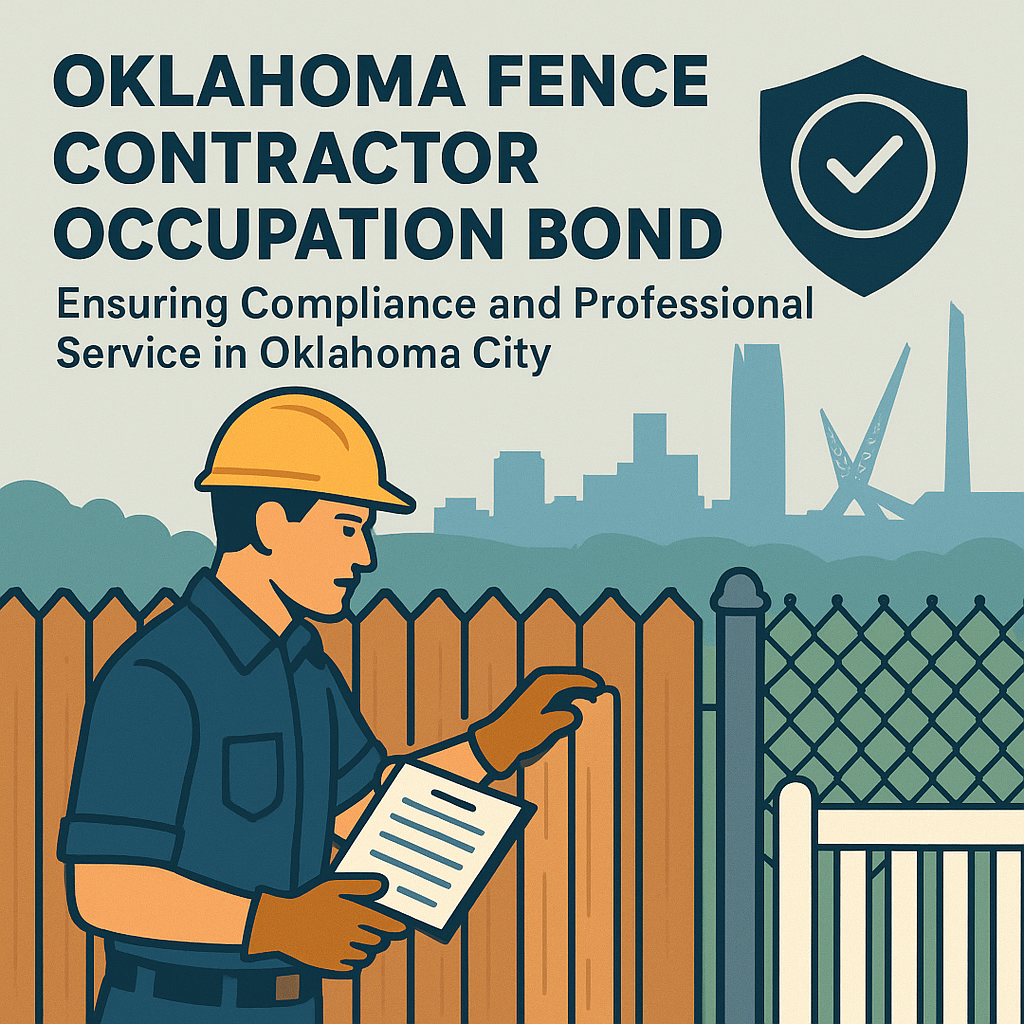
If you’re installing fences in Oklahoma City, you’ve probably come across the term “fence contractor occupation bond.” Maybe you’re launching a new fencing business or renewing your license, and the requirement popped up. Whatever the case, understanding this bond is your first step toward running a compliant, trustworthy, and successful contracting company. Don’t worry—it’s not as complicated as it sounds.
Think of it like this: you’re not just buying a piece of paper. You’re making a promise to your customers and the city that you’ll do things the right way. And that promise opens doors.
Your personal credit score is the primary driver of your bond cost
Most freight broker applicants focus on the ,000 bond amount, but the part most applicants underestimate is how heavily their personal credit score impacts the premium. In practice, this often comes down to the underwriter's review of your FICO score. A score above 700 can secure a rate as low as 1-3% of the bond amount. A score below 650 can push rates to 10-15% or require a co-signer. What usually slows this down is applicants not knowing their exact score before applying, which leads to unexpected quotes and delays.
- Know your exact FICO score before you apply for an accurate quote
- Rates are tiered: Excellent credit (700+) pays 1-3%, while lower scores pay 10-15% or more
- If your score is below 650, prepare financials or consider a co-signer to improve approval odds
What Exactly Is a Fence Contractor Occupation Bond?
Let’s strip away the jargon. A fence contractor occupation bond is a type of surety bond required by the City of Oklahoma City for anyone who wants to legally operate as a fence contractor within the city limits. It’s often called a license bond or a compliance bond.
But what does it actually do? In simple terms, it’s a three-party guarantee. The three parties are:
- The Obligee: The City of Oklahoma City, which requires the bond to protect the public.
- The Principal: That’s you, the fence contractor, who buys the bond.
- The Surety: The insurance company that backs your promise financially.
If you break the rules—say, you violate building codes, abandon a job, or fail to pay for permits—the bond can be used to compensate the harmed party. But here’s the crucial part: you’ll eventually have to pay the surety back for any valid claim. It’s a safety net, not a free pass.
Why Oklahoma City Requires This Bond
You might wonder, “Why me? Why a fence contractor?” The city isn’t singling you out. Bonds like this exist across many trades—electricians, plumbers, roofers. They’re all about consumer protection and code compliance.
Protecting Homeowners and Property
Imagine a homeowner hires a contractor to build a privacy fence around their backyard. They pay a deposit, dig the post holes, and then… the contractor disappears. Without a bond, the homeowner might be stuck with a mess and an empty wallet. The bond provides a way for that homeowner to seek financial recovery up to the bond’s limit.
Ensuring Local Codes Are Followed
Fences aren’t just about looks. They have to meet height restrictions, property line setbacks, and safety standards. The bond gives the city teeth. If you repeatedly ignore the rules, a claim against your bond could put your business in hot water—fast. That motivates everyone to play fair.
Leveling the Playing Field
When all legitimate fence contractors carry a bond, it helps weed out unlicensed operators who cut corners. It’s a marker of professionalism. Customers can see you’ve met a requirement that shady contractors can’t or won’t.
How to Secure Your Oklahoma City Fence Contractor Bond
Getting bonded is often simpler than you think. You won’t need to fill out mountains of paperwork or wait for weeks. Here’s how the process typically flows:
- Find a Reliable Surety Bond Agency: Look for one that specializes in contractor license bonds. They’ll know Oklahoma City’s specific requirements inside and out.
- Complete a Quick Application: You’ll provide basic details about your business, your experience, and sometimes your personal credit. This helps the surety assess the risk.
- Get a Quote: For these smaller occupation bonds, credit is the main factor. If your credit is solid, you’ll pay a low premium—often just a tiny percentage of the total bond amount.
- Pay the Premium: Once you accept the quote, you pay the premium, and the bond becomes active. The surety will issue a bond form that you’ll submit to the city along with your license application or renewal.
- Keep It Current: Bonds expire, typically on an annual basis. Mark your calendar so you can renew on time and avoid a lapse in your license.
What Does an Oklahoma Fence Contractor Bond Cost?
Everyone wants to know the price tag. There’s no single answer because it depends on the bond amount required by the city and your personal credit score.
Let’s say Oklahoma City requires a $5,000 occupation bond (the exact amount may vary, so always verify with the city’s licensing department). You won’t pay $5,000. You’ll pay a premium, which could be anywhere from $100 to $500 per year, depending on the rate you qualify for.
Why such a range? The surety looks at your credit like a snapshot of your financial responsibility. A higher score usually means a lower rate. Some companies even offer bonds without a credit check for a slightly higher premium, which can be a lifesaver if your credit is less than perfect.
Think of it like car insurance. You’re not paying the full value of the car each year, just a fraction to cover the risk. A bond premium works the same way.
The Direct Benefits for Your Fencing Business
A bond isn’t just a bureaucratic hurdle. It’s a business asset. When you frame it the right way, you’ll see it’s a tool you can use in your marketing and sales process.
Instant Credibility
Picture this: You’re sitting at a potential client’s kitchen table, giving an estimate. They ask, “Are you licensed and insured?” You can say, “Absolutely. We’re fully licensed by Oklahoma City and hold all required bonds to protect you.” That answer puts them at ease instantly. It separates you from the guy who advertises on a roadside sign with a handwritten phone number.
Reducing Disputes
Because a bond claim can hurt your business and your ability to get future bonds, you’re naturally incentivized to communicate clearly, stick to your contracts, and clean up your job sites. This mindset reduces conflicts and helps you build a reputation for reliability.
Staying on the Right Side of the Law
Operating without the required bond isn’t just a minor oversight. It can lead to fines, license revocation, and even being forced to stop work in the middle of a project. The bond keeps you compliant, so you can focus on building fences, not fighting city hall.
Common Questions (and Straight Answers)
Is this bond the same as general liability insurance?
No, and it’s a common mix-up. The bond protects the city and your customers from your failure to follow rules or contracts. General liability insurance protects you from third-party claims of property damage or bodily injury (for example, if a post hole digger damages an underground utility line). You’ll likely need both to run a well-protected business.
What happens if someone files a claim against my bond?
If a claim is filed, the surety will investigate. If the claim is found to be valid, the surety pays the claimant up to the bond limit. Then, the surety comes to you for full reimbursement. It’s not a gift. That’s why it’s critical to always operate ethically and resolve customer complaints before they escalate.
Can I get bonded with bad credit?
Yes, very often. While good credit unlocks the lowest rates, many programs exist specifically for those with credit challenges. You might pay a higher premium or need a co-signer, but options are available.
Keeping Your Bond and License in Good Standing
Getting the bond is day one. Maintaining it is an ongoing commitment. Here are a few practical tips:
- Read and understand the bond form. Know exactly what obligations it covers.
- Keep detailed records of all contracts, change orders, and payments. Good paperwork is your best defense if a dispute arises.
- Communicate proactively. If a project hits a snag—weather delays, material shortages—talk to your customer immediately. Most claims start because a contractor went silent.
- Renew on time. Set a reminder at least a month before your bond expires. Letting it lapse could suspend your license and leave you without coverage.
A Steppingstone, Not a Stumbling Block
Too many contractors view the Oklahoma City fence contractor occupation bond as another annoying fee. But when you shift your perspective, you realize it’s a badge of professionalism. It tells the world—and more importantly, your customers—that you’re serious, accountable, and here to stay.
So take a deep breath. Check with the Oklahoma City licensing office to confirm the exact bond amount they require. Then, reach out to a reputable surety bond agency to get your free quote. In a short time, you’ll have the bond in hand, your license on the wall, and the confidence to bid on projects knowing you’ve checked all the right boxes.
Building fences means marking boundaries clearly. Your bond does the same thing—it draws a clear line between you and the risks that could tear down all your hard work. That’s something worth investing in.